
Walk into a room with a single, harsh overhead light and it feels flat — even unwelcoming. Flip on a layered setup with warm table lamps, a soft accent glow behind the TV, and a statement pendant over the dining space, and the very same square footage suddenly feels larger, cozier, and worth lingering in. That’s the quiet magic of lighting. You don’t need a contractor or a renovation loan; you just need the right lighting ideas and a handful of smart fixtures from places like Home Depot, Lowe’s, Wayfair, or Amazon.
This guide is built for U.S. homeowners and renters who want noticeable upgrades without tearing up drywall. We’ll cover the three layers of light every room needs, walk through specific room lighting ideas space by space, show you a quick before-and-after case study, and close with a buying checklist plus simple DIY swaps you can knock out in an afternoon.
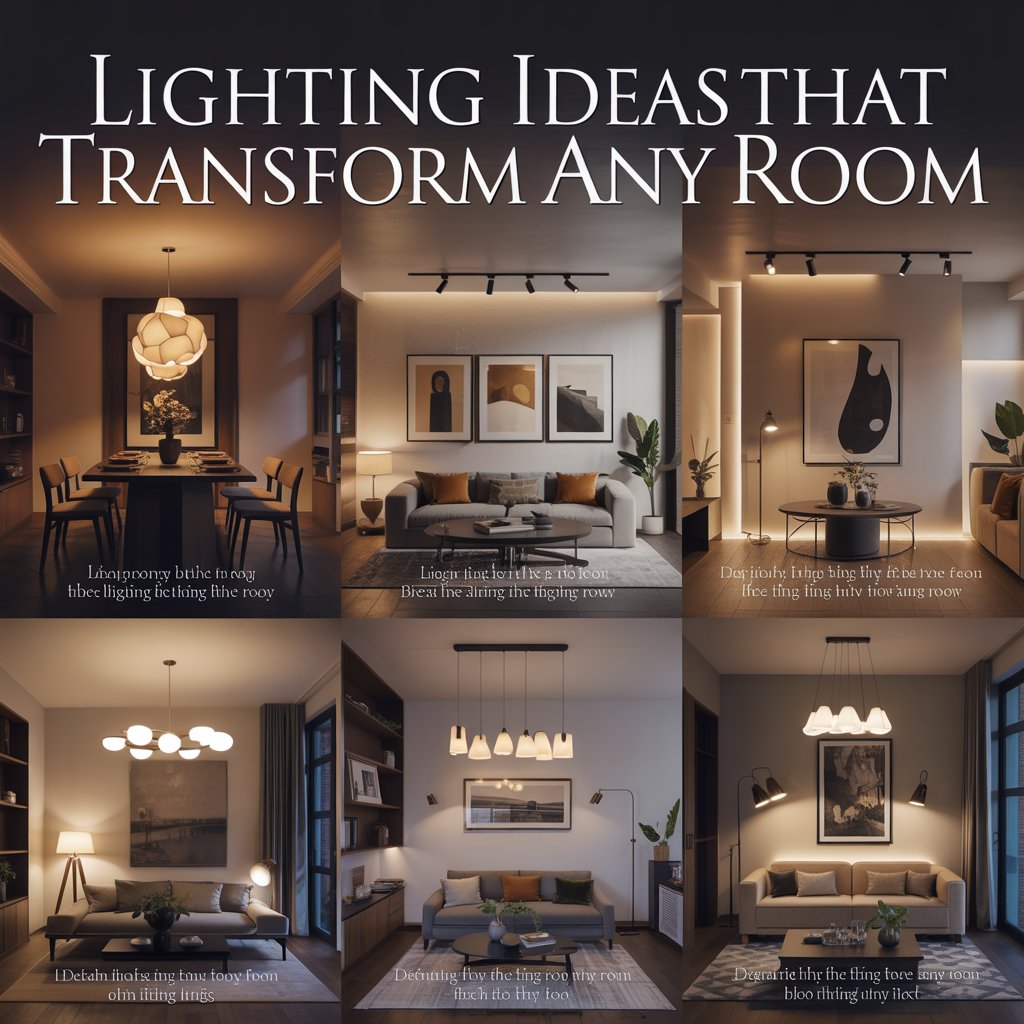
Lighting Design Principles You Actually Need
Great lighting isn’t about one spectacular fixture — it’s about layered lighting. Every well-designed room balances three types of light:
- Ambient lighting — the general, overall illumination (think recessed cans or a central chandelier).
- Task lighting — focused light for activities (under-cabinet strips in the kitchen, a swing-arm lamp by the bed).
- Accent lighting — decorative highlights that add drama (picture lights, LED strips in shelving, wall washers).
Layering is what separates a house that looks furnished from one that feels designed.
Color temperature, decoded
Bulb color is measured in Kelvin (K), and it changes a room’s entire mood:
| Temperature | Feel | Best Rooms |
|---|---|---|
| 2700K – 3000K | Warm, cozy | Living rooms, bedrooms, dining rooms |
| 3500K | Neutral, balanced | Hallways, home offices |
| 4000K – 5000K | Cool, crisp | Kitchens, bathrooms, garages |
CRI: the number most shoppers ignore
Color Rendering Index (CRI) measures how accurately a bulb shows true colors. For kitchen island lighting and closets where you pick outfits, aim for CRI 90+ — otherwise that navy shirt might look black, or the tomatoes might look sad.
Energy efficiency first
Today’s LED bulbs use 75–80% less energy than old incandescents, run cooler, and last 15–25 years. Look for the ENERGY STAR label, and shop by lumens (brightness), not watts (energy use). A 800-lumen LED replaces a 60-watt incandescent.
Room-by-Room Lighting Ideas
Living Room Lighting Ideas
Goal: A flexible, cozy space that shifts from movie-night dim to reading-bright in a single tap.
The living room is where layered lighting pays off most. Start with a central ambient source — a flush-mount, a semi-flush, or a tasteful multi-bulb chandelier — then surround it with two or three secondary sources. A pair of arc floor lamps flanking the sofa, a table lamp on a console, and a subtle LED strip behind the TV create depth that a single overhead fixture never could.
Accent lighting ideas:
- Picture lights above artwork or a gallery wall.
- Wall washers to highlight textured stone or shiplap.
- LED tape inside a bookshelf for a gallery-museum glow.
Smart upgrade: Pair warm 2700K LED bulbs with dimmer switches on every zone and, if budget allows, a programmable hub (Philips Hue or similar) to set scenes like “Evening Wind Down” or “Game Day.” Budget-friendly smart bulbs from Wyze or Govee on Amazon cost under $15 each and work with most lamps.
Budget tiers:
- Low: Swap bulbs to warm LEDs + one floor lamp (~$60–$120).
- Mid: New pendant + two table lamps + dimmer (~$250–$500).
- High: Designer chandelier, sconces, smart hub (~$800+).
A real quick win: replace an oversized “boob light” flush-mount with a woven-rattan or brass pendant from Wayfair (~$80–$180). Instant character.
Kitchen Lighting Ideas
Goal: Bright, shadow-free task light for cooking, plus warmer ambient layers for eating and entertaining.
The kitchen lives or dies by its task layer. Under-cabinet LED strips are arguably the single best upgrade here — they eliminate shadows cast by your body, they look modern, and you can install a plug-in set in an hour. Over a kitchen island, three mid-priced pendant lights spaced 24–30 inches apart deliver both function and focal point; Lowe’s and Home Depot carry excellent options in the $60–$140 range per fixture.
Recessed lighting (often called “can lights” or “high hats”) handles the ambient layer. Aim for 4000K LEDs with CRI 90+ so countertops, produce, and backsplash tile all render accurately.
Practical tips:
- Add a motion-sensor LED inside the pantry — you’ll wonder how you lived without it.
- Use dimmers on pendants so the island transitions from prep station by day to gathering spot by night.
- If you have upper cabinets that don’t reach the ceiling, uplighting above them with a simple LED strip adds warmth and makes low ceilings feel taller.
Bedroom Lighting Ideas
Goal: Calming, low-glare light that supports winding down — plus focused task light for reading.
Bedrooms are where warm 2700K bulbs earn their keep. Skip the harsh overhead and build a soft, diffuse ambient layer: a fabric-shade flush-mount, a cove-lit ceiling, or even indirect LED tape hidden behind a headboard. Add two bedside tasks — wall-mounted swing-arm sconces free up nightstand space and look elevated, while table lamps with adjustable arms are easier to install.
Bedroom lighting ideas that punch above their weight:
- A single statement pendant centered over the bed (hang 48–60 inches above the mattress).
- Plug-in sconces on either side, if hardwired isn’t an option.
- A small accent lamp or LED strip in a reading nook.
Smart upgrade: A bedside smart switch or voice-controlled bulb lets you kill lights without getting up. Pair it with a separate fan/light combo and control each independently.
Dining Room Lighting Ideas
Goal: A centered statement fixture that makes every meal feel like an occasion — with warm, flattering light.
The dining chandelier or pendant is the room’s anchor, so pick something with personality: a sputnik brass, a linen drum, a rattan basket, or a minimalist linear fixture for long tables.
Hang height: For standard 8- or 9-foot ceilings, the bottom of the fixture should sit 30–34 inches above the tabletop. Higher ceilings get an extra 3 inches per foot.
Scale rule of thumb: fixture width should be roughly one-half to two-thirds of the table width — a 36-inch-wide table pairs well with an 18–24 inch fixture.
Add dining room lighting ideas on the perimeter: a pair of buffet sconces over a credenza, or a small accent lamp. Put the main fixture on a dimmer and you can shift from weeknight homework spot to candlelit dinner in seconds.
Bathroom Vanity Lighting
Goal: Shadow-free, true-to-color light at the mirror — plus safe, low-level ambient for late-night visits.
The most common mistake here is a single light mounted above the mirror, which casts harsh downward shadows under the eyes and chin. The fix: vertical sconces on either side of the mirror mounted at roughly eye level (around 60–66 inches from the floor), or a wide lighted mirror with built-in LEDs.
Choose bathroom vanity lighting rated for damp locations (marked “damp-rated” or “wet-rated” on the box) and use 3000K–4000K LEDs with CRI 90+ for the most flattering, accurate look while applying makeup or shaving.
Add a small recessed lighting can on its own switch for ambient fill, and tuck a motion-activated nightlight near the toilet or in a toe-kick for safe 3 a.m. trips.
Small Rooms & Hallways
Goal: Make tight spaces feel bigger, brighter, and intentional rather than cramped.
Small room lighting thrives on restraint plus reflection. Swap a dated hall fixture for a slim flush-mount or a small semi-flush with a fabric shade. Add plug-in wall sconces in narrow entries where floor space is precious. Use LED tape inside built-in shelving for both function and drama.
The mirror trick: A large mirror opposite a light source doubles perceived brightness and makes hallways feel wider. Pair it with warm-neutral paint (think Benjamin Moore “Edgecomb Gray” or Sherwin-Williams “Agreeable Gray”) to keep things cozy rather than clinical.
Smart Lighting and Control Tips
Smart lighting has finally grown up, and it’s now one of the highest-impact, lowest-effort upgrades you can make. Benefits include scene-setting (“Movie Night,” “Work from Home”), scheduling lights to mimic occupancy when you travel, voice control via Amazon Alexa, Google Home, or Apple HomeKit, and meaningful energy savings.
Where to start:
- Easiest: Replace bulbs in existing lamps with Wi-Fi smart bulbs (LIFX, Govee, Wyze).
- Best value: Swap a standard wall switch for a smart dimmer (Lutron Caséta is the gold standard and works with most ecosystems).
- Best integration: Look for Zigbee or Z-Wave devices if you already run a hub; stick with Matter-compatible gear for future-proofing.
Motion sensors at entryways, mudrooms, and garages add both convenience and security. Most pay for themselves within a year in reduced runtime.
Before-and-After: A Real Living Room Makeover
Before: A 14×18 living room lit only by a single flush-mount and two 60-watt incandescent table lamps on end tables. The space felt dark, flat, and unwelcoming.
After: The flush-mount was replaced with a warm brass 5-light chandelier (Wayfair, $189). Two linen-shade floor lamps (Target, $89 each) were added by the sofa. A slim LED picture light ($59, Amazon) was mounted above a large framed print. All fixtures were put on one Lutron Caséta dimmer with a Pico remote ($65).
Result: The room felt roughly 30% larger, colors finally looked correct, and the homeowners reported using the space dramatically more in the evenings.
Cost breakdown:
- Low (~$150): Bulb swaps + one new floor lamp + plug-in dimmer.
- Mid (~$150–$800): New central fixture, two lamps, wired dimmer, accent light.
- High ($800+): Designer chandelier, hardwired sconces, full smart-home integration.
Quick Buying & Installation Checklist
Before you add anything to your cart, run through this short list:
- Measure ceiling height — this dictates fixture hang length and scale.
- Check wattage limits on every fixture you’re keeping; never exceed.
- Verify dimmer compatibility — not all LEDs work with all dimmers (Lutron’s compatibility tool online is excellent).
- Confirm electrical box size can support a heavier chandelier; upgrade if needed.
- Pick one color temperature per room and stick to it to avoid mixed tones.
- Shop by lumens, not watts, for brightness.
- Hire a licensed electrician for any new circuits, hardwired sconces, or panel work — it’s non-negotiable for safety, insurance, and resale.
Quick DIY Tips and Safety Reminders
Simple weekend wins that don’t require an electrician:
- Swap every bulb to warm, high-CRI LEDs.
- Add a plug-in arc floor lamp for instant ambiance.
- Install plug-in wall sconces (no wiring, just a discreet cord cover).
- Stick adhesive LED strips under cabinets or behind the TV.
Safety first:
- Always turn off the breaker before touching any wiring.
- Use damp-rated or wet-rated fixtures in bathrooms and outdoors.
- Don’t daisy-chain power strips; respect amp ratings.
- Call a pro for new circuits, panel upgrades, or anything you’re unsure about — it’s worth the $150 service call.
Your Turn: Start With One Room
Lighting is the single fastest way to change how a home feels — and most of the upgrades above can be done in a weekend with tools you already own. Pick one room this Saturday, change its bulbs to warm LEDs, add one new light source, and notice the difference. Then come back and tackle the next.
Which room are you lighting up first? Drop a comment below, or grab our downloadable [Lighting Buying Checklist & Top Picks for 2026] for a room-by-room shopping shortlist curated around U.S. retailers.