Why Flooring Choice Matters
Choosing the right flooring is one of the most impactful decisions you’ll make as a homeowner. It affects how your space looks, feels underfoot, holds up to daily life, and even influences your home’s resale value. With so many flooring options compared across showrooms and websites, it’s easy to feel overwhelmed. Should you splurge on solid hardwood for the living room? Is tile the smartest pick for a busy kitchen? Can budget-friendly flooring still look great and last for years?
This guide breaks down the most common residential flooring types in the U.S. — hardwood, engineered wood, tile, laminate, vinyl (including luxury vinyl plank), carpet, and eco-friendly alternatives like bamboo, cork, and concrete. We’ll walk through cost, durability, water resistance, maintenance, and style so you can match the right floor to each room, budget, and lifestyle. Whether you’re renovating a fixer-upper, updating a single bathroom, or planning a whole-home refresh, you’ll leave with a clear, practical roadmap.
Quick Comparison: Best Flooring by Need
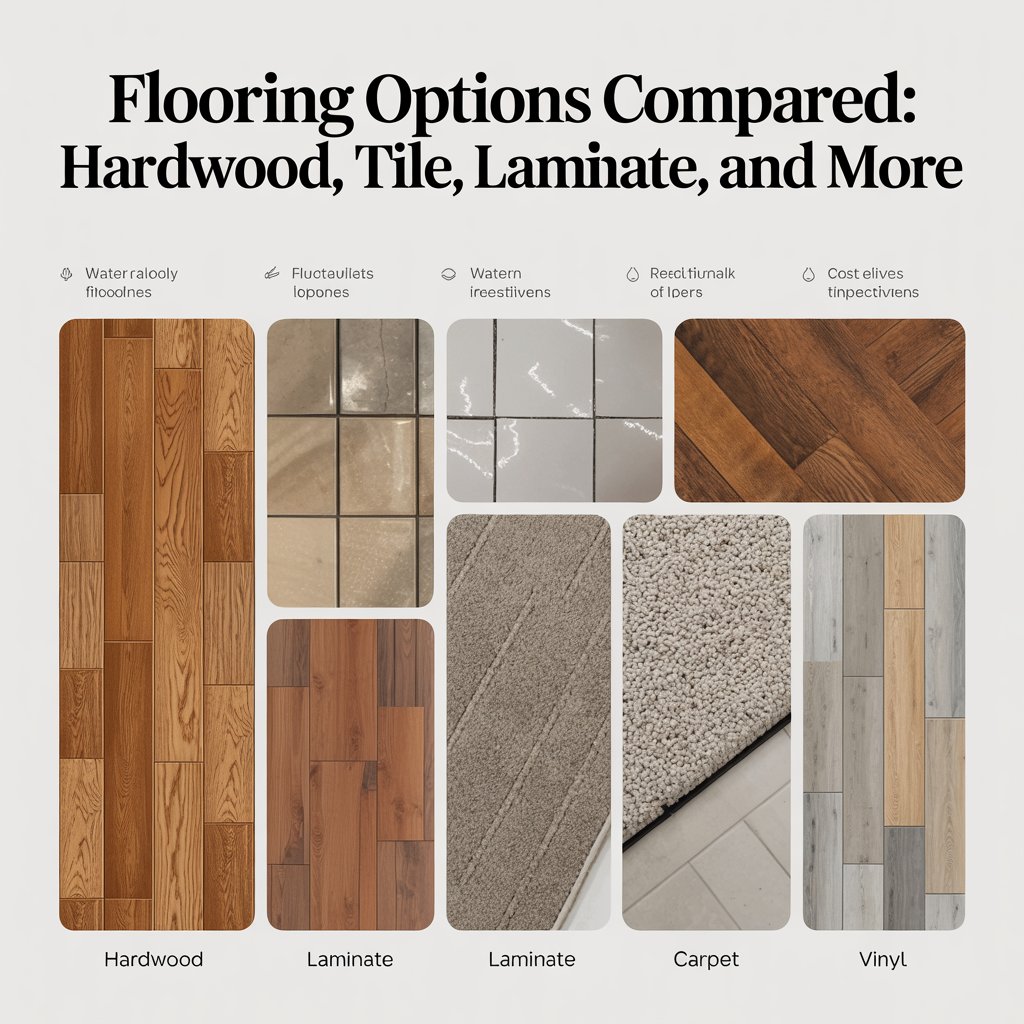
Before we dive in, here’s a scannable snapshot of every flooring type covered in this guide:
- Solid Hardwood — Best for: living rooms, bedrooms. Pro: Refinishable, timeless. Con: Not waterproof, higher cost.
- Engineered Wood — Best for: basements, over concrete. Pro: More stable than solid. Con: Limited refinishing.
- Tile (Ceramic/Porcelain) — Best for: bathrooms, kitchens. Pro: Extremely durable, waterproof. Con: Hard underfoot, grout maintenance.
- Laminate — Best for: budget updates, living areas. Pro: Affordable wood look. Con: Susceptible to water damage.
- Vinyl / LVP — Best for: kitchens, mudrooms, basements. Pro: Fully waterproof flooring, low maintenance. Con: Can feel less premium.
- Carpet — Best for: bedrooms, cozy spaces. Pro: Warm, soft, sound-dampening. Con: Stains, allergens, shorter lifespan.
- Bamboo & Cork — Best for: eco-conscious buyers. Pro: Renewable, comfortable. Con: Variable moisture resistance.
- Concrete / Specialty — Best for: modern lofts, garages. Pro: Ultra-durable, industrial style. Con: Cold, requires expert finishing.
Solid Hardwood: Timeless and Refinishable
Solid hardwood is milled from a single piece of timber — typically oak, maple, hickory, or walnut — and has been a staple of American homes for generations. It’s installed by nailing or stapling to a wood subfloor and is most commonly found in living rooms, dining rooms, bedrooms, and hallways.
Pros: Nothing matches the warmth and authenticity of real wood. Solid hardwood can be sanded and refinished multiple times over its 30+ year flooring lifespan, making it a genuine long-term investment. It consistently ranks high for resale value; buyers often expect hardwood in main living areas.
Cons: Solid hardwood is sensitive to moisture and temperature swings. It’s not recommended for bathrooms, basements, or below-grade installations. It also tends to be among the pricier options.
Cost: Expect to pay $8–$15+ per square foot installed, depending on wood species, plank width, and finish. Exotic species like Brazilian cherry can push well beyond that range. Floor refinishing typically costs $3–$8/sq ft and may be needed every 7–10 years in high-traffic homes.
Best for: Homeowners who want a classic look and plan to stay in the home long-term.
Engineered Wood: Stable and Versatile
Engineered hardwood features a real wood veneer on top of a plywood or HDF core, giving it far greater dimensional stability than solid wood. This construction is one of the key engineered hardwood benefits — it resists warping from humidity changes and can be installed over concrete slabs, radiant heating systems, and in some below-grade spaces.
Pros: You get authentic hardwood aesthetics with more installation flexibility. It’s available in nail-down, glue-down, and floating floor installation formats. Many products come prefinished, reducing on-site dust and labor time.
Cons: The top veneer layer is usually 0.5–6 mm thick, which limits how many times you can refinish it — often only once or twice over a 20–30 year lifespan. Cheaper options with thin veneers can’t be refinished at all.
Cost: National averages run $4–$10 per square foot installed. Higher-end engineered products from established manufacturers can rival solid hardwood in both price and performance.
Best for: Homeowners who want real wood in moisture-prone areas like kitchens, finished basements, or over concrete.
Tile (Ceramic vs. Porcelain): Durable and Water-Friendly
Tile remains one of the most durable and moisture-resistant flooring options available. The debate of ceramic vs. porcelain tile comes down to density: porcelain is fired at higher temperatures from finer clays, making it denser, less porous, and more suitable for heavy-traffic and outdoor areas. Ceramic tile is slightly softer and often less expensive, making it a solid choice for bathroom walls and low-traffic floors.
Pros: Tile is fully waterproof, stain-resistant, and can last 50+ years with basic care. It works beautifully with radiant heat systems and comes in a nearly limitless range of colors, sizes, and patterns — including wood-look and stone-look planks.
Cons: Tile is hard and cold underfoot, which can be uncomfortable for long standing periods. Dropped dishes are more likely to break. Grout sealing is essential and should be repeated every 1–2 years to prevent staining and mildew.
Cost: Installed costs range from $5–$15 per square foot, with high-end porcelain, large-format tiles, and intricate patterns pushing higher.
Best for: Bathrooms, kitchens, laundry rooms, and any space where tile vs vinyl comparisons come up — tile wins on longevity, while vinyl wins on comfort and cost.
Laminate: Budget-Friendly Wood Look
Laminate flooring is a multi-layer synthetic product with a photographic image layer (usually mimicking wood or stone) protected by a clear wear layer, all bonded to an HDF core. It was one of the first affordable alternatives to hardwood and remains a popular pick for cost-conscious renovators.
Pros: Laminate is one of the most budget-friendly flooring options, often installed as a floating floor with click-lock planks that make DIY floating floor installation straightforward. It resists scratches well, making it a reasonable option for durable flooring for pets.
Cons: Traditional laminate is not waterproof — prolonged exposure to moisture causes swelling at the seams. Newer “water-resistant” laminates have improved, but they still can’t match true waterproof flooring like vinyl. Once damaged, planks must be replaced rather than refinished.
Cost: Typically $2–$6 per square foot installed, making it one of the most affordable hard-surface options.
Lifespan: 10–25 years depending on quality and AC (abrasion class) rating.
Best for: Living rooms, home offices, and rental properties where budget matters and moisture is controlled.
Vinyl and LVP: Waterproof and Low-Maintenance
Vinyl flooring has evolved dramatically. Modern luxury vinyl plank (LVP) and luxury vinyl tile (LVT) feature realistic wood and stone visuals, textured surfaces, and fully waterproof cores — typically SPC (stone plastic composite) or WPC (wood plastic composite). In the hardwood vs laminate and tile vs vinyl debates, LVP often emerges as the pragmatic winner for busy households.
Pros: LVP is 100% waterproof, comfortable underfoot, and highly resistant to scratches and dents. The wear layer LVP includes (usually 12–22 mil for residential) determines scratch resistance — thicker is better for homes with dogs or kids. Installation is almost always floating/click-lock, making it beginner-friendly.
Cons: While high-end LVP looks remarkably realistic, some buyers still perceive it as less premium than real hardwood or tile. It cannot be refinished; damaged planks are simply swapped out.
Cost: Installed prices range from $2–$8 per square foot, with the upper range covering premium LVP with thick wear layers and attached underlayment.
Lifespan: 10–30 years depending on wear layer thickness and traffic.
Best for: Kitchens, bathrooms, mudrooms, basements, and pet-friendly homes. If you have a busy household with kids and pets and a mid-range budget ($2–6/sq ft), consider LVP for mudrooms and kitchens.
Carpet: Comfort and Warmth
Carpet is a textile floor covering available in cut pile (plush, frieze), loop pile (Berber), and cut-and-loop constructions. It remains the go-to choice for bedrooms, finished basements, and any room where softness and warmth are priorities.
Pros: Carpet is unmatched for comfort, sound absorption, and thermal insulation — a big plus in cold climates. Modern stain-resistant fibers (like solution-dyed nylon and polyester) handle spills far better than older carpets. It’s also one of the most affordable options to install.
Cons: Carpet traps dust, pet dander, and allergens, requiring regular vacuuming and professional deep cleaning every 12–18 months. It’s not moisture-friendly and can harbor mold if water-damaged. Its shorter lifespan (5–15 years) and trend-sensitive styling mean it’s replaced more often than hard surfaces.
Cost: $2–$6 per square foot installed, though premium wool or high-density nylon carpets can exceed that range.
Best for: Bedrooms, upstairs hallways (for noise reduction), and cozy living areas in colder regions.
Bamboo & Cork: Eco-Friendly Alternatives
Click to expand: Sustainable flooring options gaining popularity
Both bamboo and cork are renewable, eco-friendly flooring choices with distinct personalities.
Bamboo is technically a grass, not a wood, and regenerates in 3–5 years — far faster than hardwood trees. Strand-woven bamboo is especially hard (harder than many oak species) and suitable for high-traffic areas. It’s available in natural, carbonized (darker), and stained finishes.
Cork is harvested from the bark of cork oak trees without killing the tree, and the bark regenerates every 9–10 years. It’s naturally antimicrobial, hypoallergenic, warm, and springy underfoot — excellent for kitchens where you stand for long periods.
Shared pros: Renewable materials, comfortable feel, unique aesthetics, lower VOC emissions when finished with water-based sealers.
Shared cons: Both are susceptible to fading in direct sunlight and can be damaged by prolonged moisture. Cork requires resealing every few years, and lower-quality bamboo products may off-gas formaldehyde from adhesives — always check certifications like FloorScore or GREENGUARD.
Cost: $3–$8 per square foot installed.
Lifespan: 20–30 years with proper care.
Best for: Eco-conscious homeowners, home offices, playrooms, and kitchens (cork).
Concrete and Specialty Floors: Modern and Industrial
Click to expand: Polished concrete, resin, and specialty options
Once reserved for garages and commercial spaces, polished concrete and resin (epoxy) floors are increasingly showing up in modern U.S. homes — particularly in lofts, contemporary builds, and renovated industrial buildings.
Polished concrete involves grinding an existing slab to a smooth, glossy finish, often with integral color or stains. It’s nearly indestructible, low-maintenance, and pairs beautifully with radiant heating. The main drawback is that it’s cold and very hard underfoot, and area rugs become essential for comfort.
Epoxy/resin floors are poured coatings applied over concrete, creating seamless, chemical-resistant surfaces popular in garages, workshops, and increasingly in kitchens and bathrooms for a sleek, modern aesthetic.
Cost: $3–$12+ per square foot, depending heavily on prep work (grinding, crack repair, moisture mitigation) and finish complexity. Stamped or stained decorative finishes add to the price.
Lifespan: 50+ years for polished concrete; 10–20 years for epoxy.
Best for: Modern/industrial-style homes, garages, basements, and homeowners who value durability over warmth.
Basement flooring options often include polished concrete (if the slab is in good shape), LVP, or engineered wood with a moisture barrier.
Best Flooring by Room
| Room | Top Recommendations | Why |
|---|---|---|
| Kitchen | Tile, LVP, engineered wood | Must handle spills, dropped items, and heavy foot traffic. Best flooring for kitchen areas balances durability with comfort. |
| Bathroom | Porcelain tile, LVP | Fully waterproof is non-negotiable. Tile for longevity, LVP for warmth and budget. |
| Living Room | Solid hardwood, engineered wood, LVP | Style and resale value lead here. Hardwood remains the gold standard. |
| Bedroom | Hardwood, carpet, LVP | Comfort and warmth matter most. Carpet for coziness, hardwood for broad appeal. |
| Basement | LVP, engineered wood, tile, polished concrete | Moisture is the enemy below grade. Avoid solid hardwood and standard laminate. Basement flooring options must tolerate concrete subfloors and potential dampness. |
| Entry / Hallway | Tile, LVP, hardwood | High traffic and dirt/moisture tracked in from outdoors. Durable and easy to clean wins. |
| Pet-Friendly Homes | LVP, tile, laminate (water-resistant) | Durable flooring for pets needs scratch resistance and easy cleanup. Avoid carpet in pet-heavy rooms. |
Costs, Lifespan, and Warranties
Click to expand: National average cost table
| Flooring Type | Installed Cost (per sq ft) | Expected Lifespan |
|---|---|---|
| Solid Hardwood | $8 – $15+ | 30+ years (with refinishing) |
| Engineered Wood | $4 – $10 | 20 – 30 years |
| Tile (Ceramic / Porcelain) | $5 – $15+ | 50+ years |
| Laminate | $2 – $6 | 10 – 25 years |
| Vinyl / LVP | $2 – $8 | 10 – 30 years |
| Carpet | $2 – $6 | 5 – 15 years |
| Bamboo / Cork | $3 – $8 | 20 – 30 years |
| Concrete / Specialty | $3 – $12+ | 20 – 50+ years |
Cost per square foot varies significantly by region. Major metro areas (NYC, San Francisco, Seattle) often run 20–40% above national averages due to higher labor rates, while rural areas may come in below.
Warranties: Most luxury vinyl plank and laminate products carry 15–30 year residential wear warranties, but read the fine print — many exclude damage from improper installation, standing water (even on “waterproof” products), or use of non-approved cleaners. Hardwood warranties typically cover finish defects for 25–50 years but exclude normal wear and scratches.
Long-term value: Tile and solid hardwood cost more upfront but often deliver the best cost-per-year over their lifespan. Carpet and budget laminate may seem cheap but need replacement far more often.
Installation Tips and Maintenance
DIY vs. Professional: Floating floors (laminate, most LVP, some engineered wood) are the most DIY-friendly — click-lock planks require no glue or nails. Solid hardwood (nail-down) and tile (thinset mortar) demand more skill and are usually best left to professionals. A poor install can void warranties and shorten lifespan significantly.
Subfloor prep matters: Every flooring type needs a clean, level, dry subfloor. For basement flooring options, always test for moisture (calcium chloride test or relative humidity probe) and install a vapor barrier if readings exceed manufacturer limits. Concrete slabs should be checked for cracks and leveled with self-leveling compound where needed.
Acclimation: Solid and engineered wood must acclimate to your home’s temperature and humidity for 3–7 days before installation. Skipping this step is a leading cause of cupping and gapping.
Maintenance basics: Sweep or vacuum hard surfaces regularly to prevent abrasive grit buildup. Use felt pads under furniture. Grout sealing on tile floors should be done at install and redone every 1–2 years. Hardwood benefits from area rugs in high-traffic zones and floor refinishing when the finish wears through.
Sustainability and Resale Impact
Click to expand: Environmental and home-value considerations
If eco-friendly flooring matters to you, prioritize FSC-certified hardwood, rapidly renewable materials (bamboo, cork), or products with FloorScore/GREENGUARD certifications for low VOC emissions. Recycled-content tile and reclaimed wood are also excellent choices.
From a resale perspective, real hardwood (solid or engineered) in main living areas continues to deliver the strongest buyer appeal in most U.S. markets. LVP has gained significant acceptance, especially in family-oriented homes, while carpet in main living areas can be a turn-off for buyers who plan to replace it immediately.
Flooring Decision Checklist
Use this quick checklist before you buy:
- ☐ Define your budget per square foot (installed, not just materials).
- ☐ Rank your priorities: waterproofing, comfort, resale, eco-friendly, or budget.
- ☐ Match flooring to each room’s moisture and traffic level.
- ☐ Test subfloor moisture — especially in basements and over concrete.
- ☐ Get 2–3 installed quotes from reputable contractors.
- ☐ Read warranty fine print — what’s excluded?
- ☐ Order samples and live with them in your space for 48+ hours.
Choosing flooring is a big decision — but it doesn’t have to be a stressful one. With the right information, you can balance beauty, durability, and budget in every room. Have a specific project in mind? Drop your room type and budget in the comments below, or use our free flooring cost calculator to get a personalized estimate for your home.