
You moved into your home because of that gorgeous vaulted ceiling, the flood of natural light, the sense of openness. But a few months in, something feels off. The sofa looks like a dollhouse prop. The walls tower above your furniture like canyon cliffs. Sound bounces off every hard surface. The room looks impressive in photos but doesn’t feel like a place you want to curl up with a book on a Tuesday evening.
If that sounds familiar, you’re not alone. Figuring out how to decorate a high-ceiling living room is one of the most common challenges homeowners face in open-concept homes, two-story great rooms, and spaces with cathedral or vaulted ceilings.
The good news: the fix isn’t buying more stuff or covering every inch of wall. It’s about creating visual layers, choosing the right scale, defining your seating zone, and adding warmth through lighting, textiles, color, and natural materials. Whether your style leans modern, farmhouse, traditional, rustic, or transitional, the strategies below will help you turn that echoey, formal-feeling space into a cozy high-ceiling living room you actually want to live in.
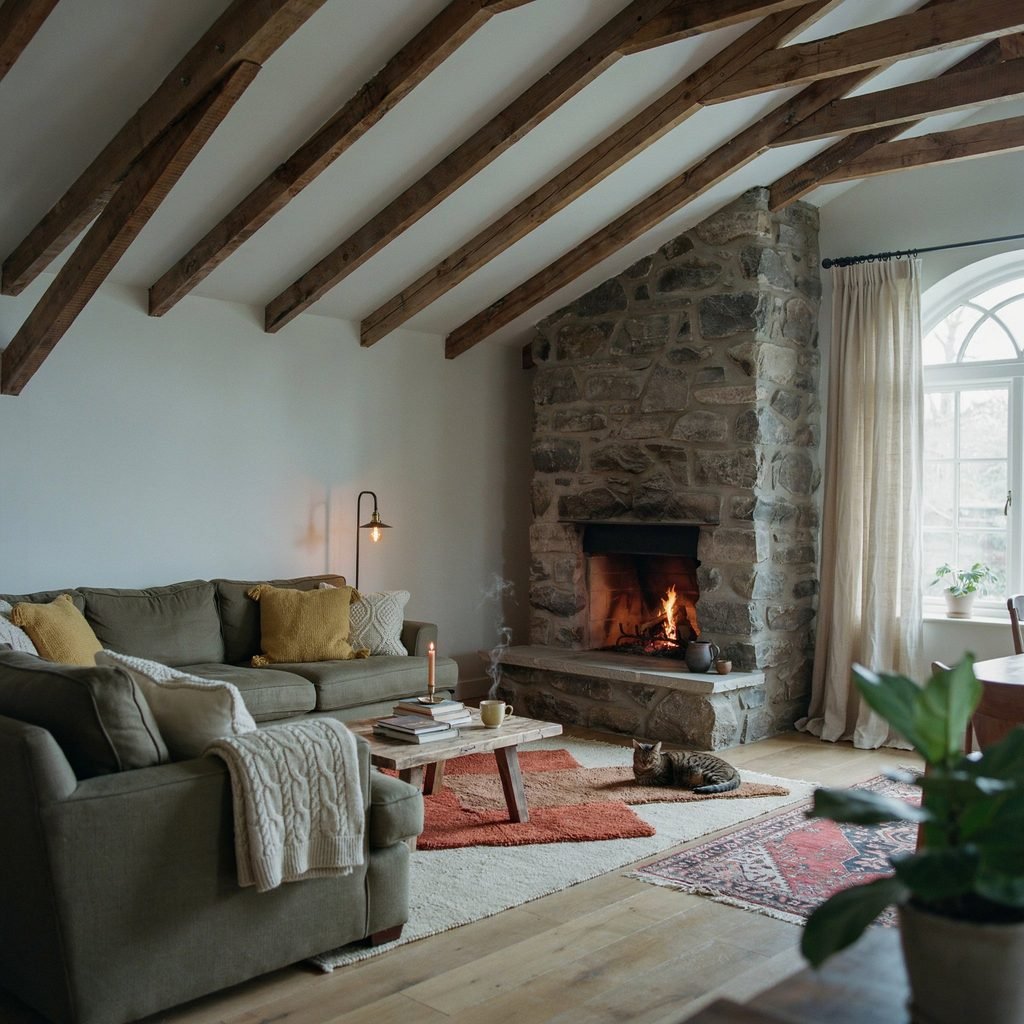
1. Start by Understanding Scale and Proportion
The single biggest reason a tall room feels cold is a mismatch between the room’s volume and the size of everything inside it. A standard 84-inch sofa, a 5-by-7 rug, a small framed print, and a 20-inch table lamp can all disappear visually when your ceiling peaks at 14 or 18 feet.
High ceilings require larger visual anchors. Your furniture should feel substantial enough to hold the room’s width and height. The seating area needs to feel grounded even though the ceiling is far overhead.
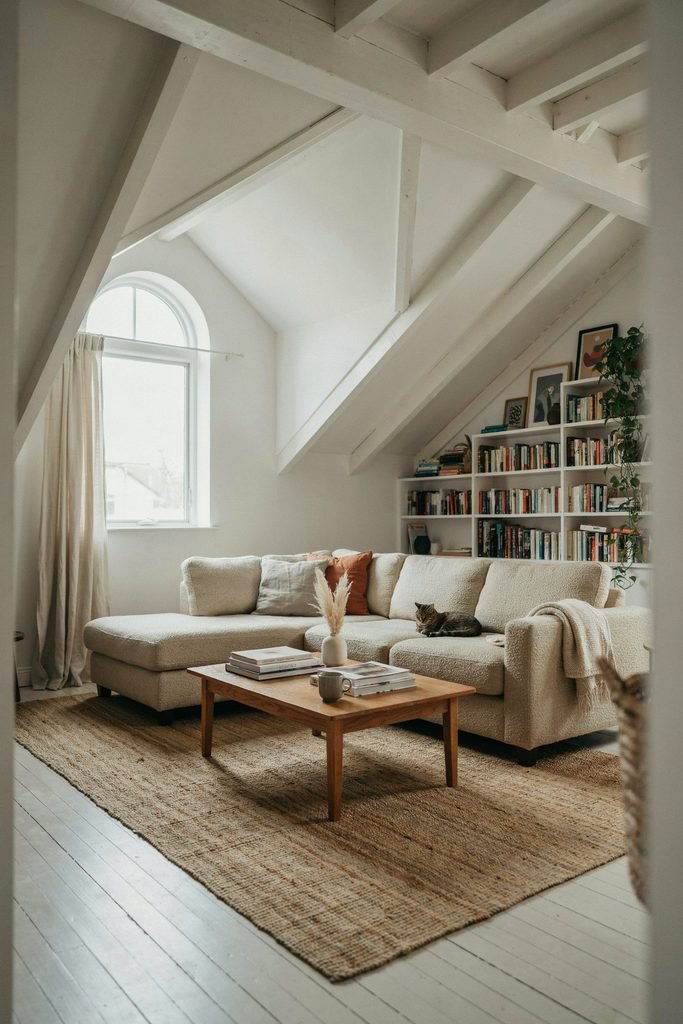
That doesn’t mean you need to fill every vertical inch of wall. Instead, aim for a balanced composition that visually links the lower furniture zone with the taller portions of the room. Think of it as creating a conversation between the floor-level seating and the upper walls—so your eye travels smoothly upward rather than hitting a void.
In practice, this means choosing a sectional or deep sofa over a slim apartment-sized couch, selecting a substantial coffee table, and making sure your décor has enough presence to match the room’s proportions. Scale and proportion in interior design aren’t about rules; they’re about making sure nothing looks accidentally lost.
2. Use a Large Area Rug to Ground the Room
An appropriately sized area rug for a large living room is one of the fastest, most affordable ways to make the space feel intimate. A small rug floating in the middle of an expanse of hardwood emphasizes emptiness. A large rug pulls the furniture together and says, “This is a defined, purposeful space.”
Here’s a practical guideline: choose a rug large enough that at least the front legs of your sofa and chairs sit on it. In most high-ceiling living rooms, that means an 8-by-10-foot, 9-by-12-foot, or even 10-by-14-foot rug. A small accent rug under just the coffee table rarely does the job.
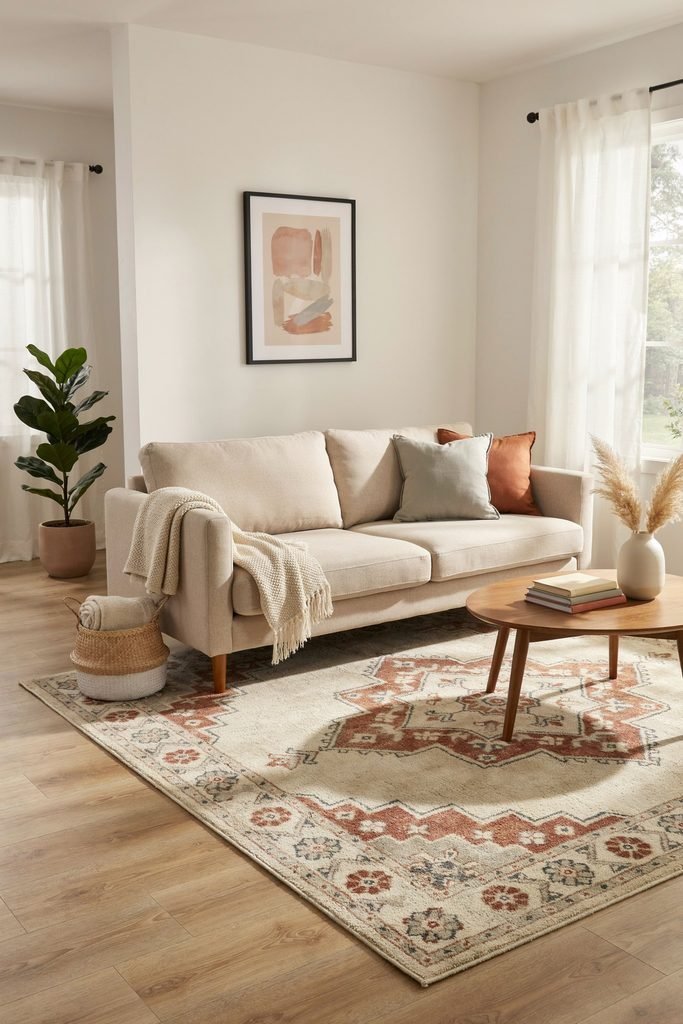
Avoid a rug that sits disconnected from the seating. The sofa, chairs, and coffee table should all visually “belong” to the rug.
For warmth, lean into textured materials: wool, a chunky flatweave, a vintage-inspired patterned rug, or a plush pile. Layering a smaller patterned rug over a larger jute or sisal base adds softness and visual interest without looking cluttered.
In a two-story living room with a 10-foot sectional, for example, pair the seating area with a 9-by-12-foot rug and a large pendant or chandelier overhead. Suddenly the conversation zone feels anchored and human-scale, even with 20 feet of air above.
3. Create a Cozy Seating Zone Instead of Decorating the Entire Room at Once
One of the most common mistakes in large living room decorating ideas is trying to make the whole space serve one purpose. Instead, define a clear seating arrangement.
Pull furniture away from the walls when possible. Arrange sofas and chairs around a coffee table, fireplace, or another focal point so the group feels self-contained. In very large rooms, consider two seating zones—a primary conversation area and a smaller reading nook or window-side pair of chairs.
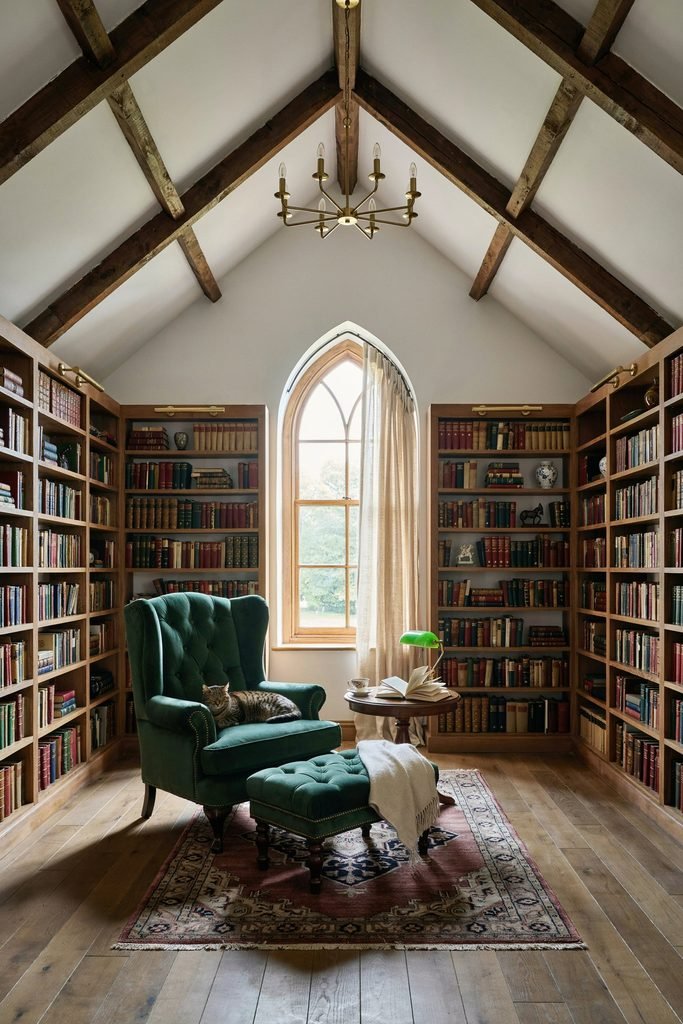
Complete the arrangement with an accent chair, upholstered ottoman, bench, or a console table behind the sofa for structure. Choose a larger coffee table or nested tables so the center of the grouping doesn’t look bare.
The goal is a cozy seating arrangement that prioritizes conversation and comfort. You don’t need every corner of the room to serve the sofa. Let the space breathe around the edges while the seating zone feels tight and inviting.
4. Choose Furniture With Enough Presence
Furniture for a high-ceiling living room should have visual weight. A deeper sofa, a sectional with a chaise, or a piece with a taller back holds its own under tall ceilings far better than a low-profile, delicate frame.
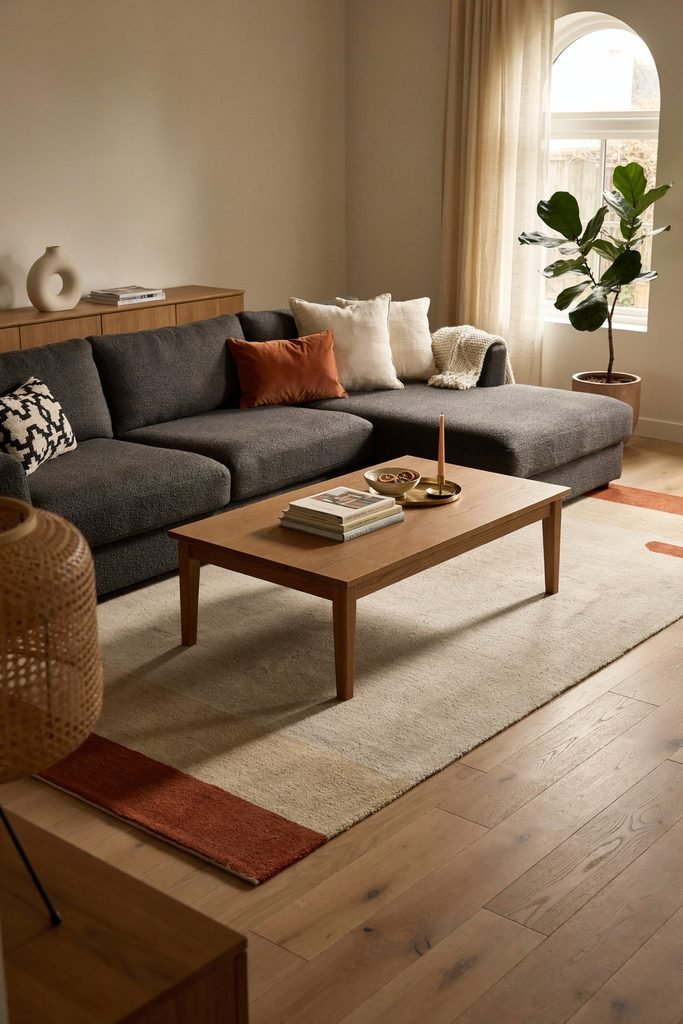
Upholstered chairs with substantial silhouettes outperform spindly accent chairs in these rooms. Tall bookcases, armoires, cabinets, or built-ins bring welcome visual weight to otherwise bare vertical walls. A wider media console or a thoughtfully styled fireplace mantel keeps the lower half of the room from feeling sparse.
That said, balance is key. You want breathing room between pieces so the space doesn’t tip into overcrowding. And remember: “large-scale” doesn’t mean expensive. Two or three well-proportioned pieces will always outperform a dozen small, fussy items.
5. Add Layers of Warm Lighting
If you rely on a single recessed-can ceiling fixture, your room will feel flat and cold after sunset. High-ceiling living room lighting needs layers at multiple heights to fill the vertical space with warmth.
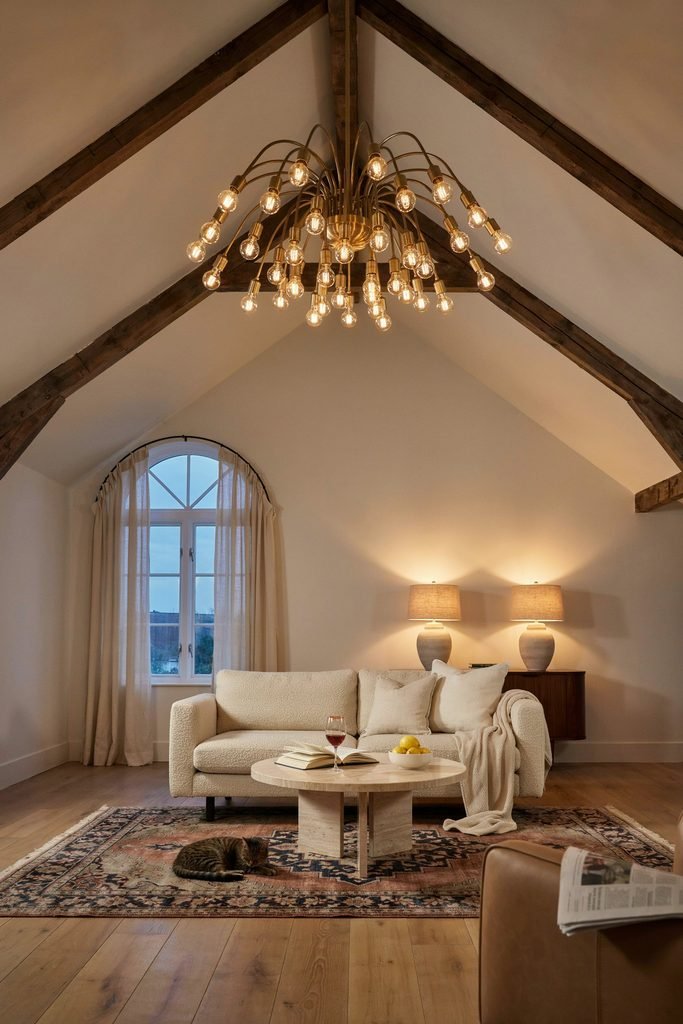
Ambient lighting: A statement chandelier or oversized pendant light visually fills some of that vertical gap. Hang it at an appropriate height—generally 30 to 36 inches above a coffee table or 7 feet above the floor in a walkway. In very tall rooms, a multi-tier chandelier or a cluster of pendant lights works beautifully.
Task lighting: Floor lamps beside reading chairs, table lamps on side tables, and a lamp on the console behind the sofa keep the lower half of the room lit and inviting.
Accent lighting: Wall sconces, picture lights over artwork, candles on the mantel, or subtle LED strips behind shelving add glow without glare.
Use warm-white bulbs (2700K to 3000K) rather than cool, bluish tones. Install dimmer switches so you can shift from bright family-evening lighting to a soft, cozy glow.
A practical note: for fixtures mounted 12 feet or higher, consider professional installation and plan ahead for bulb changes. A statement chandelier is gorgeous, but not if you need a 10-foot ladder every time a bulb goes out.
6. Use Floor-to-Ceiling Curtains to Add Softness
Window treatments for high ceilings do more than block light—they soften hard edges, absorb sound, and add a layer of fabric that instantly makes a room feel warmer.
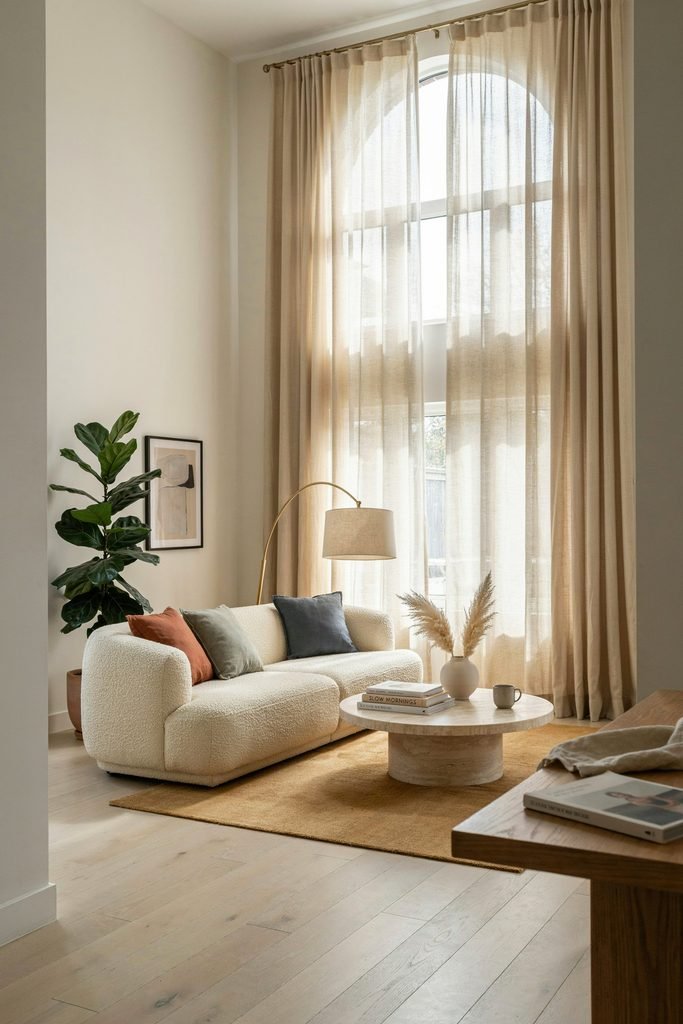
Hang curtain rods as close to the ceiling as practical rather than just above the window frame. Floor-to-ceiling curtains emphasize height in a polished, intentional way while adding softness and movement to the wall.
Choose linen, cotton blends, velvet, or insulated drapery panels depending on the look and climate you’re after. Warm neutrals, earthy shades, muted patterns, or colors that echo your rug and upholstery keep the palette cohesive. Layering sheer panels under heavier drapes gives you light control, privacy, and depth.
You don’t need curtains on every wall. Use them intentionally around large windows, sliding doors, or dramatic architectural openings for maximum effect.
7. Decorate Tall Walls With Intention
When you decorate tall walls, resist the urge to scatter small frames at random heights. That approach emphasizes how much empty wall you have rather than resolving it.
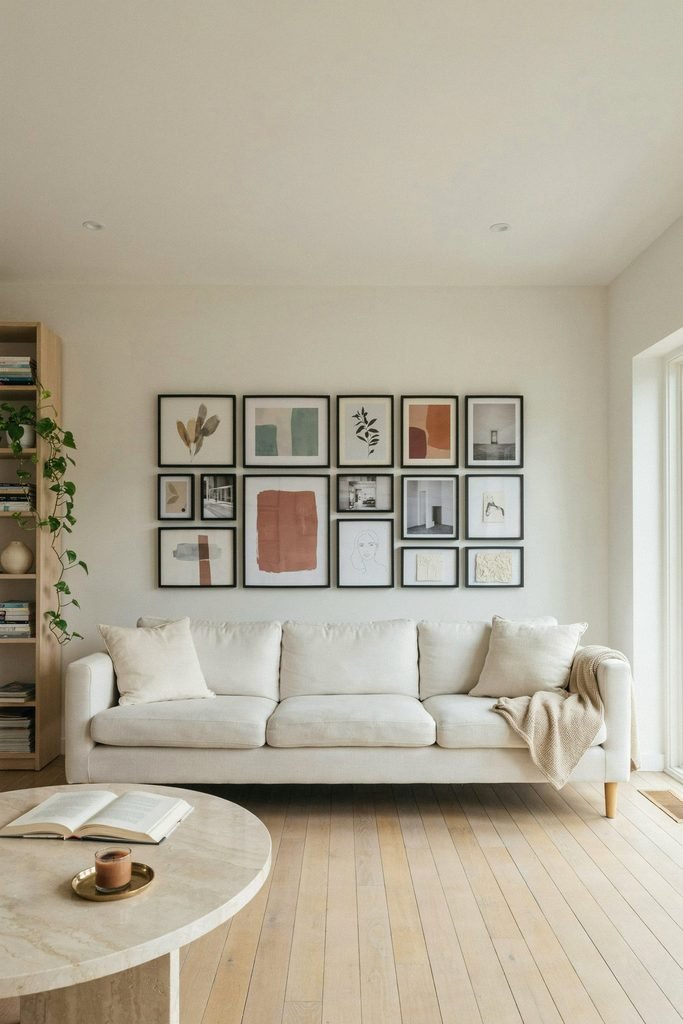
Strong tall living room wall decor options include:
- One piece of oversized wall art or large-scale artwork above the sofa
- A gallery wall for tall ceilings with a clear grid or salon-style layout
- A diptych or triptych of coordinated pieces
- A large mirror to bounce natural light around the room
- A textile wall hanging, sculptural metal piece, or statement clock
- Tall bookcases or built-in shelving that draw the eye upward gradually
Placement matters. Keep artwork visually connected to the furniture beneath it—leave roughly 6 to 10 inches between the top of the sofa and the bottom of the frame. Let a tall arrangement rise upward in stages rather than isolating one tiny picture near the ceiling. And leave intentional negative space. Not every square foot needs coverage.
8. Bring Warmth Upward With Paint, Wood, and Architectural Detail
Color and material choices can visually “lower” a ceiling and connect the floor to the walls.
Warm paint colors—soft whites, beige, greige, taupe, muted clay, warm gray, or soft olive—reduce the sterile feel that cool, blue-based whites sometimes create. Painting an accent wall behind the fireplace, sofa, or media console adds depth without overwhelming the room.
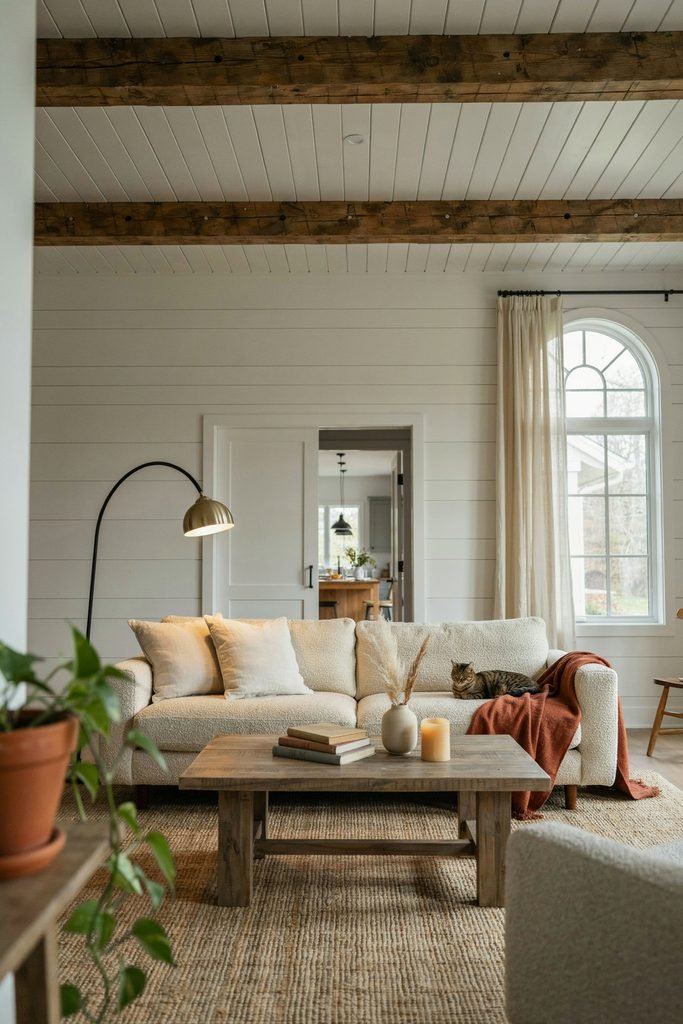
Architectural detail breaks up large flat surfaces. Board-and-batten, picture-frame molding, vertical paneling, or shiplap can give a tall wall rhythm and texture. Wood ceiling beams—structural or decorative—add warmth overhead and suit farmhouse, rustic, and transitional styles beautifully.
In some rooms, a slightly darker ceiling color makes the space feel cozier and more enclosed. Brick, stone, plaster, or textured finishes around a fireplace or focal wall add tactile interest.
A quick caution: dark colors and heavy treatments can shrink a room. Test large paint samples on the wall and observe them at different times of day before committing, especially if natural light is limited.
9. Add Texture Through Textiles and Natural Materials
Echo and visual coldness often come from an abundance of hard, smooth surfaces: tall drywall, glass, tile, hardwood, concrete. Texture is the antidote.
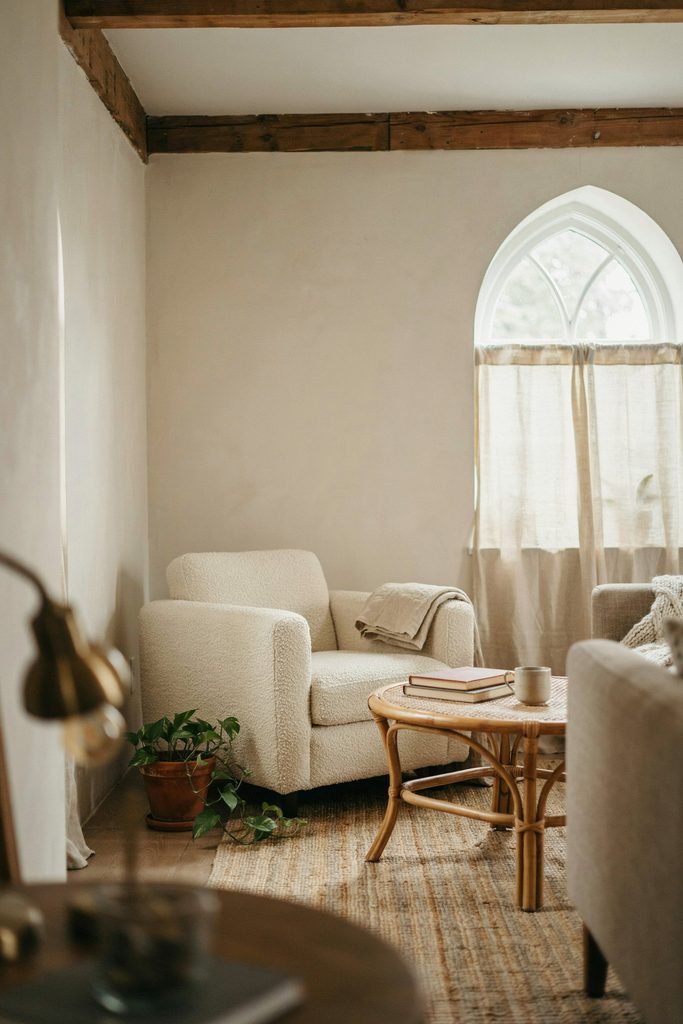
Layer in throw blankets, oversized pillows, upholstered ottomans, woven baskets, wood furniture, leather accents, and linen drapes. Mix fabrics like bouclé, wool, velvet, and chunky knits. Incorporate stone, rattan, cane, jute, and ceramic decor.
The trick is coordinating these textures within a limited color palette so the room feels layered and lived-in rather than cluttered. Three to five textures in two or three complementary tones create a cozy, collected look.
10. Use Plants and Vertical Elements
Indoor trees and large houseplants soften vertical space and make a tall room feel alive. Fiddle-leaf figs, rubber trees, bird-of-paradise plants, palms, and olive trees work well in bright rooms. For low-light corners, realistic faux trees or tall branches in oversized floor vases deliver the same effect without maintenance.
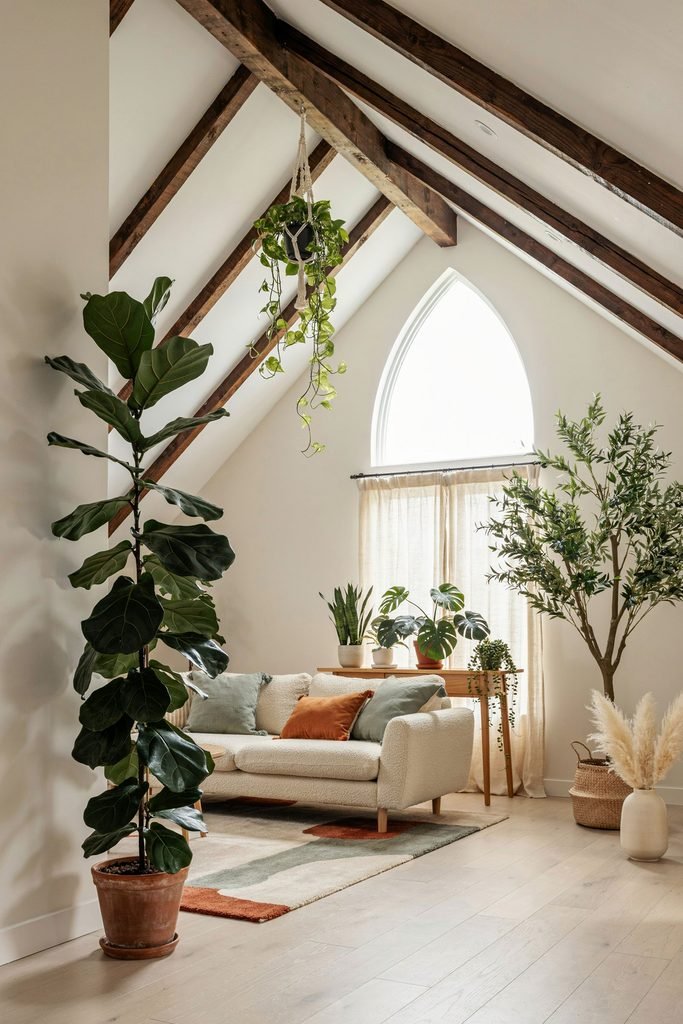
Other vertical elements—large leaning mirrors, tall bookcases, a decorative ladder draped with a throw, or a vertical art arrangement—draw the eye upward in a natural, organic way rather than leaving that space stark.
Match live plants to your room’s light conditions and your willingness to water and prune them. A struggling, half-dead fiddle-leaf fig won’t add the warmth you’re after.
11. Make the Fireplace or Main Wall a Strong Focal Point
If your room has a fireplace, let it anchor everything. Style the mantel with one large mirror or a single piece of art rather than a row of small objects. Extend tile, stone, wood, or paneling upward for a more dramatic fireplace wall. Flank it with built-in shelves or cabinets for visual balance.
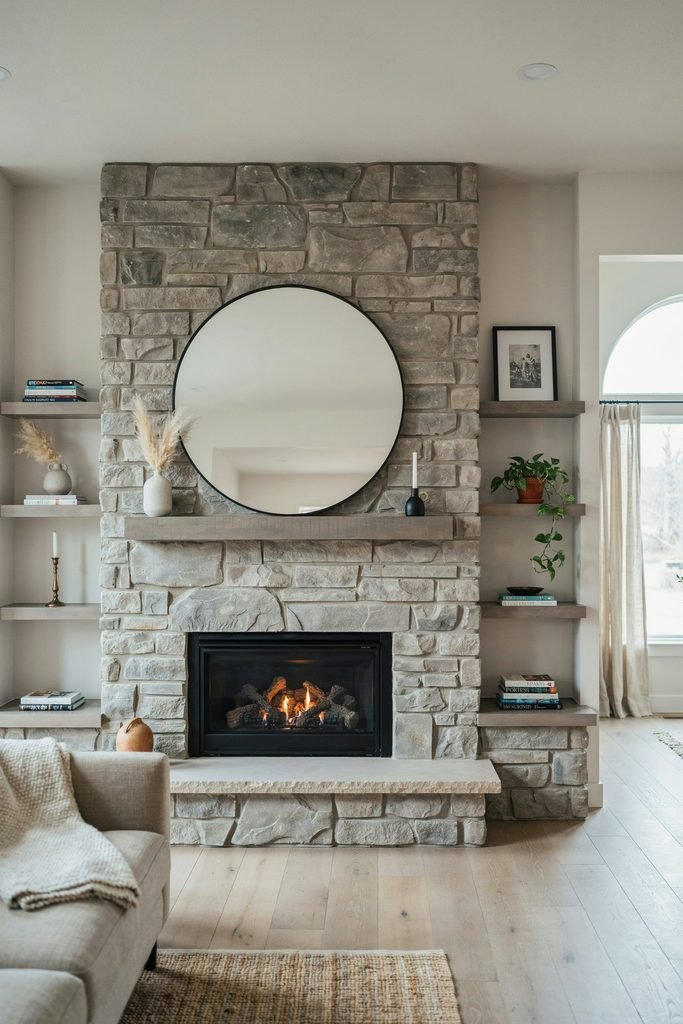
For rooms without a fireplace, create a focal point with a media wall framed by shelving, a large artwork installation, a feature wallpaper wall, or a bookcase wall. The key is giving the eye one clear place to land so the room feels composed rather than scattered.
12. Avoid These Common High-Ceiling Decorating Mistakes
- Using a rug that’s too small for the seating area
- Choosing furniture that’s too low or delicate for the room’s volume
- Relying solely on overhead lighting
- Hanging small art too high, disconnected from the furniture below
- Pushing all furniture against the walls
- Filling the room with many tiny accessories instead of fewer larger pieces
- Ignoring window treatments
- Leaving tall walls completely blank
- Over-filling upper walls and creating visual clutter
- Sticking exclusively to cool gray, white, black, glass, and metal without warm materials
Frequently Asked Questions
How do you make a living room with high ceilings feel cozy?
Layer warm lighting at multiple heights, use a large area rug to define the seating zone, add floor-to-ceiling curtains, incorporate textured textiles, choose furniture with enough visual weight, and introduce warm paint colors or natural wood elements. The combination of these strategies reduces echo and visual emptiness.
What should I put on tall living room walls?
Opt for large-scale artwork, a well-planned gallery wall, an oversized mirror, tall bookcases, textile hangings, or architectural paneling. Keep pieces visually connected to the furniture below and avoid scattering small frames at random heights.
What size rug works best in a large living room?
Aim for a rug large enough that the front legs of your sofa and chairs rest on it. In most high-ceiling living rooms, that means at least 8 by 10 feet, and often 9 by 12 or larger. The rug should connect the seating pieces, not float independently beneath just the coffee table.
Should curtains go all the way to the ceiling in a high-ceiling room?
Yes, in most cases. Hanging rods close to the ceiling and using floor-to-ceiling curtains creates a polished, intentional look while adding softness and reducing the cold, hard feeling of tall walls. It emphasizes height gracefully rather than chopping the wall into awkward sections.
Conclusion: Create Comfort at Human Scale
Learning how to decorate a high-ceiling living room isn’t about fighting the height or shrinking the space into something it’s not. It’s about building warmth, connection, and intention at the level where you actually live—sitting, reading, gathering, and resting.
Start with one or two changes that address your room’s biggest gap. Maybe it’s a larger area rug that finally grounds the seating. Maybe it’s swapping harsh overhead lighting for layered, warm fixtures. Maybe it’s floor-to-ceiling curtains, one oversized piece of art, or pulling the sofa off the wall.
Take a look around your room and identify the main issue: poor scale, empty walls, weak lighting, lack of texture, or an undefined seating area. Tackle that first. Then layer in the next solution. Before long, that soaring, echoey space will feel like the cozy, intentional living room you always imagined—one where the tall ceilings add grandeur without stealing your comfort.
