
Between open-concept floor plans, work-from-home setups, and the constant hum of notifications, most of us crave a living space that feels like a deep exhale. Japandi living room ideas offer exactly that—a design philosophy that borrows the quiet restraint of Japanese minimalism and pairs it with the cozy functionality of Scandinavian living. The result is a room that feels warm, intentional, and refreshingly free of visual clutter.
Whether you’re furnishing a compact apartment, refreshing a family living room, or simply tired of decor that feels loud and disposable, Japandi interior design gives you a clear path toward a calming living room design without requiring a full renovation. It rewards natural materials, soft lighting, and fewer-but-better choices.
This guide walks you through 15 specific, actionable Japandi style living room ideas—complete with material suggestions, layout tips, and budget-friendly swaps—so you can build a peaceful home decor scheme that actually fits your life.
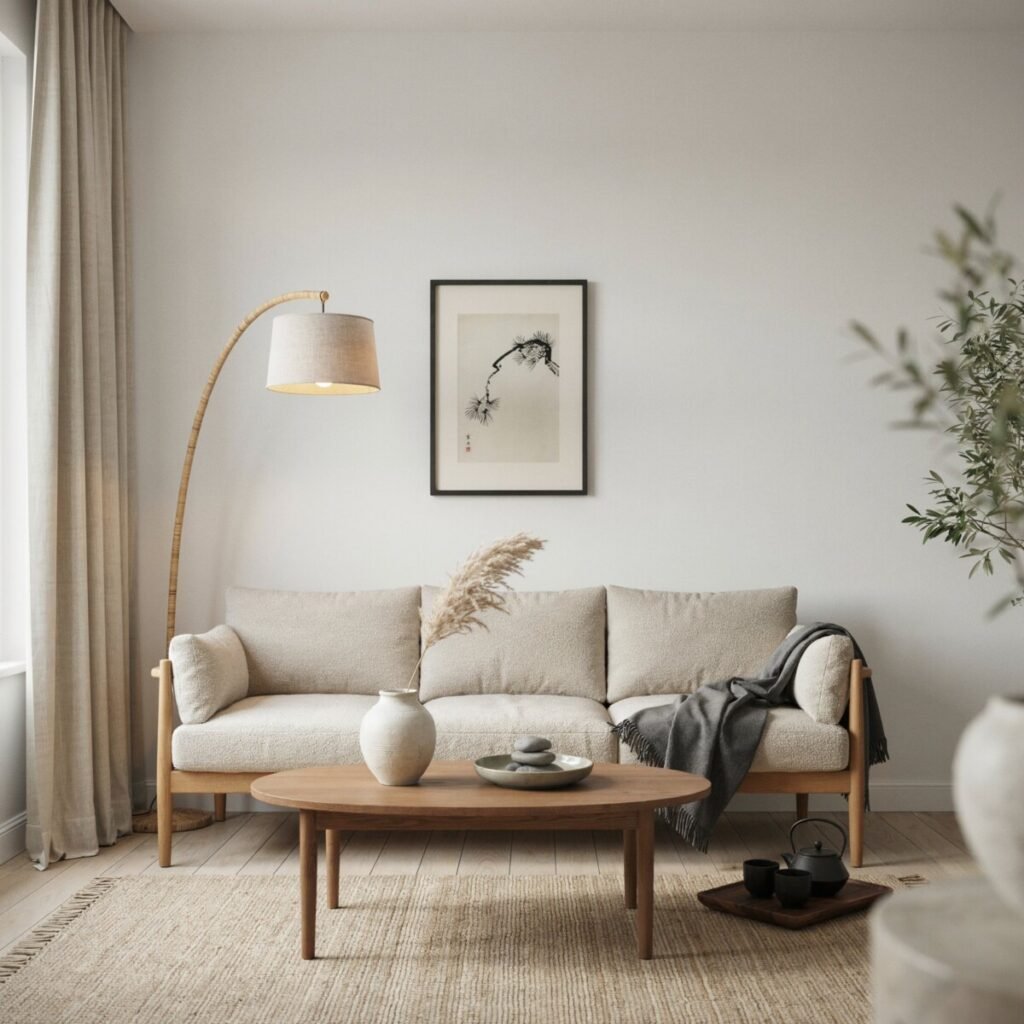
What Is Japandi Style?
Japandi is a hybrid of two design traditions that share a deep respect for simplicity, craftsmanship, and the beauty of everyday objects.
- Japanese minimalism contributes clean lines, an appreciation for imperfection (wabi-sabi decor), and the belief that empty space is as important as filled space.
- Scandinavian living room design contributes hygge—the art of cozy comfort—plus functional furniture, layered textiles, and a love of natural light.
Together they create a Japanese Scandinavian style that favors:
- Uncluttered rooms with purposeful, quality-over-quantity furnishings
- Nature-inspired materials like wood, linen, stone, and ceramic
- A muted, earthy color palette
- Warm minimalism that never feels cold or sterile
- Functional storage that keeps surfaces clear
Think of a Japandi living room as an organic modern living room with soul: every piece earns its place, and nothing competes for attention.
15 Japandi Living Room Ideas
1. Start with a Warm, Nature-Inspired Neutral Color Palette
A Japandi color palette leans on warm white, beige, greige, and soft taupe for walls and large furniture, then grounds the room with muted brown, charcoal, or black accents. Add one earthy tone—olive green, terracotta, or soft sage—for gentle contrast.
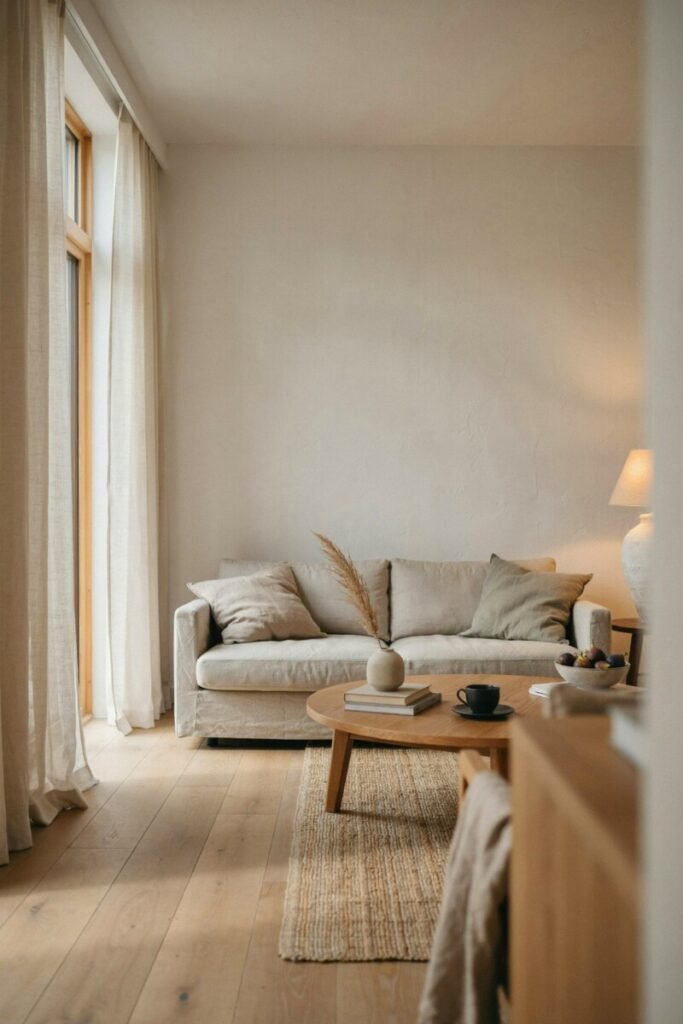
For renters who can’t repaint, choose a warm-white slipcover for your sofa and layer greige throw pillows on top. Paint is the most affordable transformation: a gallon of warm white or greige can redefine an entire room for a modest investment. Stick to matte or eggshell finishes to keep the look soft and organic rather than glossy.
2. Choose Low-Profile Furniture with Clean, Simple Lines
A low-profile sofa or platform-style media console instantly signals Japandi furniture. Look for pieces with straight or gently curved silhouettes, exposed wood legs, and minimal ornamentation. The lower sightline opens up wall space and makes even a small Japandi living room feel airier.
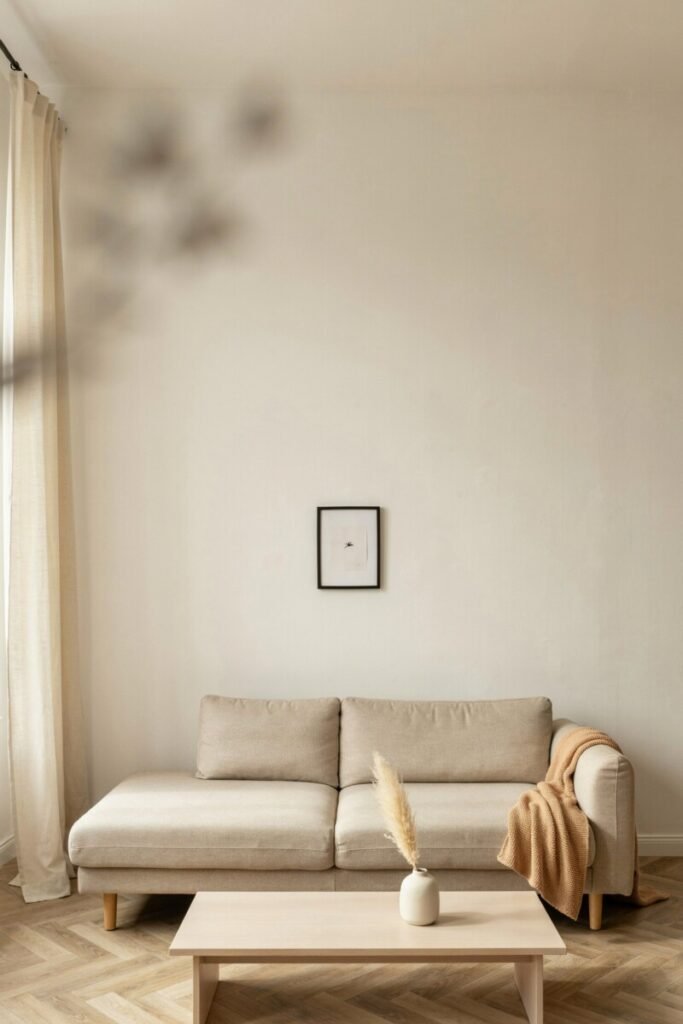
Shop for mid-century or Scandinavian-inspired frames at secondhand stores, then reupholster in a neutral linen. If buying new, prioritize a solid wood frame over particleboard so the piece lasts decades. Keep coffee tables under 18 inches tall to reinforce that grounded, calm feeling.
3. Add Warmth with Light Oak, Walnut, or Ash Wood Furniture
Wood furniture is the backbone of Japandi decor. Light oak and ash echo Scandinavian living room design, while walnut introduces the richer tones favored in Japanese interiors. Mixing one or two wood species adds depth without visual clutter.
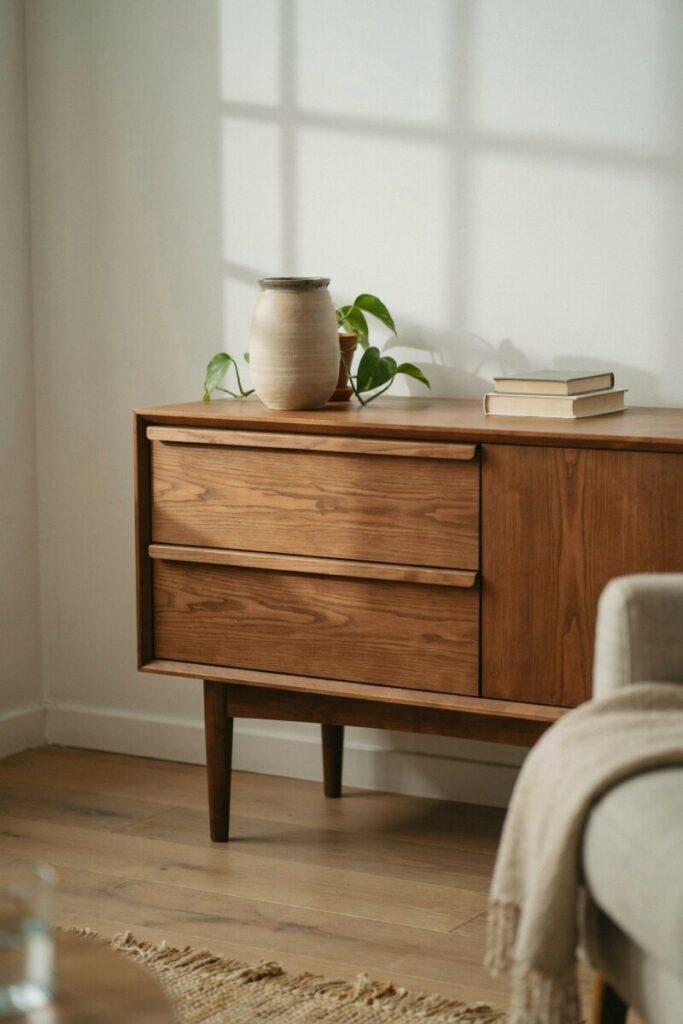
A simple oak sideboard, a walnut coffee table, or an ash bookshelf can anchor the room. On a budget, look for solid-wood pieces at estate sales or thrift shops, then sand and refinish them with a clear matte sealer. Avoid high-glass lacquer; let the grain show.
4. Layer Textured Fabrics: Linen, Cotton, Wool, and Boucle
Textured neutral decor is what keeps a minimalist living room from feeling flat. Drape a chunky wool throw over a linen sofa, add boucle accent pillows, or lay a woven cotton runner across the coffee table. The mix of fibers invites touch and adds the hygge warmth Scandinavian design is known for.
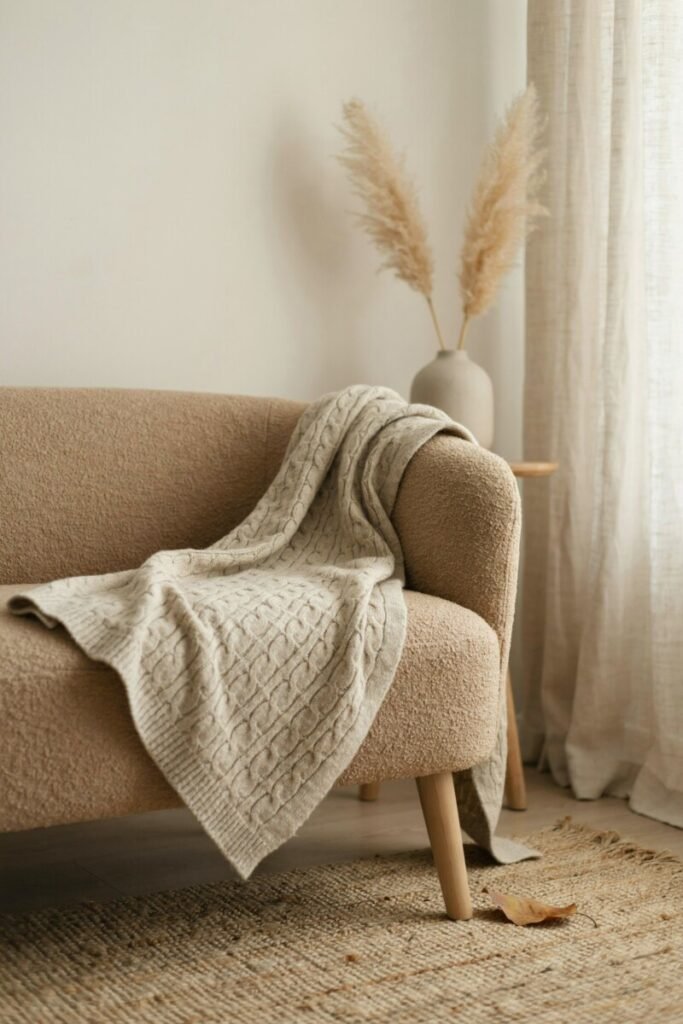
Affordable swap: pick up a set of undyed cotton or linen pillow covers and rotate them seasonally. A single boucle throw from a home-goods retailer can transform a plain couch for well under fifty dollars.
5. Keep Decor Intentional—Don’t Fill Every Surface
A decluttered living room is the heart of Japandi interior design. Instead of lining a shelf with ten small objects, choose two or three meaningful items—a handmade pottery vase, a stacked pair of books, a single candle. Negative space lets each object breathe.
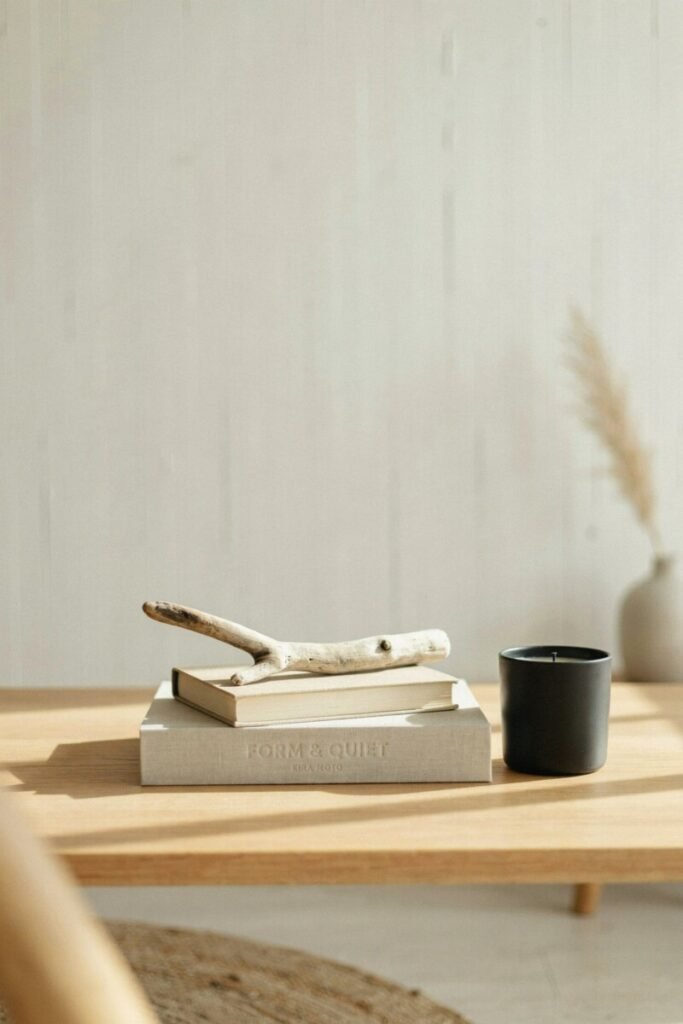
Start by removing everything from your coffee table and shelves, then return only what you genuinely love or use daily. Store the rest in functional storage bins. This zero-cost habit is the single most effective step toward a peaceful home decor aesthetic.
6. Embrace Wabi-Sabi with Handmade Ceramics and Imperfect Accents
Wabi-sabi decor celebrates irregularity: a slightly lopsided ceramic vase, a hand-thrown bowl with visible glaze drips, a rough-hewn wooden tray. These pieces add soul that mass-produced items can’t replicate.
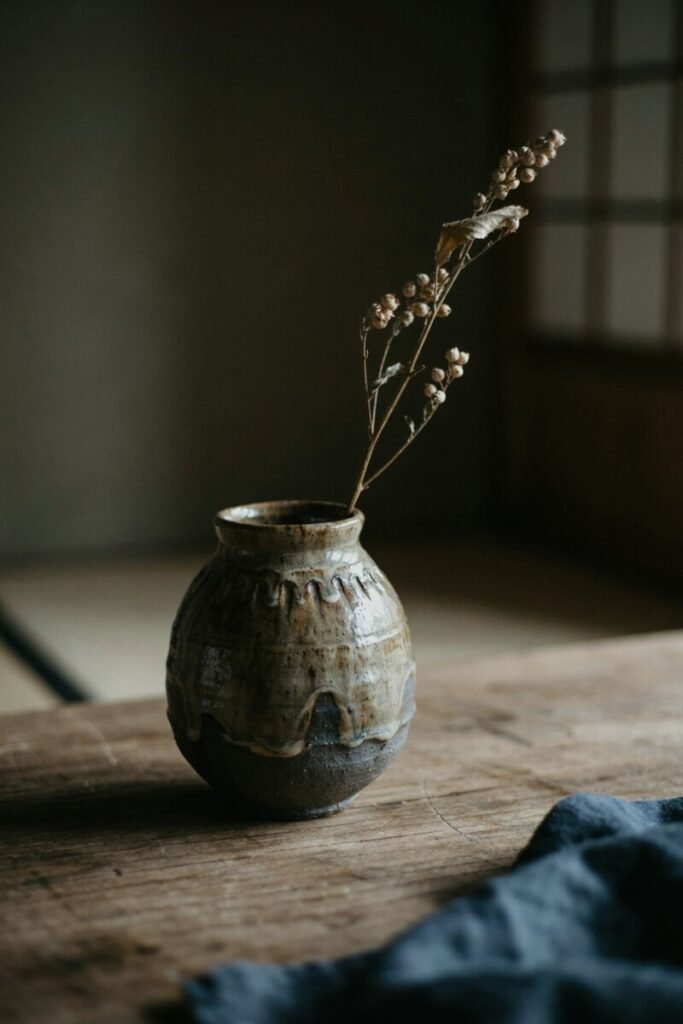
Visit local craft fairs, pottery studios, or online maker marketplaces for one-of-a-kind finds. Budget-friendly option: thrift stores often carry handmade pottery for a few dollars. Place a single imperfect vessel on a shelf or use it to hold dried branches for a subtle biophilic design touch.
7. Use Soft, Layered Lighting for a Relaxed Atmosphere
Japandi lighting avoids harsh overhead glare. Instead, layer three sources: a paper lantern pendant or woven rattan fixture overhead, a warm-toned floor lamp beside the sofa, and a small ceramic table lamp on a side table. Aim for bulbs in the 2700 K–3000 K range for a cozy, candle-like glow.
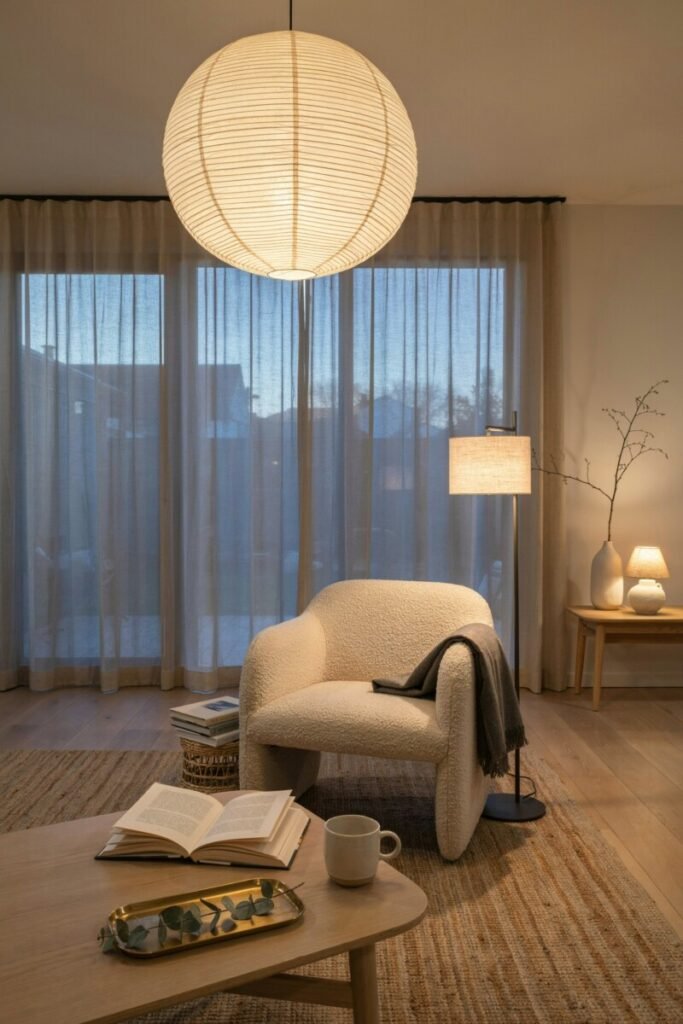
Affordable approach: swap a dated ceiling fixture for a simple paper lantern pendant and add a dimmer switch. Both updates cost little but dramatically shift the room’s mood toward calm.
8. Anchor the Room with a Natural-Fiber Area Rug
A large, simple rug in jute, sisal, or flat-weave cotton defines the seating area and adds organic texture underfoot. Stick to neutral tones—oat, sand, or soft grey—to maintain a calming living room design.
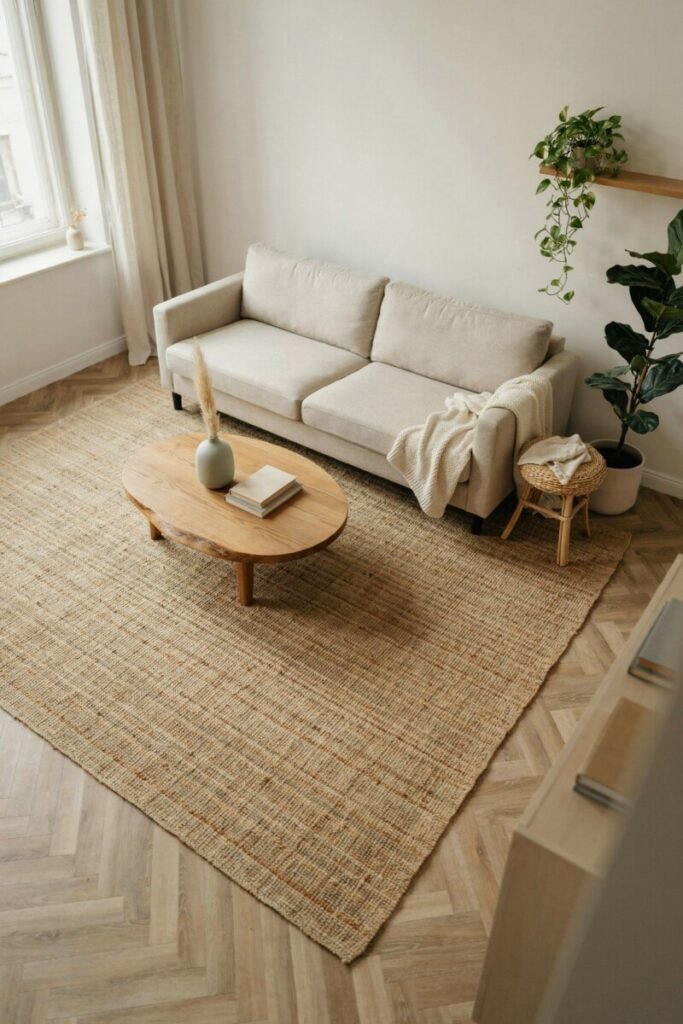
For a budget pick, look for undyed jute rugs at big-box home stores; they’re durable and pair beautifully with wood furniture. In a small Japandi living room, choose a rug that extends at least six inches beyond the front legs of your sofa to visually expand the space.
9. Introduce Indoor Plants for Biophilic Balance
Indoor plants soften clean lines and connect the room to nature. Choose sculptural, low-fuss varieties: a fiddle-leaf fig, a snake plant, a trailing pothos, or a single olive tree in a matte ceramic pot. One or two well-placed plants are more Japandi than a crowded jungle.
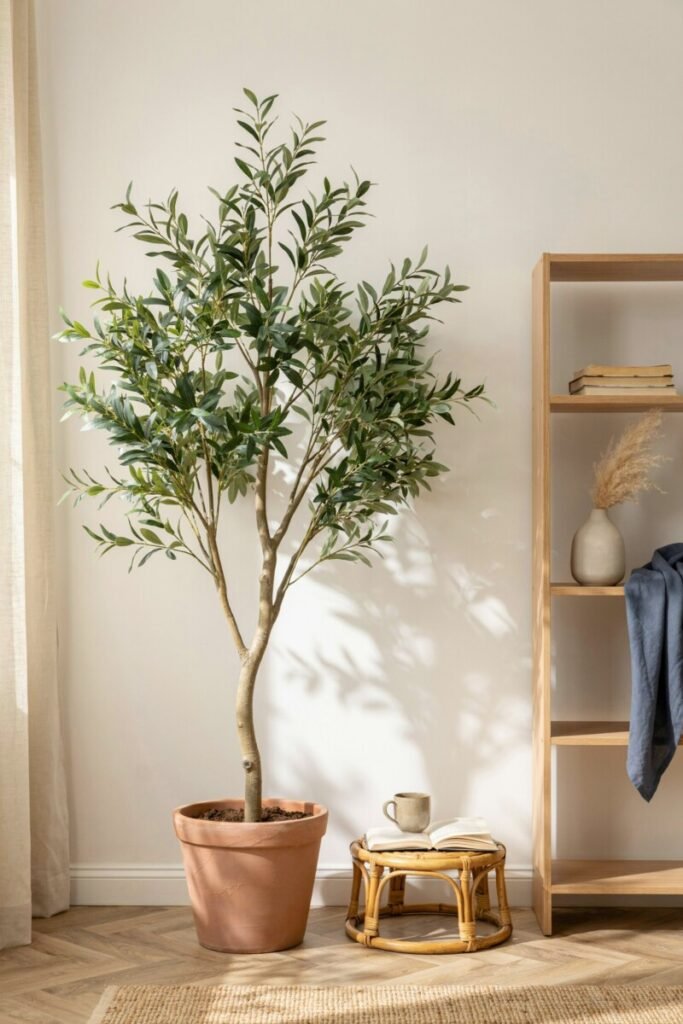
Place a tall plant in an empty corner or set a small succulent on a floating shelf. Propagate cuttings from friends for free greenery. Use unglazed terracotta or concrete planters to keep the palette earthy.
10. Create Visual Calm with Concealed Storage
A minimalist home decor scheme depends on hiding everyday clutter. Choose Japandi furniture with built-in storage: a bench with a lift-top, a media console with closed cabinets, or woven baskets tucked under a console table. The goal is open space you can actually see.
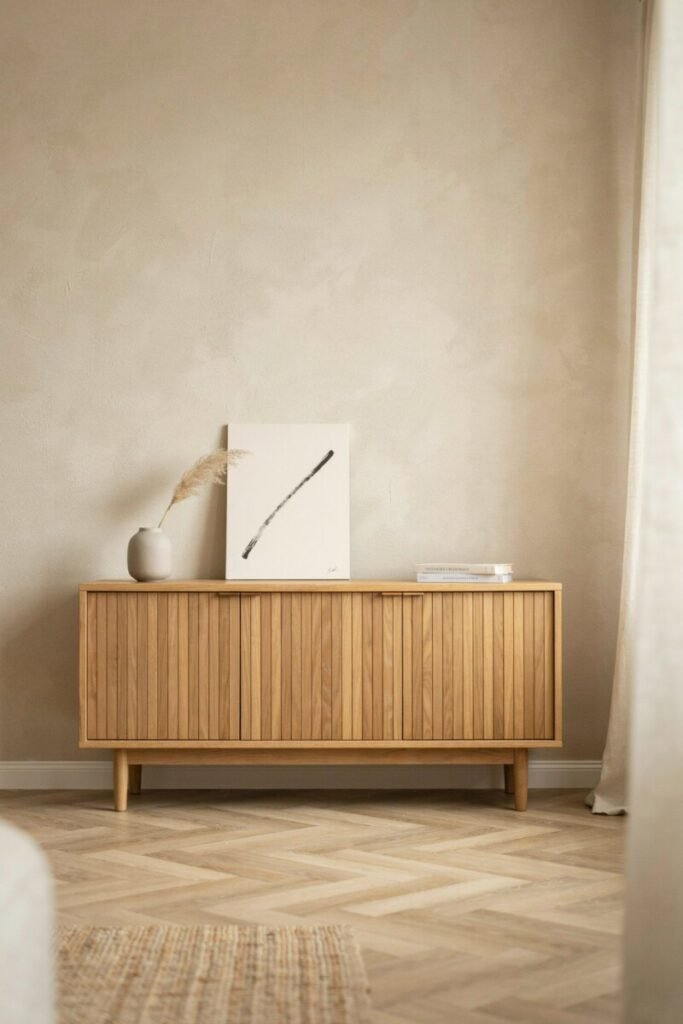
Budget tip: pick up seagrass or rattan baskets at a discount store and use them to corral remotes, magazines, kids’ toys, or blankets. Label the inside if needed—no one will see it, but you’ll find things faster.
11. Mix Black Accents with Warm Woods and Soft Neutrals
A touch of charcoal or matte black prevents a neutral living room ideas palette from drifting into blandness. Try a slim black metal floor lamp, a charcoal linen cushion, or a matte black picture frame. The contrast against light oak and warm white feels modern yet grounded.
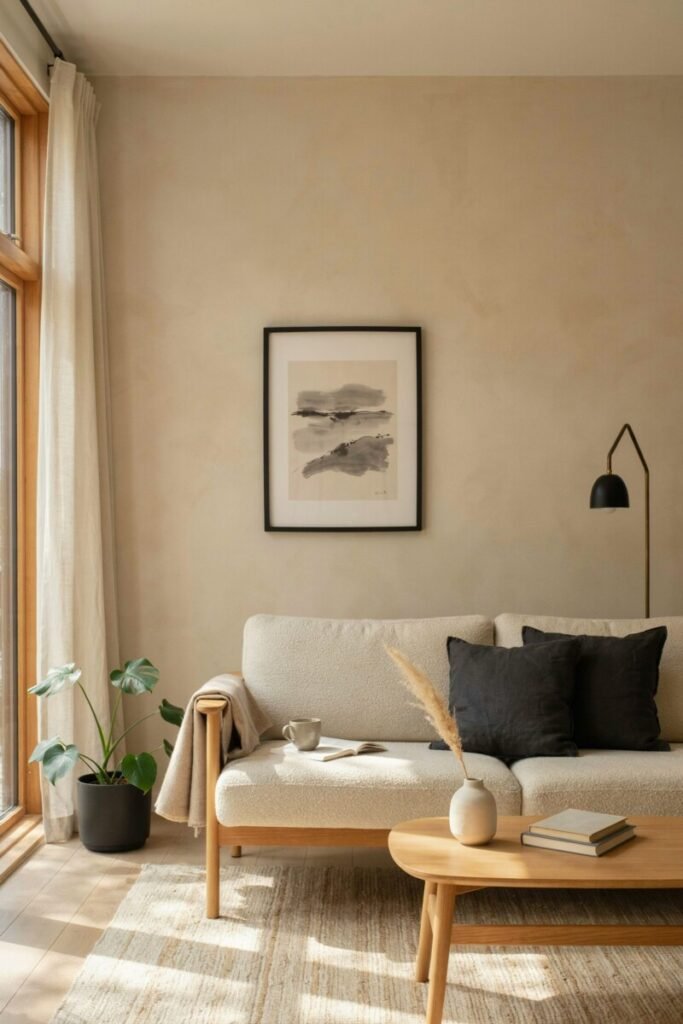
Keep black accents to roughly ten percent of the room’s visual weight. An affordable entry point: swap existing cabinet hardware for matte black pulls or frame a favorite print in a thin black frame.
12. Add Low Seating, Floor Cushions, or a Relaxed Reading Corner
Japanese minimalism traditionally embraces floor-level living. Introduce a pair of firm floor cushions, a low reading chair, or a wide window-seat bench with a linen cushion. This invites lounging and slows the pace of the room.
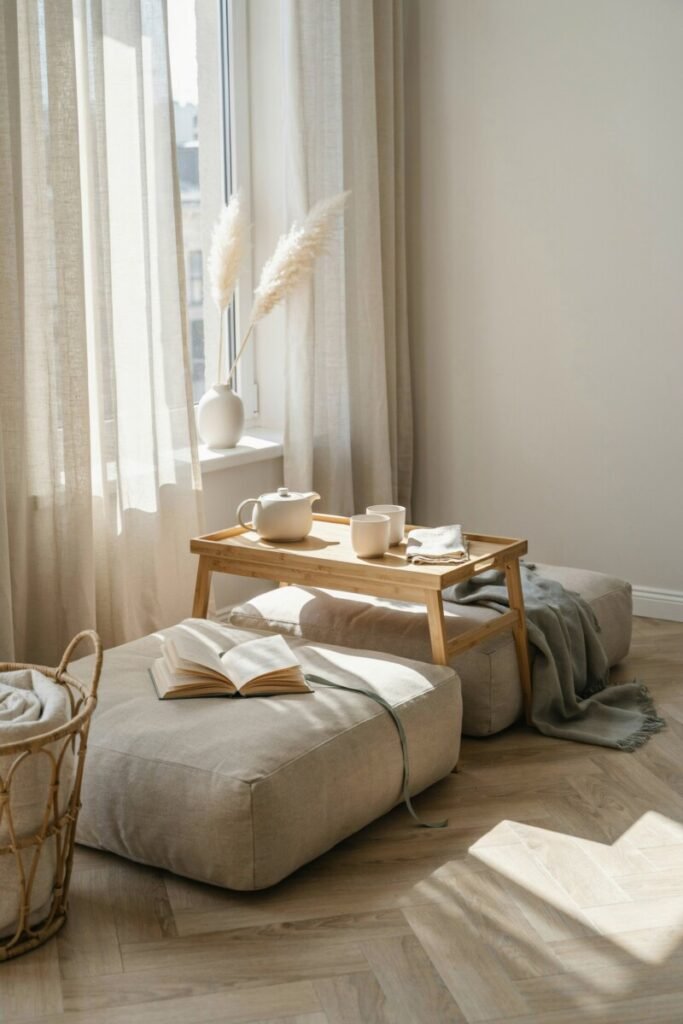
In a small space, a single oversized floor cushion and a small side table can create a cozy minimalist living room corner for reading or tea. Look for cotton or linen-covered cushions with firm foam inserts; they’re easy to tuck away when guests arrive.
13. Hang Airy Linen Curtains to Soften Natural Light
Linen curtains filter sunlight into a warm, diffused glow that flatters every surface in the room. Choose panels in warm white, oat, or pale greige, and hang them from a simple wood or matte-black rod mounted close to the ceiling to draw the eye upward.
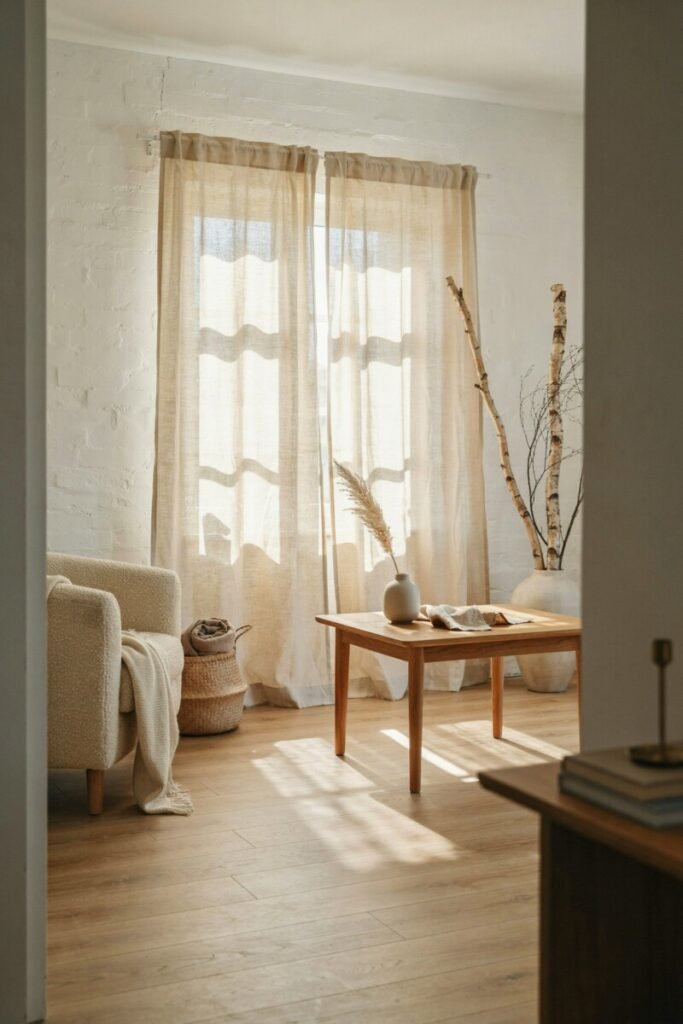
Budget-friendly DIY: buy unbleached muslin or cotton-linen blend fabric by the yard, hem the edges with iron-on tape, and clip them onto a rod with curtain rings. The slightly rumpled texture is perfectly on-brand for Japandi decor.
14. Style One Meaningful Focal Point Instead of a Crowded Gallery Wall
Rather than filling an entire wall with frames, choose a single statement: a large abstract print in earthy tones, a handwoven textile wall hanging, or a floating shelf displaying three ceramic vases. One strong focal point gives the eye a place to rest.
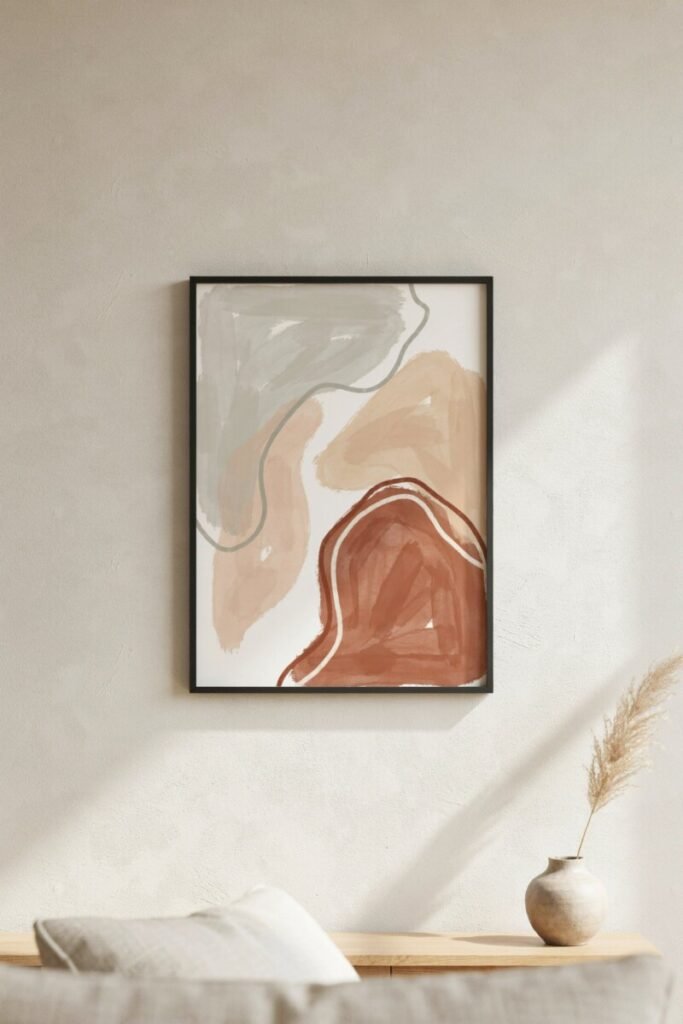
Print a free-domain artwork in muted tones at a local print shop and frame it in light oak. Or hang a handmade macramé or woven rattan piece. The key is restraint—one intentional element beats ten scattered ones.
15. Make a Small Japandi Living Room Feel Open and Functional
A small Japandi living room benefits from multi-functional furniture, mirrored or light-reflecting surfaces, and a tight edit of belongings. Choose a slim sofa, a nesting side table, and wall-mounted shelves to keep floor space open. Stick to two or three wood tones and one neutral upholstery color so the eye isn’t pulled in multiple directions.
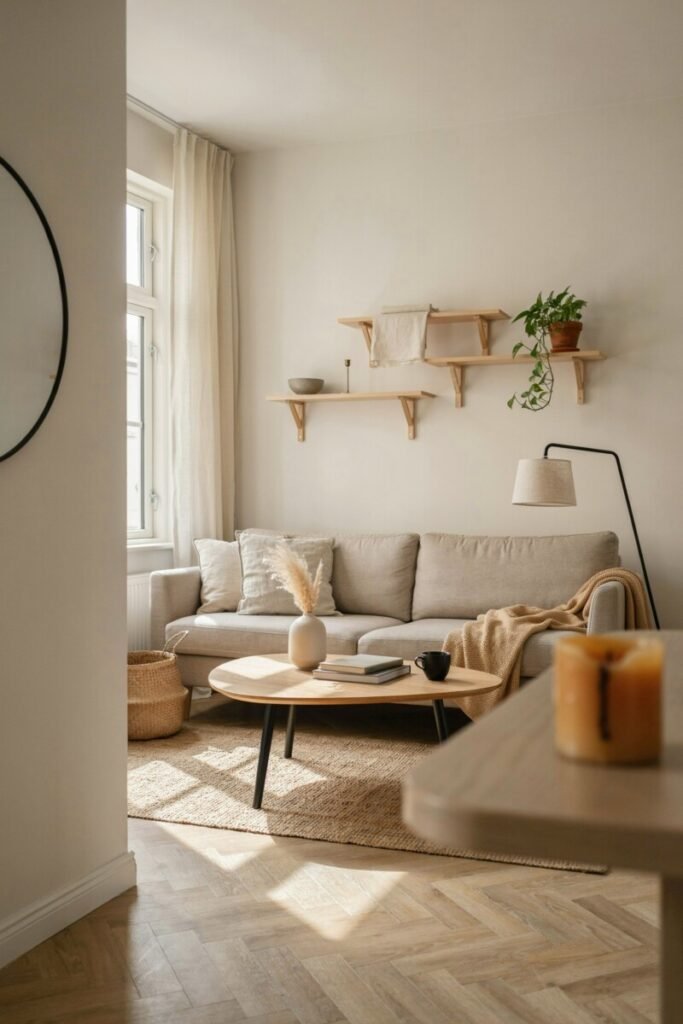
Renters can maximize a compact layout by floating the sofa a few inches off the wall, using a round coffee table to improve traffic flow, and mounting a large mirror opposite a window to bounce natural light deeper into the room.
How to Choose a Japandi Color Palette
Use the classic 60-30-10 rule to balance your Japandi color palette:
| Ratio | Role | Example Colors |
|---|---|---|
| 60 % | Dominant (walls, sofa, rug) | Warm white, beige, greige |
| 30 % | Secondary (curtains, wood furniture, accent chair) | Light oak, taupe, soft sage, muted brown |
| 10 % | Accent (cushions, ceramics, art) | Charcoal, olive green, terracotta, matte black |
Keep finishes matte or satin. Avoid high-shine paint, glossy tile, or metallic accents that clash with the organic, understated mood.
Ideal Japandi Materials at a Glance
| Material | Best Used For |
|---|---|
| Light oak / ash | Coffee tables, shelving, picture frames |
| Walnut wood | Sideboards, media consoles, accent chairs |
| Bamboo / rattan | Pendant lights, baskets, room dividers |
| Linen | Curtains, sofa upholstery, pillow covers |
| Boucle / wool | Throw blankets, accent cushions |
| Ceramic / handmade pottery | Vases, bowls, table lamps |
| Jute / sisal | Area rugs, woven storage bins |
| Paper (washi / lantern) | Pendant shades, soft lighting fixtures |
Common Japandi Living Room Mistakes to Avoid
- Making the room too cold or stark. Japandi is warm minimalism, not a showroom. Add textiles, wood, and soft lighting.
- Buying matching sets. A “collection” of identical decor looks manufactured. Mix eras, makers, and textures.
- Using bright colors or glossy finishes. Neon hues and high-shene surfaces fight the calming living room design goal.
- Confusing empty space with thoughtful minimalism. Remove clutter deliberately; don’t just strip personality.
- Ignoring comfort. A beautiful but uncomfortable sofa defeats the hygge half of Japandi.
- Over-furnishing. Every extra table or chair shrinks open space. Edit ruthlessly.
- Overdecorating shelves and tables. Three curated objects beat fifteen knickknacks.
- Choosing cheap faux-natural materials. Plastic “wood” laminate or polyester “linen” reads as inauthentic. Opt for the real thing, even in small doses.
Budget-Friendly Japandi Decor Tips
You don’t need designer pricing to achieve a Japandi style living room. Try these US-friendly strategies:
- Shop secondhand. Estate sales, Facebook Marketplace, and thrift stores are gold mines for solid wood furniture and handmade pottery.
- Refinish what you own. Sand an old oak dresser, strip orange-toned stain, and seal with a matte water-based polyurethane for a fresh Scandinavian look.
- Use neutral slipcovers. A beige or oat linen-look slipcover can modernize a dated couch for a fraction of replacement cost.
- Thrift pottery and ceramics. Mismatched stoneware in earthy tones instantly reads wabi-sabi.
- Try peel-and-stick wallpaper in a subtle linen or plaster texture on one accent wall—renter-friendly and removable.
- DIY linen-look curtains from unbleached cotton fabric and iron-on hem tape.
- Invest in one statement light fixture. A paper lantern or rattan pendant draws the eye and elevates the whole room.
- Add storage baskets. Seagrass, rattan, or cotton-rope bins hide clutter and add texture simultaneously.
Frequently Asked Questions
What colors work best in a Japandi living room?
Stick to warm neutrals—warm white, beige, greige, and taupe—as your base. Layer in muted brown, soft sage, olive green, or terracotta for depth, and use charcoal or matte black sparingly for contrast.
Can Japandi style work in a small apartment living room?
Absolutely. A small Japandi living room thrives on low-profile furniture, concealed storage, a tight color palette, and multi-functional pieces. Fewer items and lighter wood tones make compact spaces feel open and serene.
Is Japandi more Japanese or Scandinavian?
It’s an even blend. Japanese minimalism contributes restraint, wabi-sabi, and low seating; Scandinavian design contributes hygge, functional storage, and layered textiles. The magic is in the balance.
How can I make my living room look Japandi on a budget?
Start by decluttering, then repaint walls in warm white, add a jute rug, swap in linen or cotton textiles, thrift a few ceramic vases, and introduce one or two indoor plants. Most of these steps cost very little but transform the room’s feel dramatically.
Conclusion
A Japandi living room isn’t about perfection, a designer budget, or ripping out everything you own. It’s about slowing down, editing what no longer serves you, and surrounding yourself with natural materials, soft light, and a handful of objects you truly love.
Start small: clear one shelf, swap a bright bulb for a warmer one, drape a linen throw over your sofa, or bring in a single potted plant. Each tiny shift nudges the room toward calm. Over weeks, those small choices compound into a cozy minimalist living room that supports rest, focus, and a more intentional daily rhythm.
Your peaceful home doesn’t have to wait for a renovation. It can begin this weekend, with one thoughtful, unhurried choice.
