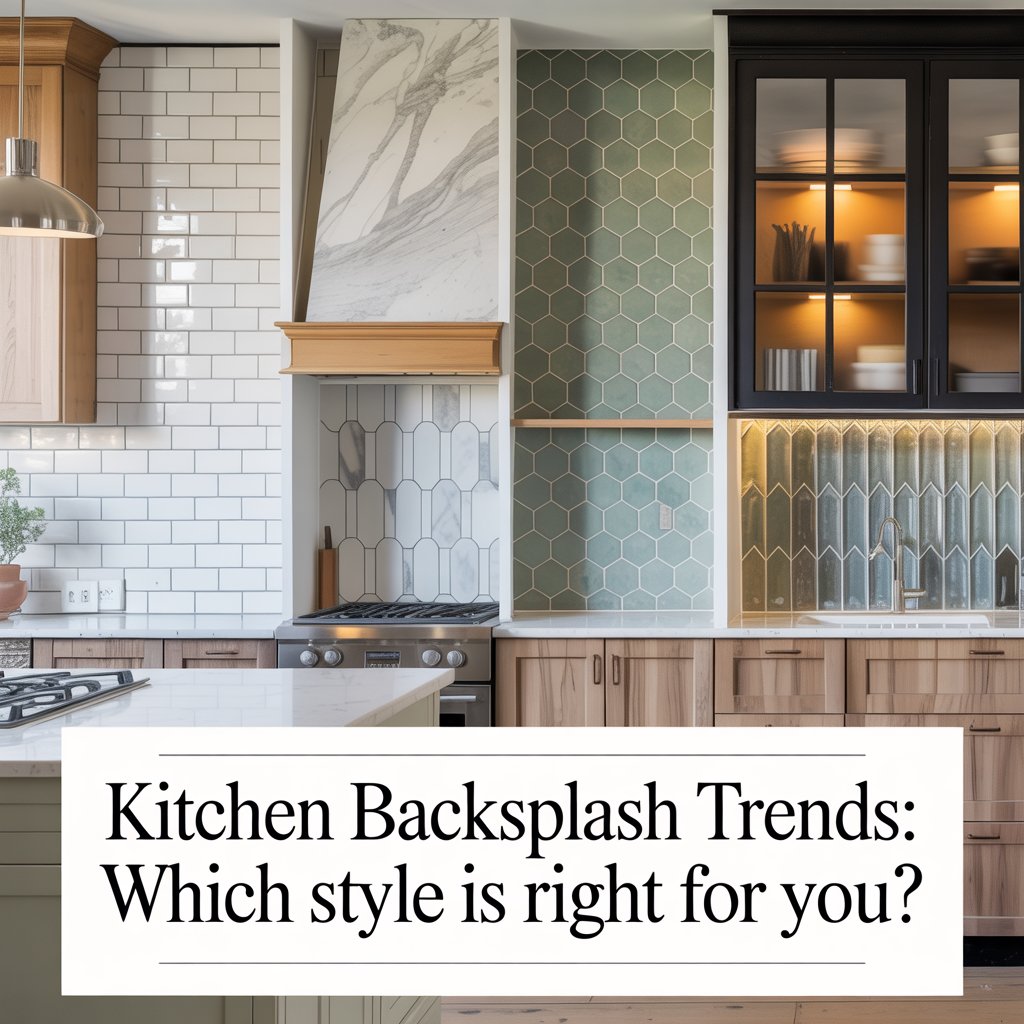
The kitchen backsplash is the one place where function and personality collide in the most concentrated way. It protects your walls from tomato-sauce splatters and coffee splashes, yes — but it also happens to be the single most visible design element between your countertops and cabinets. Get it right, and the whole room feels considered, cohesive, and quietly expensive. Get it wrong, and even brand-new cabinets can look dated.
Backsplashes have always mattered, but the kitchen backsplash trends of 2026 have pushed the category further than ever. We’re seeing oversized porcelain slabs that mimic quarried marble, 3D textured tiles you want to run your hand across, a quiet comeback of mirrored glass, and a whole generation of renters proving that peel-and-stick doesn’t have to look cheap. At the same time, timeless picks — subway tile with bold grout, natural stone, encaustic pattern — keep cycling back because they work.
This guide cuts through the noise. We’ll walk through the trends worth watching (and the ones worth skipping), break down what materials really cost once installation is factored in, and give you a practical decision framework — by kitchen size, lifestyle, budget, and how long you plan to stay in your home. Whether you’re renovating a century-old farmhouse or refreshing a condo rental before your lease renews, you’ll leave with a clear kitchen backsplash style and a realistic next step.
Why Backsplashes Still Matter
A backsplash’s first job is protection. Cooking generates grease, steam, and acid — and drywall does not hold up to any of them. A properly installed tile, glass, or slab backsplash wipes clean in seconds and, if sealed correctly, will outlast your cabinets.
But the decorative work a backsplash does is just as important. It’s the vertical plane in a kitchen dominated by horizontal surfaces (counter, floor, island top), which makes it the eye’s natural landing spot. Designers often describe it as the “jewelry” of the kitchen — a place to take a risk the rest of the room can’t absorb. A well-chosen backsplash also quietly improves resale: realtors consistently rank updated backsplashes among the top five kitchen features buyers notice in the first ten seconds of a showing.
Top Kitchen Backsplash Trends for 2026
Large-Format Porcelain Slabs and Bookmatched Slabs
Oversized porcelain slabs (often 4×10 feet or larger) are the defining backsplash trends 2026 look. “Bookmatching” — mirroring the veining of two adjacent slabs — creates a dramatic, almost symmetrical mural effect behind the range. The visual vibe is quiet luxury: continuous surface, almost invisible seams, no grout lines to scrub. Best fit: large open-plan kitchens and modern urban condos where the backsplash is a focal point rather than a detail.
- Pros: Seamless look, highly stain-resistant, easy-to-clean backsplash surface, mimics marble at a fraction of the cost and weight.
- Cons: Heavy, requires professional installation and often structural assessment for mounting; seams are visible if the fabricator isn’t skilled.
- Maintenance: Wipe with a pH-neutral cleaner; resealing is rarely needed.
Textured and 3D Tiles (Contemporary Tactile Surfaces)
These are the textured backsplash tiles you instinctively want to touch — fluted, ribbed, wave-profile, and hand-sculpted zellige-style ceramics. They catch under-cabinet lighting beautifully and give a kitchen a handmade, layered feeling. Best fit: minimalist kitchens that need warmth, and any space where a flat surface would feel too sterile.
- Pros: Adds dimension without color; excellent hide-and-seek for imperfections in older walls.
- Cons: Grooves trap grease near the stove — not ideal directly behind a gas range.
- Maintenance: Vacuum crevices monthly; degrease quarterly with a soft brush.
Glass and Mirrored Backsplashes
Glass tile (subway, mosaic, or full-panel mirrored) is having a soft renaissance, particularly in smoked bronze and pale aqua tints. Mirrored backsplashes bounce light in tight galley kitchens and make small spaces feel twice as deep. Best fit: small or dark kitchens, backsplash for modern kitchen schemes aiming for high glamour.
- Pros: Reflects light, enlarges visual space, wipes clean instantly.
- Cons: Shows fingerprints and water spots; mirrored panels amplify clutter on the counter.
- Maintenance: Daily microfiber wipe; avoid ammonia-based cleaners on tinted glass.
Classic Subway Tile with Modern Twists
Subway tile refuses to go anywhere — and 2026 iterations prove why. The updates are in the details: 4×16 elongated “super subway” shapes, stacked (not staggered) layouts, vertical orientation, and bold grout color ideas like deep emerald, charcoal, or terracotta against white tile. A black-grout-on-white-tile combo is still the sharpest affordable backsplash option in the category.
- Pros: Affordable, timeless, widely available, DIY-friendly for standard layouts.
- Cons: Common — can read “generic” if not styled intentionally.
- Maintenance: Seal grout annually; lighter grout shows stains faster.
Patterned Encaustic and Cement-Look Tiles (Vintage/Boho)
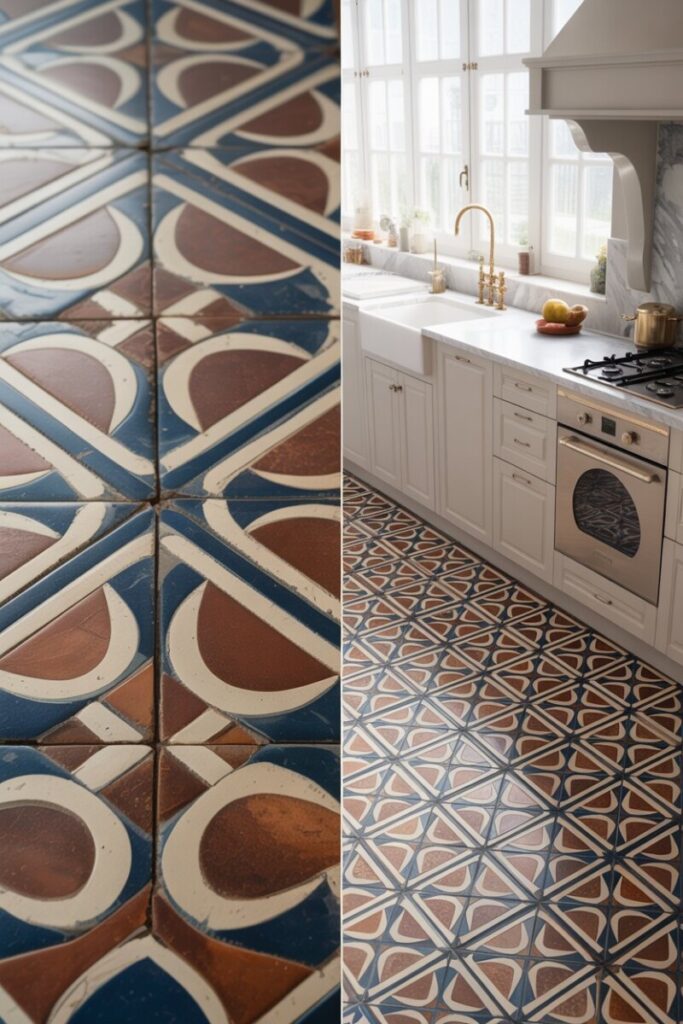
Encaustic and cement-look tiles bring warmth, story, and vintage soul. Think Moroccan geometry, Portuguese azulejo-inspired motifs, or soft watercolor florals. Best fit: backsplash for farmhouse kitchen renovations, eclectic homes, and anyone designing around character rather than polish.
- Pros: Instant personality, hides crumbs and splashes better than plain tile.
- Cons: Real cement tile is porous and must be sealed; can feel busy in already-patterned kitchens.
- Maintenance: Seal on install and every 12–18 months; avoid acid cleaners.
Natural Stone and Marble (Veined Slabs and Engineered Alternatives)
Honed Calacatta, dramatic Arabescato, and soft Taj Mahal quartzite remain the aspirational picks — and for the first time, engineered quartz slabs that replicate these looks are genuinely convincing. If resale is a concern, real stone still wins on the “wow” test, but engineered stone wins on practicality.
- Pros: Unique veining (no two slabs alike), high perceived value, strong ROI.
- Cons: Natural marble etches from lemon juice and wine; real stone is expensive and heavy.
- Maintenance: Seal natural stone immediately and re-seal annually. Use cutting boards religiously.
Metallic and Brass Accents (Trim, Insets, and Full Panels)
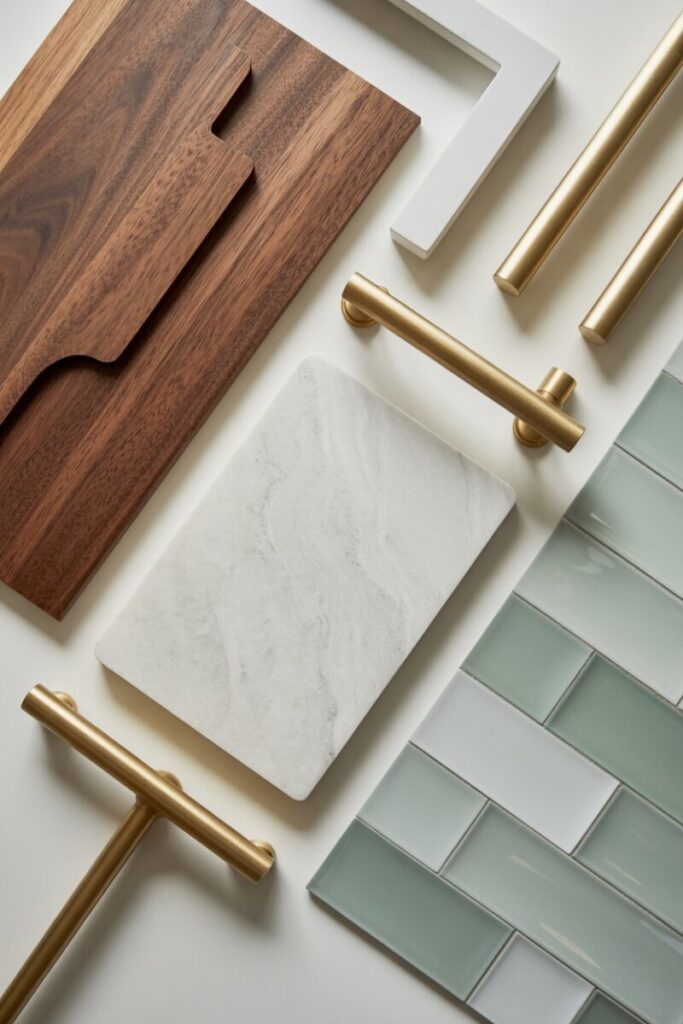
Full metallic backsplashes have faded, but brass and bronze accents are everywhere — as trim between tile and cabinet, as thin inset bands inside a field of subway tile, or as brushed-brass mesh behind open shelving. Best fit: transitional kitchens warming up cool gray or white palettes.
- Pros: Warm tone, pairs beautifully with current faucet and hardware finishes.
- Cons: Polished brass tarnishes; brushed and “living finish” patina options age better.
- Maintenance: Wipe with a dry microfiber cloth; avoid brass polish on lacquered finishes.
Minimal Grout, Thin-Profile Grout Lines, and Grout Color Trends
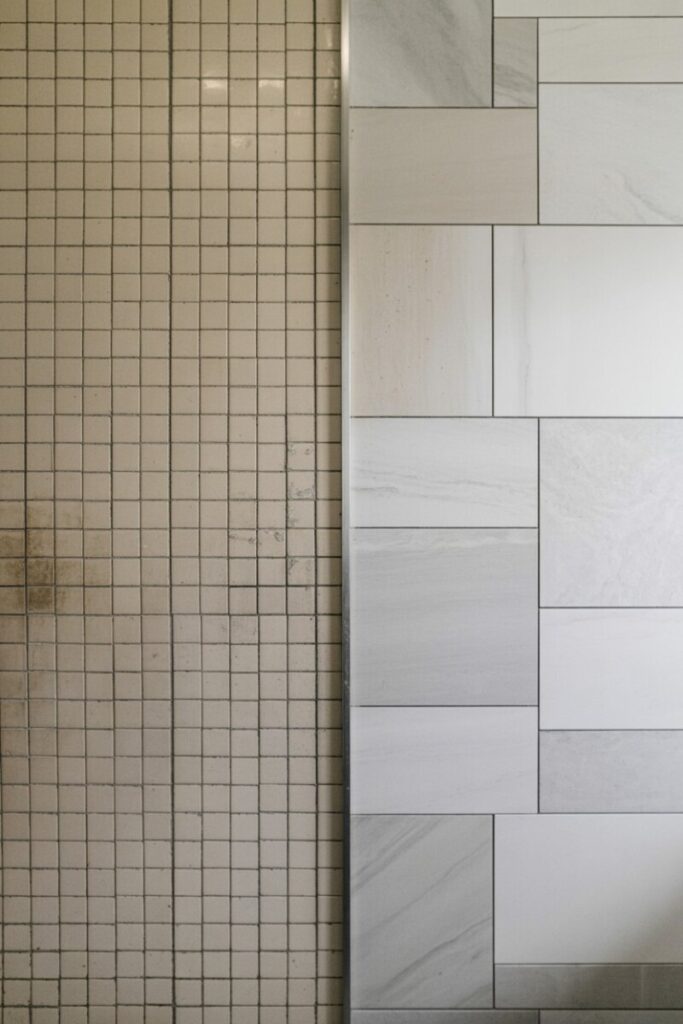
The visible trend across categories is less visible grout — 1/16″ joints, rectified tiles, and epoxy or urethane grout in tones matched exactly to the tile for a slab-like effect. Where grout is visible, color is intentional: sage, clay, navy, and warm cream are the new defaults over stark white.
- Pros: Cleaner silhouette, fewer grout lines to maintain.
- Cons: Rectified tile and thin joints demand a perfectly level wall — hire a pro.
- Maintenance: Epoxy grout resists staining but is harder to install; urethane is a good middle ground.
Sustainable and Recycled Tile Options
Recycled-glass mosaics, tiles made from post-industrial ceramic waste, and low-fire terracotta from regional artisans are the sustainable-recycled-tiles category growing fastest. Brands like Fireclay and Heath now publish full lifecycle data, which matters to buyers under 40 making purchase decisions.
- Pros: Story-rich, lower embodied carbon, often handmade with beautiful variation.
- Cons: Longer lead times (6–12 weeks common); higher per-tile cost.
- Maintenance: Similar to standard ceramic — seal grout, wipe clean.
How to Choose the Right Style for Your Kitchen
The best kitchen backsplash styles are the ones that resolve the room’s specific problems rather than just copy a Pinterest board. Start with these four filters:
Size and layout. Best backsplash for small kitchen schemes: light-colored glass, large-format slab, or vertically oriented subway tile — all of which stretch the eye upward. In large open-plan kitchens, you have room for a statement: bookmatched slab behind the range, or a patterned encaustic inset. A backsplash to ceiling (extending tile all the way up past wall cabinets) works beautifully in rooms with 9-foot ceilings or higher, and is an elegant move for transitional and French-country styles.
Cabinet and countertop context. Busy countertop (granite with movement, heavily veined quartz)? Choose a calm, solid-tone tile. Plain white quartz or soapstone? That’s your invitation to go bold with pattern or color. Dark cabinets pair best with light, reflective backsplashes; light cabinets can anchor a saturated tile.
Lifestyle fit.
- Busy family: Go with large-format porcelain slab or glass — an easy-to-clean backsplash matters more than texture when you’re wiping salsa off twice a day.
- Entertainer: Use the backsplash as a conversation piece — bookmatched stone, encaustic pattern, or metallic trim.
- Minimalist couple: Slab, micro-thin grout, monochrome palette.
- Renter on a budget: Peel and stick backsplash for renters has genuinely improved; premium lines (Tempaper, Aspect) look convincing for 2–4 years and remove without wall damage.
Lighting. Under-cabinet lighting and backsplash interact more than most homeowners realize: glossy tile amplifies light (great in dark kitchens), while matte textured tile absorbs it (warmer, cozier). Always test a sample with your actual LED color temperature — 2700K and 4000K read completely differently against the same tile.
Cost, Installation, and ROI
📋 Sidebar — Quick Budget Breakdown
Material Approximate Cost per sq ft Peel-and-stick $5–$15 Ceramic subway tile (materials) $3–$10 Porcelain / large-format tile $10–$25 Natural stone slab $20–$75+ Installation labor $5–$40 per sq ft, depending on complexity A typical 30-square-foot run of subway tile with pro install lands around $600–$1,200 total. A bookmatched porcelain slab of the same size lands around $2,500–$4,500 installed.
Backsplash installation cost varies more on complexity than on material. Simple grid subway tile is the most DIY-friendly project in this whole guide — a motivated weekend warrior with a wet saw can handle it. Large-format slab, natural stone, and anything requiring waterproofing or structural mounting should go to a pro. Get three quotes and ask for photos of slab seams the installer has done before.
On resale, a quality backsplash rarely adds dollar-for-dollar value like a countertop replacement does, but it prevents the value loss of a dated kitchen. Neutral slab or timeless subway tile stage the best; highly personal encaustic or mirrored panels can narrow your buyer pool. If you’re planning to sell within three years, stay conservative on the backsplash and express personality through lighting and hardware instead.
Practical Tips and Mistakes to Avoid
- Seal before you move in. Backsplash maintenance and sealing is the difference between a 20-year kitchen and a 5-year kitchen if you’re using natural stone, cement, or unglazed tile.
- Order samples and live with them. Tape samples to the wall for at least 48 hours — morning light, evening light, and under-cabinet light all change how a tile reads.
- Avoid trend traps if selling soon. Mirrored backsplashes, neon grout, and ultra-glossy metallics are the first things buyers mentally “price out.”
- Match grout intelligently. Dark grout hides dirt but commits you to a graphic look; light grout reads clean but demands maintenance.
- Coordinate with fixtures. If your faucet is brushed brass, a brass accent band in the tile ties the room together more than matching cabinet hardware does.
- Don’t forget outlets. Backsplash tile meets outlet covers — order paintable or metal covers that coordinate rather than letting builder-grade white plastic interrupt the design.
Quick Style Picks
- Small kitchen: Light glass subway tile, vertically stacked, with minimal grout.
- Large open-plan: Bookmatched porcelain slab behind the range, field tile elsewhere.
- Rental apartment: Premium peel-and-stick in a zellige-look pattern.
- Farmhouse kitchen: Handmade terracotta or encaustic cement tile with sage grout.
- Modern urban condo: Honed large-format slab with a thin brass accent band.
- Budget remodel: White 3×6 subway tile with charcoal epoxy grout — timeless, durable, under $1,000 installed.
Conclusion and Next Steps
The right kitchen backsplash style comes down to three questions: how you actually cook, how long you plan to stay, and what story you want the room to tell. Trends are useful signals, not rules — the best kitchens in 2026 mix a classic field tile with one confident gesture (a slab, a pattern, a metal accent) rather than chasing every trend at once.
Your next move: build a small mood board (three samples, not twelve), order physical tile samples from at least two suppliers, and — if you’re going slab, stone, or anything large-format — book a professional measurement before you commit to materials. A two-hour consultation now saves a two-week delay later.
The backsplash is a small square footage with an outsized voice. Make it count.