
There’s something deeply satisfying about walking into a living room that feels effortlessly calm — clean but not cold, simple but not sterile, intentional but not rigid. That’s the magic of warm minimalism, a design philosophy that has quietly reshaped how American homeowners think about their living spaces in 2026. Unlike the stark, monochrome minimalism that dominated earlier decades, warm minimalism invites you in. It whispers rather than shouts, blending soft neutrals, natural textures, earthy tones, and functional beauty to create a home that feels grounded, cozy, and deeply livable.
If you’ve ever scrolled through Pinterest or Instagram and paused at images of sunlit beige living rooms, linen-draped windows, and sculptural wood furniture, you’ve already fallen a little in love with warm minimalist living room design. The good news? You don’t need a massive renovation or a designer budget to create that same feeling in your own space. Whether you’re decorating a compact city apartment, a suburban family home, or a cozy starter house, warm minimalism is one of the most adaptable and rewarding styles you can embrace.
In this guide, we’ll walk you through 12 warm minimalist living room decor ideas that are practical, stylish, and rooted in the principles of modern minimalist interior design. Each idea is designed to help you build a serene living space that feels uncluttered without ever feeling empty — a true sanctuary where you can relax, recharge, and enjoy the quiet beauty of less, but better.
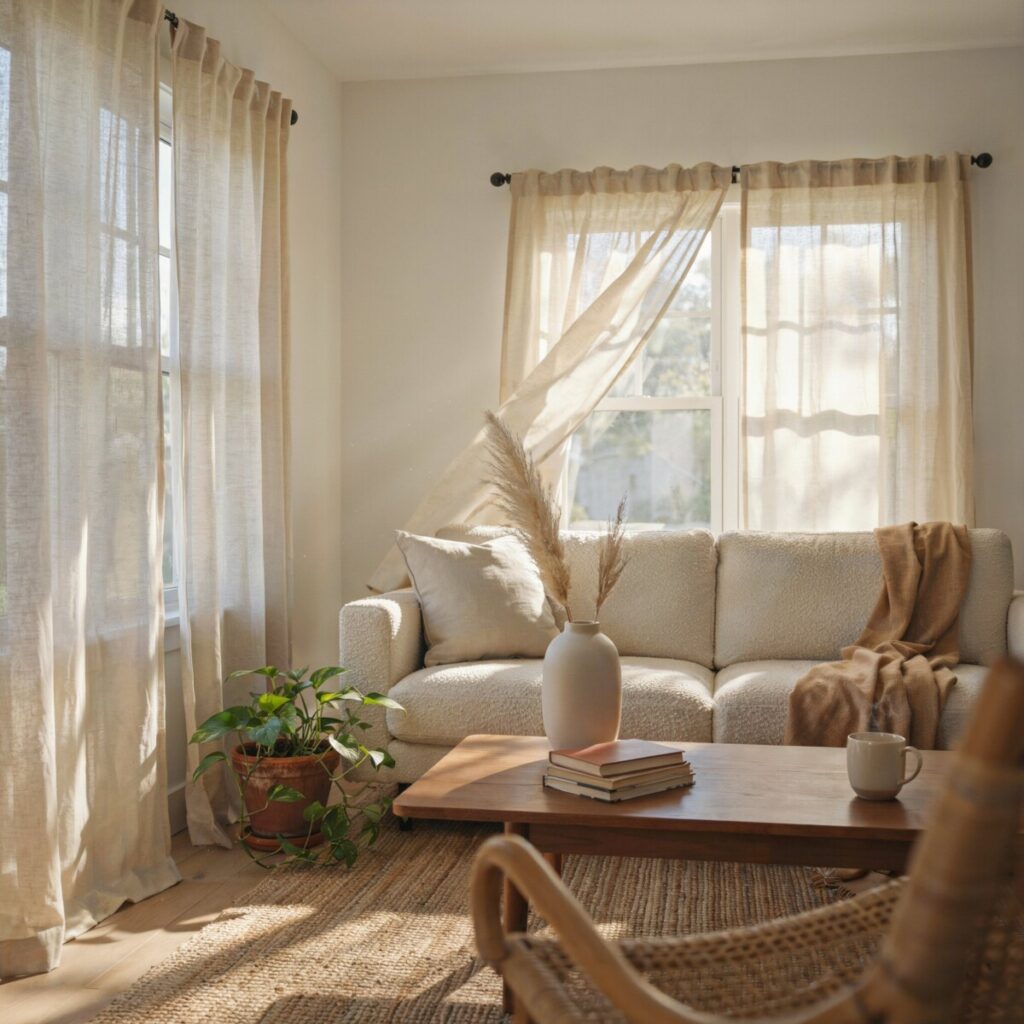
Idea 1: Build Your Foundation with a Warm Neutral Palette
Every successful warm minimalist living room begins with the right color foundation. While stark white has its place, warm minimalism leans heavily into warm neutrals — colors that feel grounded, soothing, and deeply human.
Start by painting your walls in a soft, creamy off-white, warm beige, or a muted taupe. These tones reflect natural light beautifully while adding a subtle warmth that pure whites simply can’t achieve. Think Benjamin Moore’s Swiss Coffee, Sherwin-Williams’ Alabaster, or Farrow & Ball’s Shadow White — all timeless choices for neutral living room ideas that won’t feel dated in a few years.
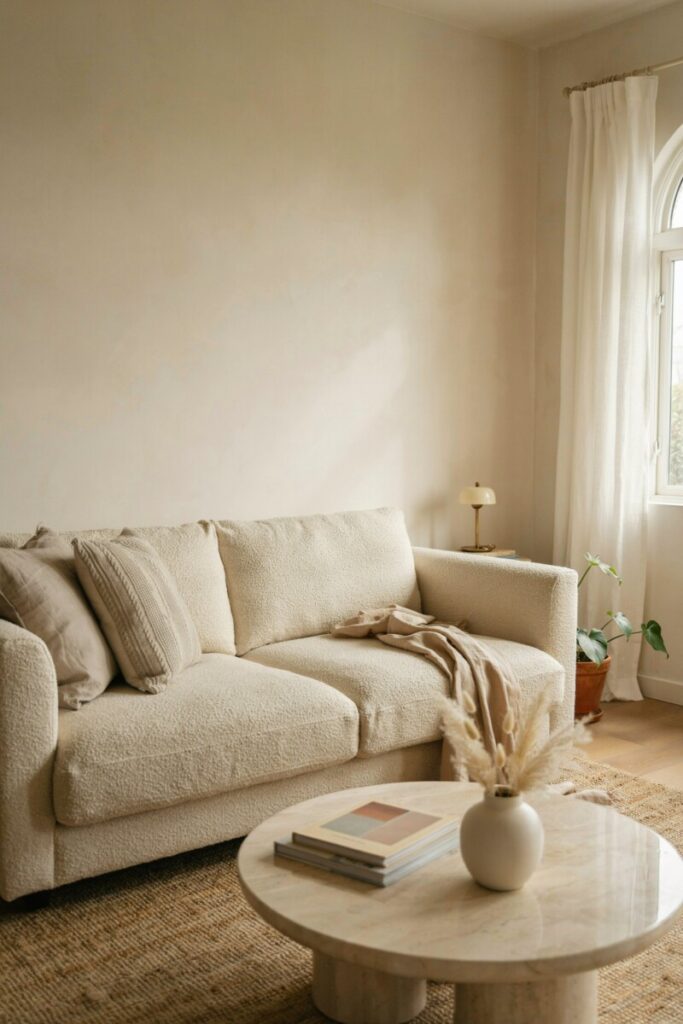
When choosing your warm neutral palette, layer it thoughtfully:
- Walls: Cream, off-white, or light taupe
- Large furniture: Beige, sand, or soft gray-beige
- Accents: Deeper tones like clay, terracotta, mushroom, or warm walnut
A well-curated warm neutral palette is the secret behind that effortless, Pinterest-worthy look you’ve been admiring. It creates visual cohesion across the room and sets the stage for everything else you add — from textiles to decor.
The beauty of cream and taupe decor lies in its versatility. You can dress it up with luxe textiles for a more refined vibe or dress it down with rustic wood and woven accents for an earthy, organic modern feel. Either way, you’re building a canvas that breathes.
Idea 2: Anchor the Room with a Bouclé Sofa
If there’s one furniture piece that has come to define the cozy minimalist living room in recent years, it’s the bouclé sofa. Bouclé — that nubby, textured looped yarn fabric — instantly adds depth, softness, and visual interest to an otherwise minimalist space without introducing loud colors or busy patterns.
A bouclé sofa in cream, ivory, or oatmeal serves as both a statement piece and a grounding element. Its organic texture invites touch, while its clean, modern silhouette keeps the aesthetic sharp and intentional. Look for sofas with low profiles, slim tapered legs, or rounded forms — all hallmarks of a modern minimalist interior.
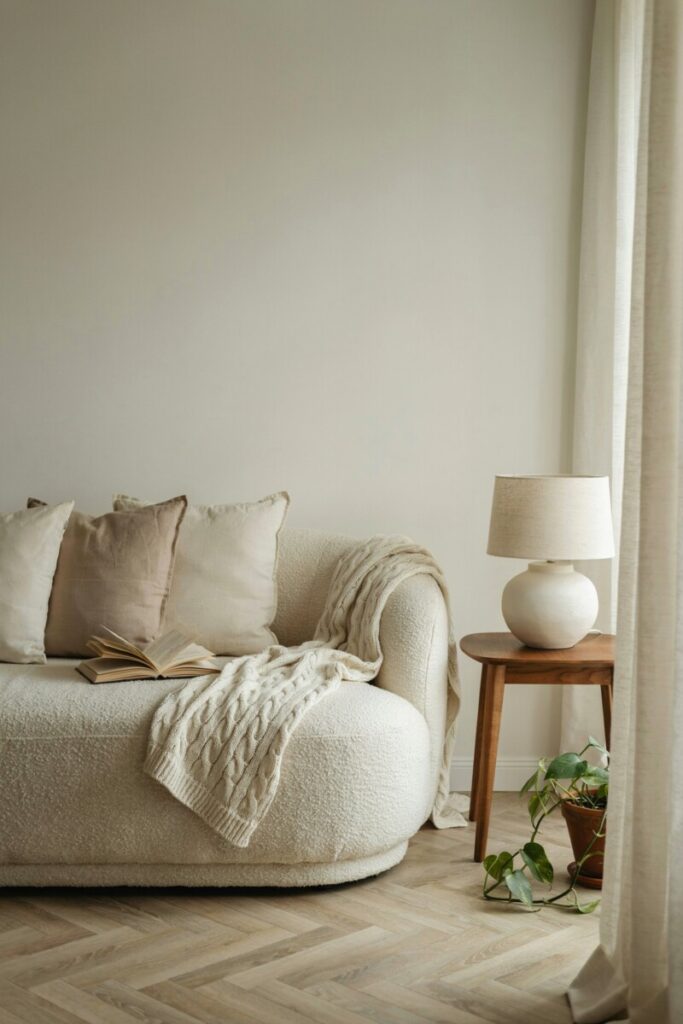
When shopping for your bouclé sofa, consider:
- Durability: Performance bouclé fabrics are now widely available and much easier to clean than earlier versions — ideal for households with kids or pets.
- Scale: In smaller living rooms, a compact bouclé loveseat or apartment-sized sofa preserves the clutter-free feeling. In larger rooms, a three-seater or L-shaped sectional creates a luxurious lounge zone.
- Shape: Curved bouclé sofas have surged in popularity for their sculptural quality and Japandi-inspired softness.
Pair your bouclé sofa with a chunky knit throw and two or three oversized linen pillows in complementary tones. This layering of natural textures is exactly what separates a cold minimalist room from a warm, inviting one.
Idea 3: Invest in Natural Wood Furniture
There’s a reason wood furniture has been a staple of warm minimalist design for decades: nothing grounds a space quite like the warmth, grain, and timelessness of real wood. In a warm minimalist living room, wood plays a starring role — not as an afterthought, but as a deliberate design element.
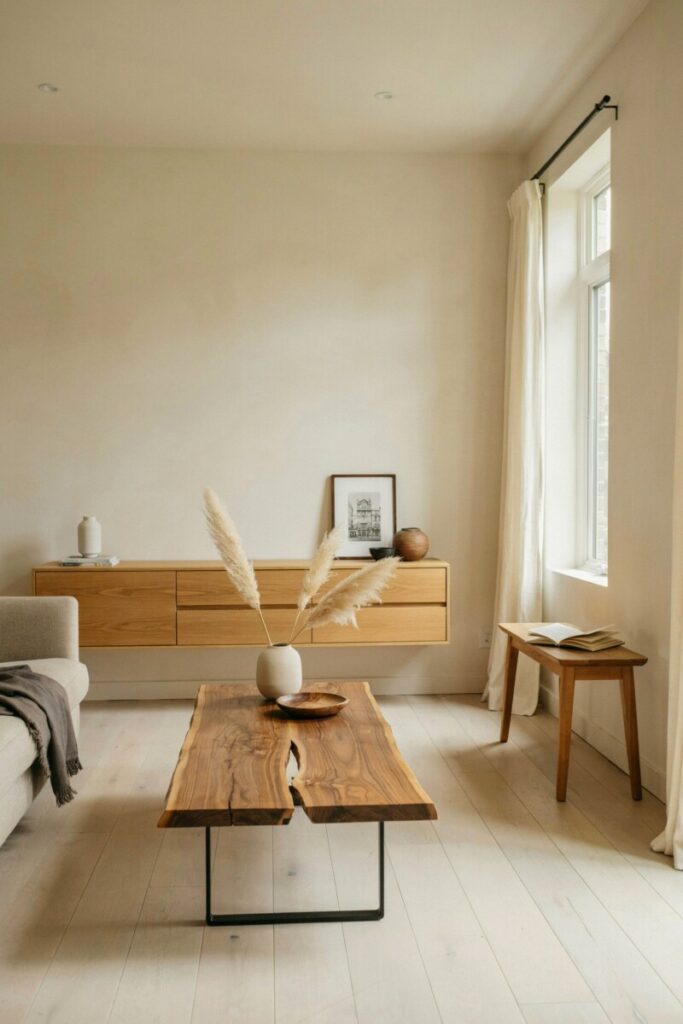
Focus on wood tones that harmonize with your neutral palette:
- Walnut: Deep, rich, and dramatic — walnut adds sophistication without feeling heavy. A walnut coffee table or media console is a classic choice.
- White Oak: Light, airy, and effortlessly modern — white oak complements beige living room decor beautifully and works well in Scandinavian and Japandi-inspired spaces.
- Natural Ash or Birch: Subtle and understated, these lighter woods keep the room feeling bright and open.
- Reclaimed or Live-Edge Wood: For a more organic modern decor aesthetic, live-edge slabs and reclaimed wood pieces add character and soul.
The key is restraint. Choose two or three statement wood pieces rather than filling the room with matching furniture. A walnut coffee table, an oak sideboard, and a simple wood bench by the window can create a cohesive yet curated look.
Don’t forget that wood furniture also serves a functional purpose. In a clutter-free living room, every piece should earn its place — both aesthetically and practically. Opt for wood furniture with hidden storage, lift-tops, or nesting designs to keep everyday items tucked away while maintaining the serene aesthetic.
Idea 4: Dress Your Windows with Linen Curtains
Natural light is the unsung hero of warm minimalist design, and linen curtains are the perfect way to frame it. Unlike heavy drapes or synthetic blinds, linen curtains filter light softly, casting a gentle, diffused glow that enhances the calm home decor vibe you’re cultivating.
Linen has an inherently organic quality — it wrinkles, it breathes, it softens over time. This imperfect, lived-in texture is exactly what gives a modern minimalist interior its warmth and humanity. In 2026, unlined linen panels in natural, ivory, or sand tones are the go-to choice for designers creating serene living spaces.
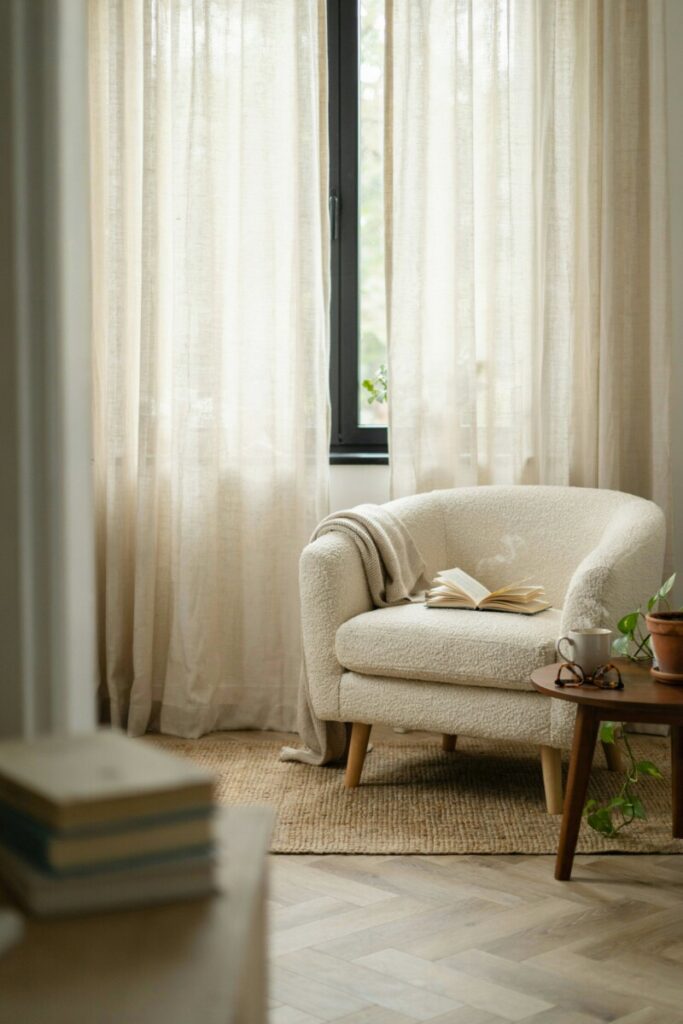
Tips for styling linen curtains:
- Hang high and wide: Mount curtain rods several inches above the window frame and extend them beyond the window on each side. This makes windows appear larger and ceilings taller.
- Let them puddle slightly: A small puddle on the floor adds a romantic, effortless feel that’s perfect for a cozy modern living room.
- Layer thoughtfully: If you need more light control, pair linen curtains with sheer inner panels or simple woven wood shades.
- Choose natural tones: Stick with ivory, beige, sand, or light oatmeal to maintain the warm neutral palette.
Linen curtains also help regulate temperature and add acoustic softness to the room — a subtle but meaningful contribution to the overall comfort of your space.
Idea 5: Layer Natural Textures Intentionally
One of the most common mistakes people make when transitioning to minimalist design is stripping away too much, leaving the room feeling flat and lifeless. The antidote? Natural textures. Layering different textures is what transforms a minimalist room from sterile to serene.
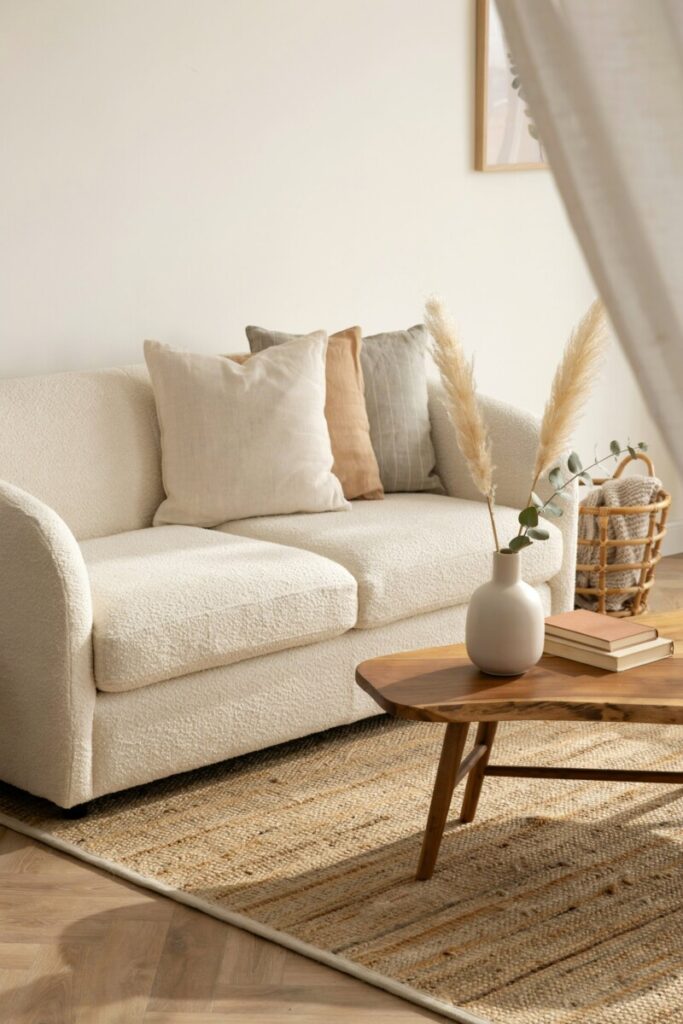
In a warm minimalist living room, texture replaces color as the primary source of visual interest. Think of it as building a tactile symphony where each element plays a distinct note:
- Soft textiles: Bouclé, linen, wool, and cotton add cozy softness.
- Natural fibers: Jute, rattan, sisal, and seagrass bring earthy, woven warmth.
- Wood grains: Smooth oak, rough-hewn walnut, or polished teak add organic depth.
- Stone and ceramics: Terracotta pots, travertine trays, and matte ceramic vases introduce cool, grounded contrast.
- Metal accents: Brushed brass, matte black iron, or aged bronze provide subtle shine and structure.
The rule of thumb for texture layering is three to five different textures per seating area. For example, a bouclé sofa (soft) paired with a jute rug (rough), a walnut coffee table (smooth wood), linen pillows (crisp fabric), and a ceramic vase (matte stone) creates a beautifully balanced vignette.
Avoid matching everything. Instead, let contrasts do the work — rough against smooth, matte against sheen, heavy against airy. This is the heart of organic modern decor and one of the easiest ways to make a minimalist space feel rich and inviting.
Idea 6: Curate Soft, Warm Lighting
Lighting can make or break the mood of a room — and in a cozy minimalist living room, soft lighting is non-negotiable. Harsh overhead lighting or cool-toned bulbs can instantly strip away the warmth you’ve worked so hard to cultivate. Instead, think of lighting as a layering exercise that enhances your calm home decor.
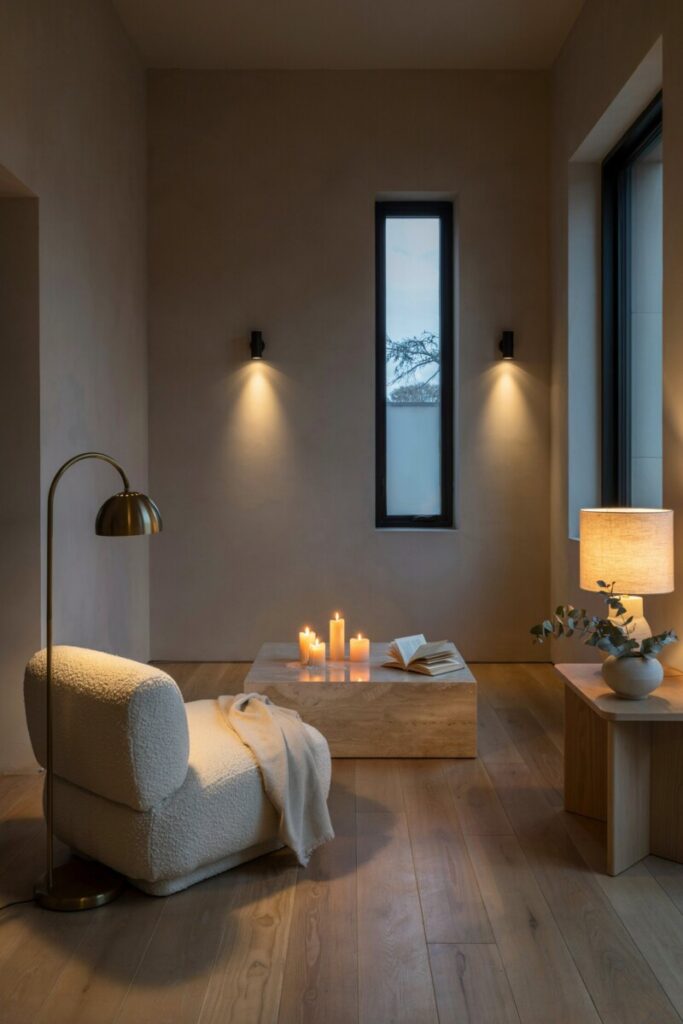
Build your lighting strategy around three principles:
1. Warm color temperature: Choose bulbs rated between 2700K and 3000K for a cozy, golden glow. Avoid anything above 4000K, which reads as cool or clinical.
2. Dimmable fixtures: Install dimmers on every overhead light and choose table and floor lamps with dimming capabilities. The ability to adjust light levels throughout the day is essential for a serene living space.
3. Multiple light sources: Rather than relying on one central fixture, scatter several smaller light sources around the room:
- A sculptural floor lamp in a reading corner
- Table lamps with linen or paper shades on console tables
- Wall sconces flanking a sofa or artwork
- Ambient LED strips behind shelving or under cabinets
- Candles and oil diffusers for a soft, flickering glow
In a Japandi living room, lighting often takes cues from Japanese design — think paper lanterns, washi-paper shades, and simple wooden pendants. These elements add softness and a meditative quality that aligns perfectly with warm minimalism.
Don’t underestimate the power of candlelight. A few well-placed pillar candles in ceramic or stoneware holders can transform an evening living room from functional to magical.
Idea 7: Embrace Organic Modern Decor Elements
Organic modern decor has become one of the most influential interior design movements in recent years, and it’s a natural fit for warm minimalist living rooms. This style blends clean, modern lines with raw, natural materials and sculptural forms inspired by the natural world.
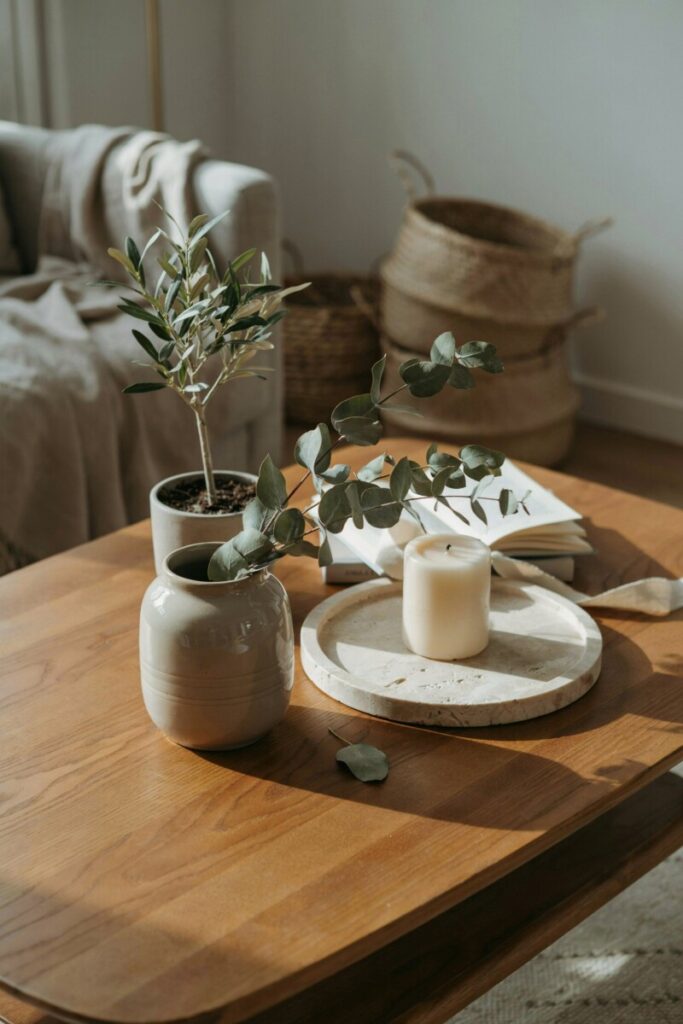
Key organic modern elements to incorporate include:
- Sculptural vases: Irregular, hand-thrown ceramics in matte finishes look stunning as standalone decor pieces.
- Dried botanicals: Pampas grass, dried eucalyptus, olive branches, and bunny tails add height and organic movement without requiring maintenance.
- Natural stone: Travertine, marble, and limestone surfaces — whether as trays, coffee table tops, or decorative objects — bring a sense of timeless luxury.
- Live plants: Large-leaf plants like fiddle-leaf figs, olive trees, or monstera soften architectural lines and purify the air. Choose planters in neutral tones to keep things cohesive.
- Woven baskets: Seagrass, rattan, and jute baskets provide stylish storage and visual texture.
The beauty of organic modern decor is that each piece feels unique and intentional — the opposite of mass-produced decor. When shopping, look for handmade, small-batch, or vintage items that have character and story. A single hand-thrown ceramic bowl on a walnut coffee table can be more impactful than a dozen generic decorative objects.
Remember: warm minimalism celebrates quality over quantity. One exceptional piece will always outshine a collection of mediocre ones.
Idea 8: Draw Inspiration from Japandi Design
If you’re looking for a specific aesthetic framework to guide your warm minimalist living room, Japandi living room design is an incredible place to start. Japandi — a fusion of Japanese and Scandinavian design philosophies — shares many of the same core values as warm minimalism: simplicity, natural materials, craftsmanship, and intentional living.
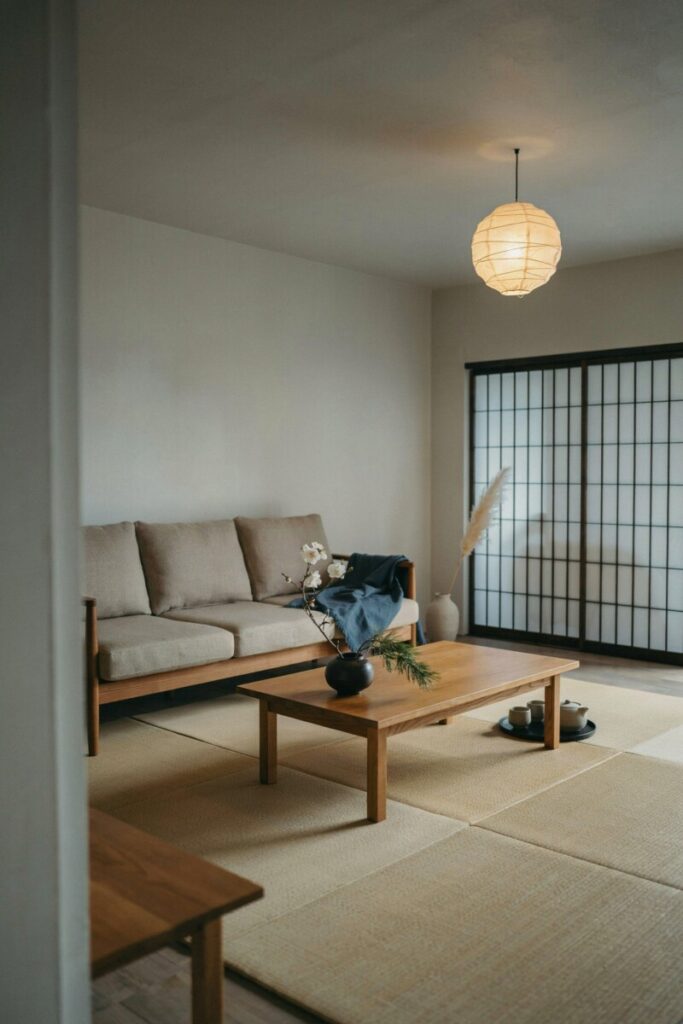
Japandi design emphasizes:
- Functional beauty: Every object has a purpose, and beauty arises from utility rather than ornamentation.
- Muted color palettes: Soft whites, warm grays, natural wood tones, and earthy greens dominate.
- Low-profile furniture: Sofas, tables, and seating are often low to the ground, creating a grounded, meditative feel.
- Handcrafted details: Imperfections are celebrated as marks of human touch — think hand-thrown pottery, hand-woven textiles, and hand-carved wood.
- Negative space: Empty space is valued as much as filled space, allowing the eye to rest and the mind to settle.
To bring Japandi elements into your living room:
- Choose low-slung wooden furniture with clean lines.
- Incorporate shoji-inspired screens, paper lanterns, or tatami-inspired rugs.
- Use natural materials like bamboo, rattan, and linen throughout.
- Display a single piece of art or a single vase on a console rather than gallery walls.
- Embrace wabi-sabi — the Japanese concept of finding beauty in imperfection and impermanence.
Japandi is not about rigid rules but about cultivating mindfulness through design. As you curate your space, ask yourself: does this piece bring calm? Does it serve a purpose? Does it reflect who I am? If the answer is yes, it belongs.
Idea 9: Design a Clutter-Free Living Room with Smart Storage
A clutter-free living room is the backbone of warm minimalism — but achieving it doesn’t mean you can’t own things. It means everything has a place, and storage is as thoughtfully designed as the decor itself.
Warm minimalism isn’t about empty rooms; it’s about intentional rooms. Every item in your living room should earn its keep, and everything that doesn’t need to be on display should be tucked away beautifully.
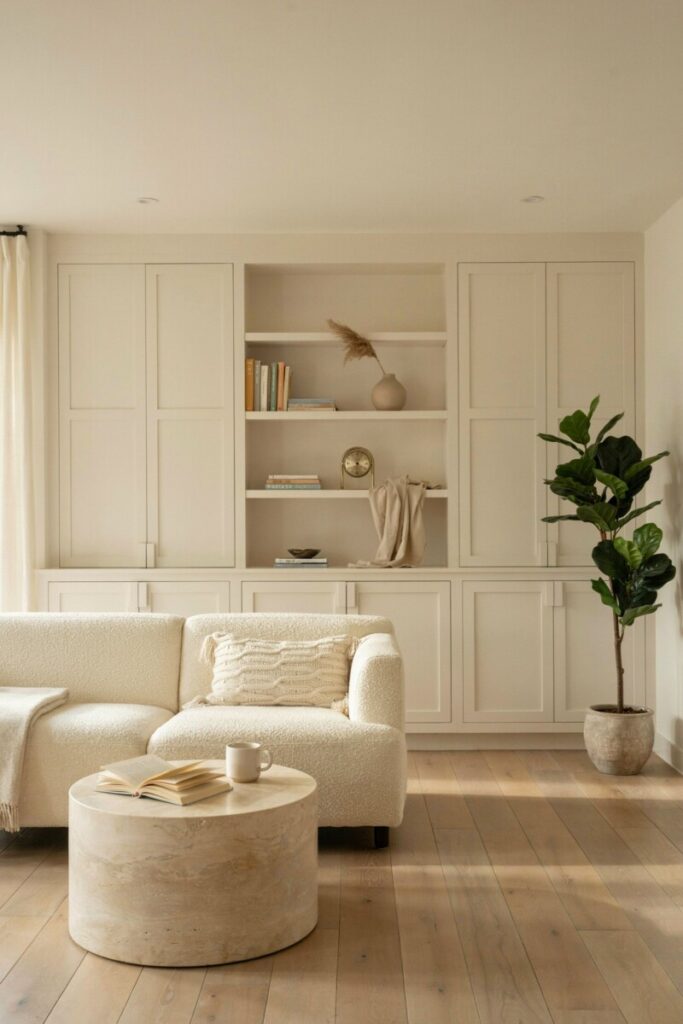
Smart storage solutions for a warm minimalist living room:
- Built-in shelving: Floor-to-ceiling built-ins painted to match your walls create seamless, custom-looking storage. Use the top shelves for display and the lower cabinets for hiding everyday items.
- Storage ottomans and benches: Upholstered pieces in bouclé or linen that double as hidden storage are a designer favorite.
- Media consoles with closed storage: Keep electronics, remotes, and cables out of sight behind closed cabinet doors.
- Decorative baskets: Woven seagrass or rattan baskets are perfect for corralling blankets, magazines, and toys while adding texture.
- Floating shelves: Keep them minimal — one or two carefully styled shelves are more impactful than walls of cluttered displays.
- Lift-top coffee tables: These offer hidden storage while maintaining a clean, minimalist silhouette.
The key principle is closed storage over open storage. While open shelving has its place, it requires constant curation and can easily become cluttered. Closed cabinets, drawers, and storage furniture keep the room visually calm without sacrificing functionality.
Make tidying a daily habit. A quick five-minute reset each evening — folding throws, returning items to their homes, fluffing pillows — goes a long way in maintaining that serene living space feeling.
Idea 10: Add Depth with Earthy Tone Accents
While your warm minimalist living room is built on a foundation of soft neutrals, earthy tones decor adds the depth and character that keeps the space from feeling one-dimensional. Earthy tones are colors drawn from nature — terracotta, sage green, mustard, rust, clay, olive, and warm brown — and they work beautifully as accent colors in a minimalist setting.
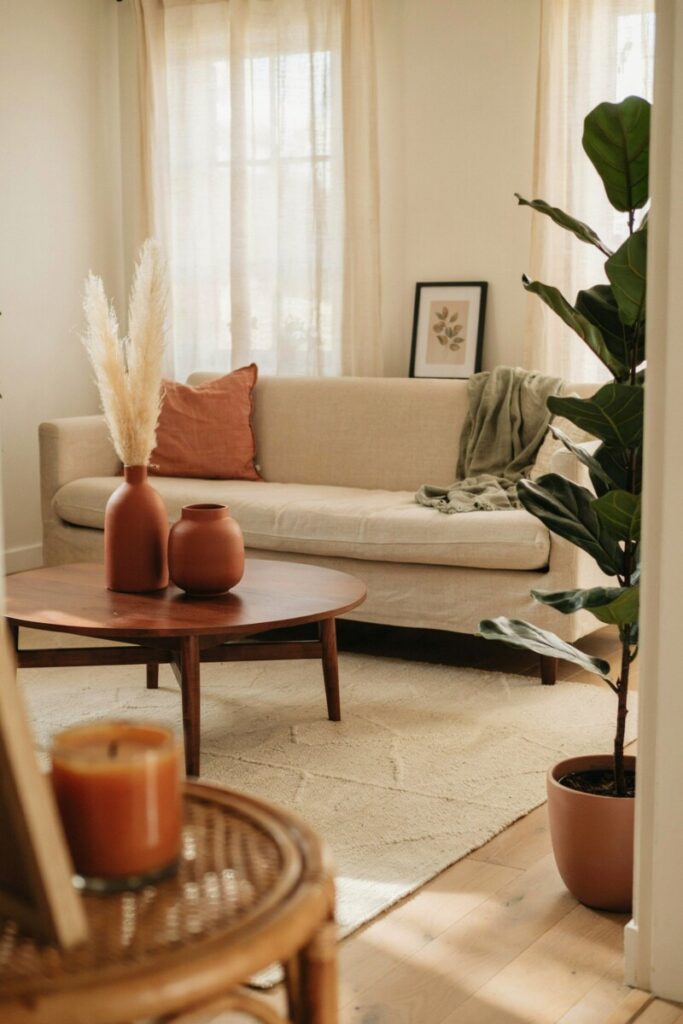
How to incorporate earthy tones without overwhelming the space:
- Textiles: A terracotta throw pillow, a sage green wool blanket, or a rust-colored linen curtain can add a pop of earthy warmth.
- Ceramics: Hand-thrown vases and bowls in earthy glazes make beautiful tabletop accents.
- Artwork: Choose pieces with earthy undertones — abstract landscapes, botanical prints, or textured paintings in muted earth tones.
- Plants: Greenery naturally introduces earthy color while enhancing the organic modern decor vibe.
- Rugs: A rug with subtle earthy patterns or tones can anchor the room beautifully.
The trick is restraint. In warm minimalism, earthy tones should complement the neutral foundation, not compete with it. Choose one or two earthy accent colors and repeat them subtly throughout the room for cohesion.
For example, a beige living room decor scheme might feature terracotta as its primary earthy accent — echoed in a throw pillow, a ceramic vase, and a piece of wall art. This repetition creates a curated, intentional look without feeling overdone.
Idea 11: Choose a Statement Rug in Natural Fibers
A well-chosen rug is one of the most impactful decisions you can make in a warm minimalist living room. It defines the seating area, adds warmth underfoot, introduces texture, and ties the entire color palette together.
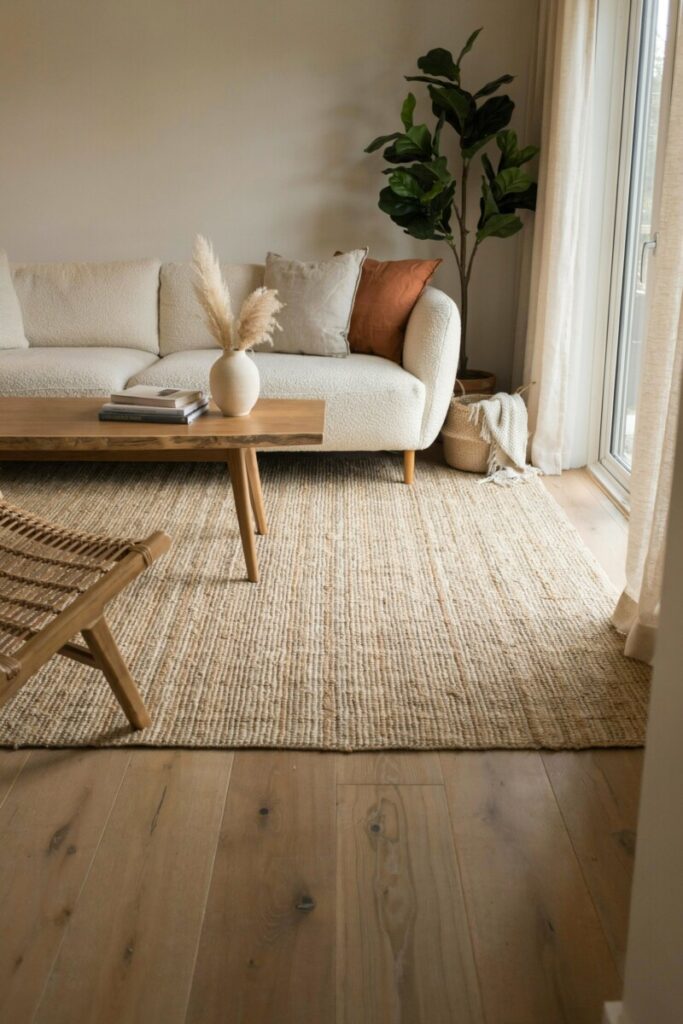
When selecting a rug for a cozy minimalist living room, prioritize natural fibers and neutral tones:
- Jute and sisal: These natural fibers add beautiful organic texture and are incredibly durable. They work especially well in high-traffic family homes.
- Wool: Wool rugs are soft, warm, and naturally stain-resistant. A low-pile wool rug in a warm neutral is a timeless choice.
- Cotton and linen: Flat-weave cotton or linen rugs in simple patterns or solid tones add subtle interest.
- Moroccan or Berber-inspired designs: These handwoven rugs feature organic patterns and plush textures that align perfectly with organic modern decor.
Size matters. A rug that’s too small makes the room feel disjointed, while one that’s too large can overwhelm. Follow these guidelines:
- Living room: The rug should be large enough that at least the front legs of all major furniture pieces sit on it. In larger rooms, all four legs on the rug creates a more cohesive, luxurious look.
- Small spaces: A rug that fits just under the coffee table with front sofa legs on it can still anchor the space effectively.
Color-wise, stick to warm neutrals — beige, cream, sand, light gray, or soft taupe. If you want pattern, choose subtle, organic designs rather than bold geometrics or busy motifs. A textured natural-fiber rug is often more impactful than a heavily patterned one in a minimalist setting.
Idea 12: Style Your Walls with Minimalist Art and Decor
Wall decor is where many people go wrong with minimalism — either by leaving walls completely bare (which feels cold) or by covering them with too much (which defeats the purpose). In a warm minimalist living room, wall decor should be intentional, meaningful, and visually balanced.
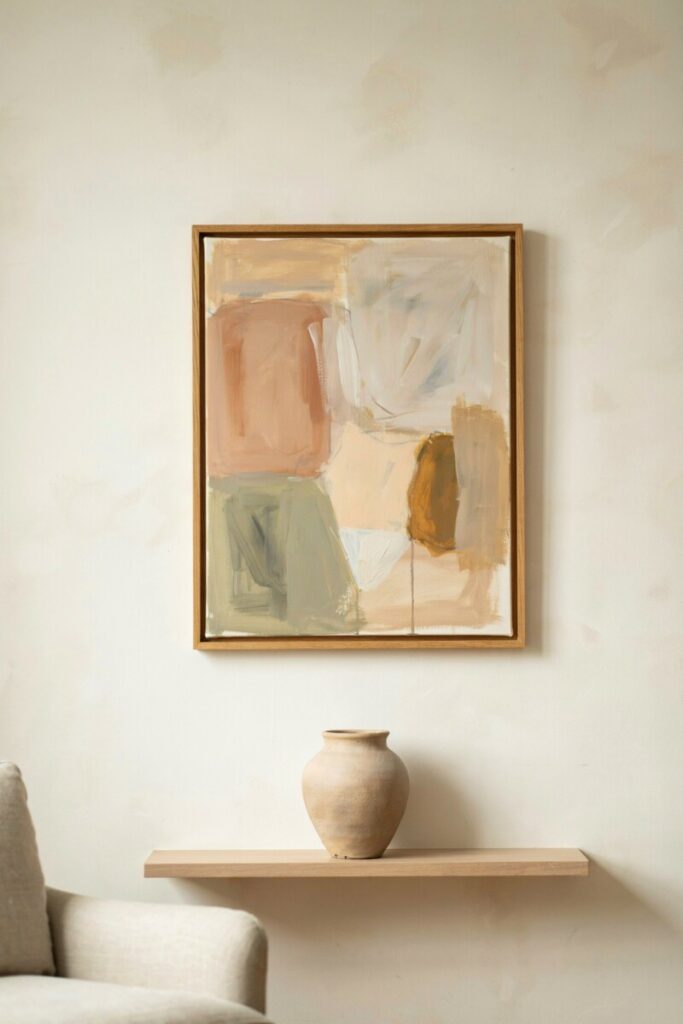
Strategies for styling walls in a serene living space:
1. One large statement piece
A single oversized painting, photograph, or textile hanging can be more powerful than a gallery wall. Choose something that resonates with you personally — abstract art, a landscape, or a large-scale botanical print. Frame it simply in natural wood or thin metal for a clean look.
2. A curated gallery wall
If you prefer a gallery wall, keep it intentional. Use matching frames in the same finish, stick to a cohesive color palette, and leave generous space between each piece. A 2×2 or 3×2 arrangement often works better than a random scattered layout.
3. Sculptural wall elements
Woven wall hangings, macramé, wooden wall panels, or ceramic wall sculptures add texture and dimension without feeling cluttered. These work especially well in Japandi and organic modern living rooms.
4. Floating shelves with restraint
One or two floating shelves styled with just a few carefully chosen objects — a small vase, a stack of books, a candle — can add personality without overwhelming the space.
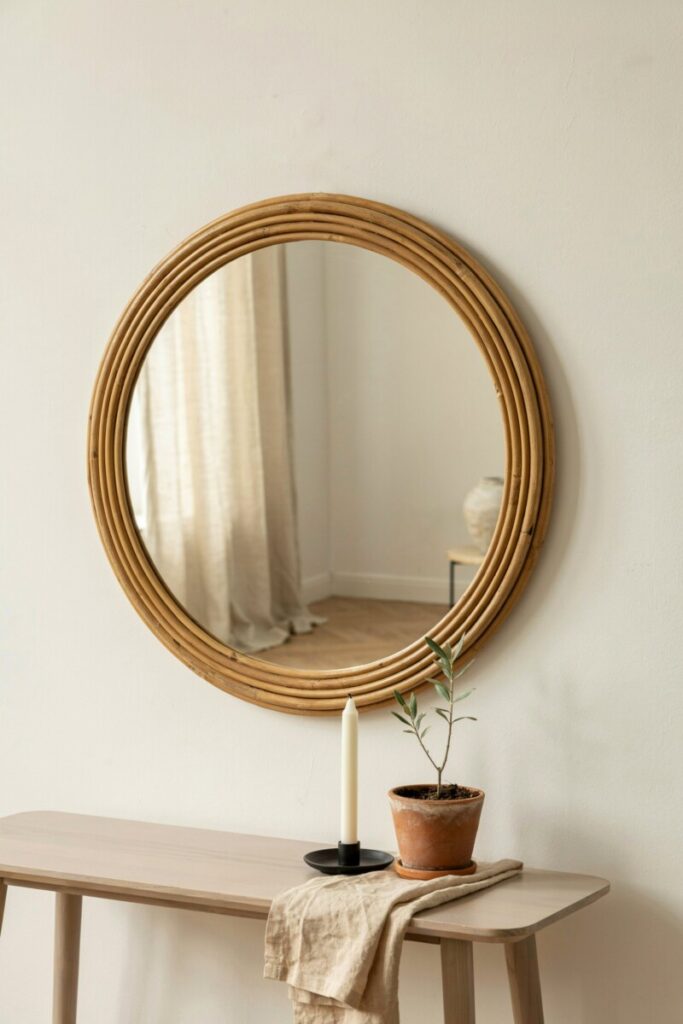
5. Mirrors
A large, simply framed mirror reflects light and makes the room feel larger. Choose a mirror with a natural wood, rattan, or matte metal frame to stay on-brand with your warm minimalist aesthetic.
The golden rule for wall decor in warm minimalism: leave plenty of negative space. Empty wall space isn’t wasted space — it’s breathing room for the eye and the mind. Resist the urge to fill every inch.
Styling Tips: How to Combine These Ideas Without Crowding the Room
Now that you have 12 warm minimalist living room decor ideas, the real challenge is bringing them together without creating a space that feels overloaded. Here are some practical styling principles to keep your living room serene and balanced:
Follow the “One In, One Out” Rule
Every time you bring a new piece into your living room, consider removing an older one. This prevents gradual clutter creep and keeps the room feeling intentional.
Use the Rule of Three
When styling surfaces like coffee tables, consoles, and shelves, group items in odd numbers — especially threes. A stack of books, a ceramic vase, and a candle make a beautiful, balanced vignette.
Leave Negative Space
Resist the temptation to fill every surface, corner, and shelf. Empty space is a design element in warm minimalism — it gives the eye a place to rest and allows individual pieces to shine.
Edit Ruthlessly
Once you’ve styled the room, take a step back and look at it with fresh eyes. Is there anything that doesn’t quite belong? Anything that feels redundant? Remove it. The process of editing is often more important than the process of adding.
Balance Visual Weight
Distribute heavy and light elements evenly around the room. If you have a large, dark walnut bookshelf on one side, balance it with something of similar visual weight on the other — perhaps a large plant in a substantial planter or a sculptural floor lamp.
Keep the Floor Visible
In a clutter-free living room, seeing a good amount of floor space makes the room feel open and airy. Avoid overcrowding with too much furniture, and choose pieces with visible legs to maintain sight lines.
Create Focal Points
Give the eye somewhere to land — a bouclé sofa, a statement artwork, a sculptural coffee table. A room without focal points feels scattered and confusing.
Rotate Seasonally
Swap out textiles, vases, and small decor items with the seasons. This keeps the space feeling fresh without requiring major changes.
Conclusion: Start Small, Stay Intentional
Creating a warm minimalist living room isn’t about achieving perfection overnight — it’s about cultivating a space that feels like home, one thoughtful choice at a time. Whether you start with a single bouclé throw pillow, swap your curtains for linen panels, or invest in a beautiful walnut coffee table, each small change moves you closer to a calmer, cozier, more intentional home.
Remember that warm minimalism is not about deprivation. It’s not about having less for the sake of less. It’s about having what truly matters — the pieces you love, the textures that comfort you, the colors that calm you — and letting everything else fall away.
Your living room should be a place where you can exhale. A place that welcomes you at the end of a long day and invites you to slow down. With these 12 warm minimalist living room decor ideas as your guide, you have everything you need to create that space — beautifully, intentionally, and on your own terms.
Start with one idea today. Maybe it’s choosing a warm neutral paint color for your walls. Maybe it’s finally hanging those linen curtains you’ve been eyeing. Or maybe it’s simply clearing a single surface and letting the beauty of empty space speak for itself.
Your calm, cozy, clutter-free living room is waiting.
Frequently Asked Questions (FAQ)
What is the difference between warm minimalism and regular minimalism?
Regular minimalism often leans toward stark, monochromatic palettes and ultra-clean lines, which can feel cold. Warm minimalism incorporates soft neutrals, natural materials, earthy tones, and layered textures to create a cozy, inviting atmosphere while maintaining simplicity and intentional design.
Can I have a warm minimalist living room with kids and pets?
Absolutely. Warm minimalism is incredibly practical for families. Choose performance fabrics for your bouclé sofa, opt for durable natural fiber rugs, and invest in smart closed storage to hide toys and everyday items. The key is designing a space that’s both beautiful and functional.
How do I keep a beige living room from looking boring?
The secret is texture layering. Combine multiple natural textures — bouclé, linen, wool, rattan, wood, stone — within your neutral palette. Add depth with earthy tone accents, incorporate plants and organic decor, and use soft lighting to create warmth and dimension.
What is the best wood tone for a warm minimalist living room?
It depends on your overall palette, but walnut and white oak are the most popular and versatile choices. Walnut adds richness and drama, while white oak keeps things light and airy. Whichever you choose, stick to one or two wood tones throughout the room for cohesion.
How much decor should I have in a warm minimalist living room?
Less than you think. Warm minimalism celebrates negative space and intentional curation. Aim for a few high-quality, meaningful pieces rather than lots of small decorative items. Every object should earn its place through function, beauty, or personal significance.
Is Japandi design the same as warm minimalism?
Japandi is a specific aesthetic within the broader warm minimalism umbrella. Japandi specifically fuses Japanese and Scandinavian design principles, emphasizing craftsmanship, natural materials, and mindful living. While all Japandi spaces are warm minimalist, not all warm minimalist spaces are Japandi.
What lighting works best in a warm minimalist living room?
Soft, warm lighting (2700K–3000K) from multiple sources works best. Avoid harsh overhead lighting and instead layer floor lamps, table lamps, sconces, and candles to create a cozy, inviting glow. Dimmers are highly recommended for mood control.
How do I maintain a clutter-free living room long-term?
Make decluttering a regular habit, invest in adequate closed storage, follow the “one in, one out” rule, and give every item in your living room a designated home. Daily five-minute resets and seasonal editing sessions help keep the space serene.
Can I mix warm minimalism with other design styles?
Yes. Warm minimalism pairs beautifully with organic modern, Japandi, Scandinavian, Mediterranean, and even modern farmhouse styles. The key is maintaining the core principles — simplicity, natural materials, and intentional curation — while incorporating elements from your preferred style.
What are the most affordable ways to start warm minimalism?
Start with paint — a warm neutral color transforms a room instantly. Swap out textiles for natural fabrics like linen and cotton. Declutter surfaces. Add plants. Rearrange existing furniture to create better flow and negative space. These low-cost changes make a dramatic impact.