
Walk into any living room that feels “off,” and chances are the rug is the culprit. A rug that’s too small makes furniture look stranded. One that’s too large can overwhelm the entire space. But when you nail the living room rug size, something magical happens—the room clicks into place, the furniture feels grounded, and the whole space exudes balance and warmth.
Choosing the right area rug for living room spaces is one of the most impactful interior design tips you can learn. It’s the foundation that ties your seating arrangement together, defines zones in open layouts, and adds texture underfoot. Yet so many homeowners and renters end up guessing, clicking “buy” online, and hoping for the best.
Whether you’re working with a cozy apartment, a sprawling open-concept home, or something in between, this guide walks you through everything you need to know. From understanding standard rug sizes to mastering the best rug placement ideas, we’ll help you make a confident, stylish choice that elevates your living room decor for years to come.
Why Rug Size Matters
Before diving into dimensions and measurements, let’s talk about why rug size carries so much weight in room styling.
Visual Flow and Proportion
A well-sized rug creates visual harmony. When your rug is proportionate to the room, it naturally guides the eye and helps furniture feel connected rather than scattered. The wrong size disrupts this flow, making even beautifully curated spaces feel chaotic or cramped.
Furniture Grouping
Rugs serve as invisible anchors for your furniture layout. They tell your brain where one conversation area ends and another begins. In open-concept homes, a properly sized rug defines the living area without the need for walls. In smaller rooms, it gives your seating arrangement a sense of purpose.
Comfort and Functionality
Beyond aesthetics, the right rug size affects how you actually use the space. A rug that extends beyond your seating means your feet land on soft texture when you sit down. It dampens sound, adds warmth underfoot, and creates a cozy landing zone. A tiny rug that only covers the coffee table area? It’s mostly decorative—and often ends up feeling more like an afterthought than a design element.
The “Float” Problem
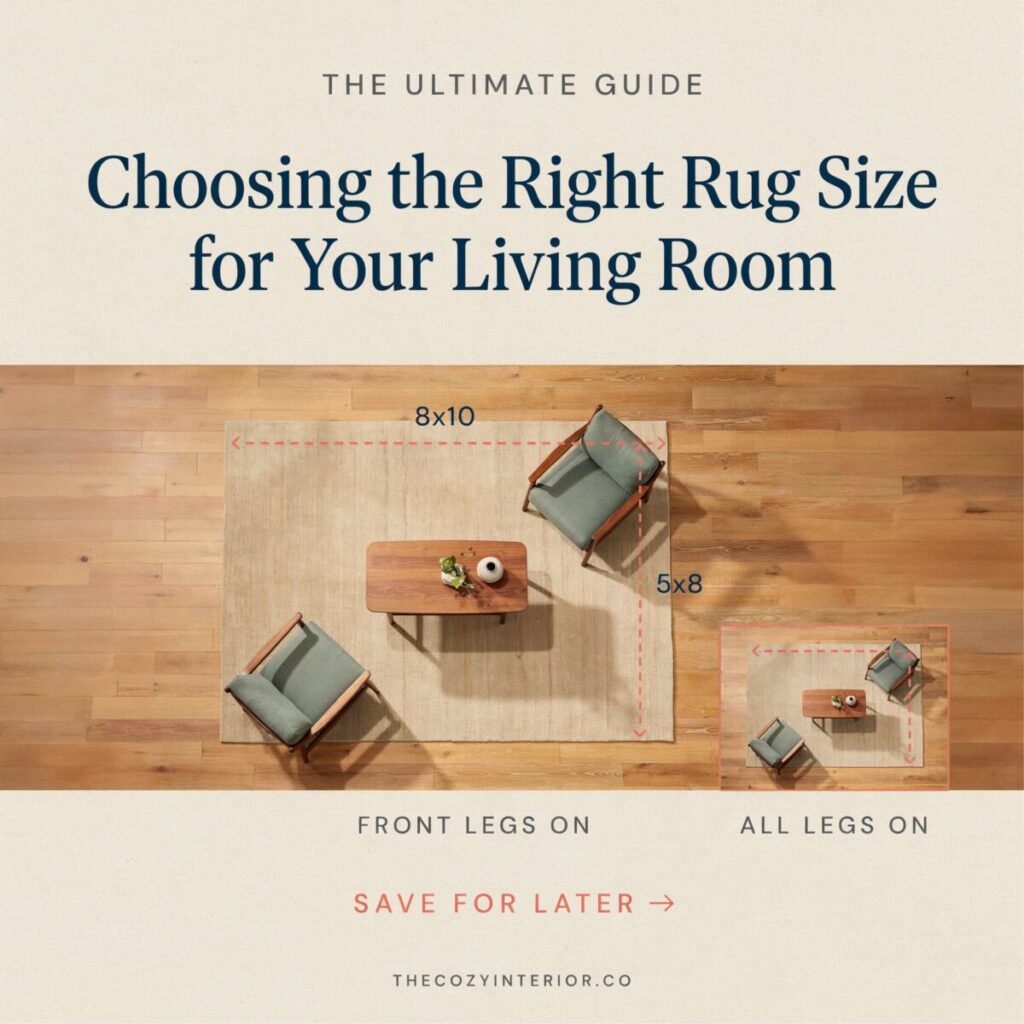
One of the biggest tells that a room’s rug is too small? Furniture that floats awkwardly around it, with legs planted firmly on hard flooring. This creates a disjointed look where nothing feels connected. Getting your rug dimensions right solves this instantly.
Standard Rug Sizes Explained
Most area rugs are produced in a handful of standard rug sizes, and understanding what each one offers is the first step toward smart shopping. Here’s a breakdown of the most common options.
5×7 Rug
A 5×7 rug works well in compact spaces, apartments, or as an accent piece layered under a coffee table in a smaller sitting area. It’s ideal when:
- You have a loveseat and two armchairs in a tight grouping
- The room is under 120 square feet
- You want to define a reading nook or small conversation area
- Budget is a concern (smaller rugs cost less)
Keep in mind that a 5×7 often leaves all furniture legs off the rug, which works stylistically but doesn’t create that grounded, connected feel.
8×10 Rug
The 8×10 rug is arguably the most popular choice for medium-sized living rooms, and for good reason. It offers enough coverage to accommodate most standard seating arrangements with front legs resting on the rug. This size is perfect for:
- Living rooms between 150–250 square feet
- Three-piece seating setups (sofa + two chairs)
- Rooms where you want clear definition without overwhelming the space
An 8×10 is often the sweet spot between affordability and visual impact.
9×12 Rug
A 9×12 rug makes a statement. This larger size suits spacious living rooms and allows you to place all furniture legs on the rug—creating a luxurious, layered look. Consider a 9×12 when:
- Your living room is over 250 square feet
- You have a formal or traditional layout
- You want maximum comfort and sound absorption
- You prefer the “all legs on” aesthetic
Oversized Rugs (10×14, 12×15, and Beyond)
Oversized rugs are the go-to for grand living rooms, great rooms, and open-concept layouts where you need serious coverage. These rugs:
- Unify large spaces with multiple furniture groupings
- Work beautifully in homes with high ceilings and expansive floor plans
- Create a custom, designer-level look
The downside? Oversized rugs are expensive, heavy, and harder to move. Measure carefully before committing.
Runner Rugs and Odd Sizes
While not typically used as main living room rugs, runner rugs (usually 2×6 or 2×8) can add visual interest in narrow spaces or alongside a sofa. Round rugs can also work in specific layouts, particularly under circular coffee tables or in reading corners.
How to Measure Your Living Room
Before you browse rug catalogs or visit showrooms, grab a tape measure. A proper rug measurement guide starts with accurate room dimensions and a clear plan for furniture placement.
Step 1: Measure the Room
Measure the length and width of your living room in feet. Note any architectural features—fireplaces, built-ins, bay windows, or awkward alcoves—that might affect layout.
Step 2: Plan Your Furniture Layout
Decide how you want to arrange your seating. Will all pieces face a TV or fireplace? Do you want a conversational grouping? Sketch your plan on paper or use a free room planner app.
Step 3: Mark the Rug Area
Using painter’s tape, outline the area where you want the rug to sit directly on the floor. This is one of the most effective interior design tips because it lets you “see” the rug before spending a dime.
Step 4: Leave Proper Border Space
The general rule: leave between 12 and 24 inches of exposed floor between the edge of the rug and the walls. In smaller rooms, you can go as tight as 8 inches. In larger rooms, aim for 18–24 inches to maintain a sense of spaciousness.
Step 5: Account for Traffic Flow
Make sure your planned rug placement doesn’t block doorways, walkways, or high-traffic paths. You want to be able to move through the room without catching toes on rug edges.
Step 6: Consider Furniture Legs
Decide which placement rule you want to follow (we’ll cover these next), and adjust your measurements accordingly.
Best Rug Sizes by Living Room Layout
No two living rooms are the same, and the best how to choose rug size strategy accounts for your specific layout. Here’s a breakdown by common room types.
Small Living Rooms
A small living room rug should still be as large as the space allows. Many people make the mistake of going tiny in tiny rooms, but this actually makes the space feel smaller.
Recommended sizes: 5×7 or 6×9
Tips:
- Keep 8–12 inches of floor visible around the edges
- Opt for low-pile rugs to avoid overwhelming the space
- Use light colors or subtle patterns to keep the room feeling airy
- A rug that extends under the front legs of your sofa (even if just barely) creates cohesion
Medium Living Rooms
Medium-sized living rooms are the most common in US homes, and they give you the most flexibility.
Recommended sizes: 8×10 or 9×12
Tips:
- Aim for the “front legs on the rug” rule
- Leave 18–24 inches of floor space around the edges
- Consider layering a smaller patterned rug over a larger neutral sisal or jute rug for added depth
Large Living Rooms
Spacious living rooms need substantial floor coverage to avoid feeling empty or cavernous.
Recommended sizes: 9×12, 10×14, or custom oversized rugs
Tips:
- Place all furniture legs on the rug for a luxe, cohesive look
- Consider multiple rugs to define separate zones (seating area + reading nook, for example)
- Large patterns and bold colors work well in big spaces
- Don’t be afraid of oversized rugs—they anchor the room beautifully
Open-Concept Spaces
Open-concept homes present unique challenges because the living room often flows into dining or kitchen areas without clear boundaries.
Tips:
- Use rugs to define zones without walls
- Match rug sizes to the scale of each furniture grouping
- Maintain visual cohesion through complementary colors or patterns across rugs
- Make sure each rug leaves adequate border space—crowded rugs in open spaces look chaotic
Sectional Sofas
Finding the rug size for sectional sofas can be tricky because of their unique shape and size. Here’s how to approach it:
Recommended sizes: 8×10 minimum, 9×12 or larger ideal
Tips:
- The rug should extend at least 6–12 inches beyond the ends of the sectional
- Place front legs of all sectional pieces on the rug
- For L-shaped sectionals, make sure the rug accommodates both “arms” of the L
- Consider placing a larger rug under the main seating with a smaller accent rug defining a secondary area
Two-Sofa Layouts
When you have two sofas facing each other, the rug should bridge the gap between them and anchor both.
Recommended sizes: 8×10 or 9×12
Tips:
- Both sofas should have at least their front legs on the rug
- The coffee table should sit completely on the rug
- Leave space for walkways on either side
- This layout works beautifully with traditional or symmetrical design styles
Floating Furniture Arrangements
“Floating” furniture means pieces aren’t pushed against walls—ideal for large rooms with central focal points.
Recommended sizes: 9×12 or oversized
Tips:
- All four legs of every piece should sit on the rug
- The rug essentially becomes a “room within a room”
- Make sure there’s plenty of walking space around the entire arrangement
- This layout looks especially stunning with bold, statement-making rugs
Common Rug Placement Rules
Interior designers follow a few tried-and-true rules when placing a rug under sofa and other furniture. You don’t have to follow these religiously, but they’re excellent starting points.
Rule 1: Front Legs on the Rug
This is the most popular and forgiving placement rule. The front legs of your sofa, chairs, and other seating rest on the rug, while the back legs remain on the floor.
Best for: Medium to large living rooms, most furniture arrangements
Why it works: It creates visual connection without requiring a massive rug. It also makes the room feel grounded and intentional.
Rule 2: All Furniture Legs on the Rug
For a more formal, layered, and luxurious look, place every piece of furniture entirely on the rug.
Best for: Large living rooms, formal spaces, rooms with oversized rugs
Why it works: It creates a unified, high-end feel and maximizes comfort underfoot.
Watch out: This requires a significantly larger rug, and in smaller rooms, it can make the space feel cramped.
Rule 3: No Legs on the Rug
Sometimes called the “floating” or “island” approach, this means the rug sits entirely under the coffee table with all furniture legs on bare floor.
Best for: Very small rooms, ultra-modern minimalist spaces, or when the rug is primarily decorative
Why it works: It keeps the room feeling open and airy.
Watch out: This often looks like an afterthought. Only use this approach intentionally, not because your rug was too small.
Rule 4: Centered Under the Coffee Table
Whatever placement rule you follow, your rug should be centered under your primary coffee table. The table should have at least 6–12 inches of rug visible on all sides.
Rule 5: Equal Border Space
Aim for roughly equal amounts of exposed floor on all sides of the rug. This creates balance and keeps the room feeling symmetrical and intentional.
Mistakes to Avoid
Even experienced decorators can fall into common rug-sizing traps. Here are the biggest mistakes to sidestep:
Going Too Small
This is the number one rug mistake. A tiny area rug for living room spaces looks like a postage stamp on a vast floor. Always buy the largest rug your room and budget can accommodate.
Ignoring Furniture Scale
A delicate French provincial sofa paired with an oversized chunky rug? Or a massive overstuffed sectional with a dainty 5×7? Mismatched scale looks awkward. Your rug should complement, not compete with, your furniture’s visual weight.
Skipping the Tape Test
Buying online without physically seeing the size is risky. Always use painter’s tape to map out the rug dimensions on your floor before purchasing.
Forgetting About Traffic Patterns
A beautiful rug placed directly in a high-traffic path will get worn unevenly and quickly. Think about how people actually move through your living room.
Overlooking Room Shape
Long, narrow living rooms need different rug solutions than square ones. A long room might benefit from a 9×12 or even two smaller rugs, while a square room works well with a single large square or rectangular rug.
Falling for the “Rug Should Match the Room Size” Myth
You don’t need a rug that covers every inch of floor. Leaving breathing room around the edges is essential for visual balance.
Not Considering Door Clearance
If your living room has doors that swing inward, make sure your rug doesn’t interfere. Check clearance heights too—thick, high-pile rugs can catch on doors.
Buying Based on Price Alone
It’s tempting to grab the cheapest option, but a poorly sized, low-quality rug can undermine your entire room’s design. Invest in the right size and quality you can afford.
Style and Material Considerations
Size isn’t the only factor in choosing the perfect floor covering for your living room. Material, pile height, pattern, and color all play supporting roles in your overall home decor ideas.
Material Choices
- Wool: Durable, naturally stain-resistant, luxurious feel. Great for high-traffic areas but pricier.
- Cotton: Soft, affordable, easy to clean. Works well in casual spaces.
- Jute/Sisal: Natural texture, eco-friendly, adds organic warmth. Less soft underfoot and can be rough on bare feet.
- Synthetic (polypropylene, polyester): Budget-friendly, stain-resistant, great for homes with kids or pets. Less luxurious feel.
- Silk/Viscose: Luxurious sheen and softness, but delicate. Best for low-traffic, formal spaces.
Pile Height
- Low pile (flatweave, kilim): Easy to clean, good for high-traffic areas, works well with rolling furniture.
- Medium pile: The sweet spot for most living rooms—comfortable and practical.
- High pile (shag): Ultra-cozy and statement-making, but harder to clean and can trip up vacuum cleaners.
Patterns and Colors
- Bold patterns can hide stains and add visual interest but may limit future furniture changes.
- Neutral, solid rugs are versatile and timeless—easy to build around.
- Dark colors hide dirt better but can make small rooms feel smaller.
- Light colors brighten spaces but show every crumb and footprint.
Texture and Layering
Don’t be afraid to layer rugs for added dimension. A smaller patterned rug over a larger neutral base (like a jute or sisal) is a designer trick that adds depth and personality.
Final Tips Before Buying
You’ve measured, planned, and picked your perfect size. Before you click “checkout,” here’s a final checklist:
The Pre-Purchase Checklist
- [ ] Used painter’s tape to outline rug size on the floor
- [ ] Verified furniture placement rules match your chosen size
- [ ] Left 12–24 inches of floor space around the edges
- [ ] Checked door clearance and traffic flow
- [ ] Considered material, pile height, and color against your lifestyle
- [ ] Measured twice, bought once
Smart Shopping Tips
- Order samples before committing to expensive rugs. Color and texture look different in person versus on a screen.
- Check return policies—especially for online purchases. Rugs are heavy, and returns can be costly.
- Read reviews for insights on color accuracy, quality, and true-to-size dimensions.
- Consider professional cleaning costs when budgeting, especially for natural fiber rugs.
- Invest in a quality rug pad—it extends rug life, prevents slipping, and adds cushioning. A pad should be slightly smaller than the rug itself (about 1 inch on each side).
Timing Your Purchase
Rugs often go on sale during holiday weekends (Memorial Day, Labor Day, Black Friday) and during seasonal transitions. If your dream rug is out of budget, consider waiting for a sale.
Conclusion
Choosing the right rug size for your living room is part science, part art, and a whole lot of practical decision-making. Whether you opt for a compact 5×7, a versatile 8×10, a luxurious 9×12, or a statement-making oversized rug, the key is intention.
A properly sized rug transforms your living room from a collection of furniture into a cohesive, comfortable, and inviting space. It grounds your furniture layout, enhances your room styling, and becomes a foundational element of your home decor.
Take the time to measure, plan, and test before you buy. Use the rug size guide principles we’ve covered, follow proven rug placement ideas, and trust your instincts. Your living room—and your feet—will thank you.
The perfect rug is out there. Now you have the knowledge to find it.
Frequently Asked Questions (FAQs)
1. What size rug should I get for a standard living room?
For most standard US living rooms (150–250 square feet), an 8×10 rug is the ideal choice. It accommodates most three-piece seating arrangements with front legs on the rug, provides good coverage, and leaves appropriate border space. If your room is on the larger side, consider a 9×12 for a more luxurious feel.
2. Should all furniture legs be on the rug?
Not necessarily. The three main placement rules are: all legs on the rug (most formal, requires large rugs), front legs on the rug (most popular and versatile), or no legs on the rug (minimalist, mainly decorative). For most homes, the “front legs on” approach strikes the best balance between visual cohesion and practicality.
3. How much floor space should be visible around the rug?
Aim for 12–24 inches of exposed floor between the rug edge and the walls. In small rooms, you can reduce this to 8–12 inches. In large rooms, 18–24 inches looks best. The goal is equal, balanced borders on all sides.
4. Can I use multiple rugs in one living room?
Absolutely! Multiple rugs work especially well in open-concept spaces or large living rooms with distinct zones. Just make sure the rugs complement each other in style, color palette, or texture to maintain visual cohesion. Layering a smaller patterned rug over a larger neutral base is also a popular designer technique.
5. Do I need a rug pad, and what size should it be?
Yes, a rug pad is highly recommended. It prevents slipping, extends the life of your rug, adds cushioning, and protects your floors. The pad should be slightly smaller than the rug—about 1 inch smaller on each side—so it remains hidden beneath the rug edges while still providing full coverage and grip.