
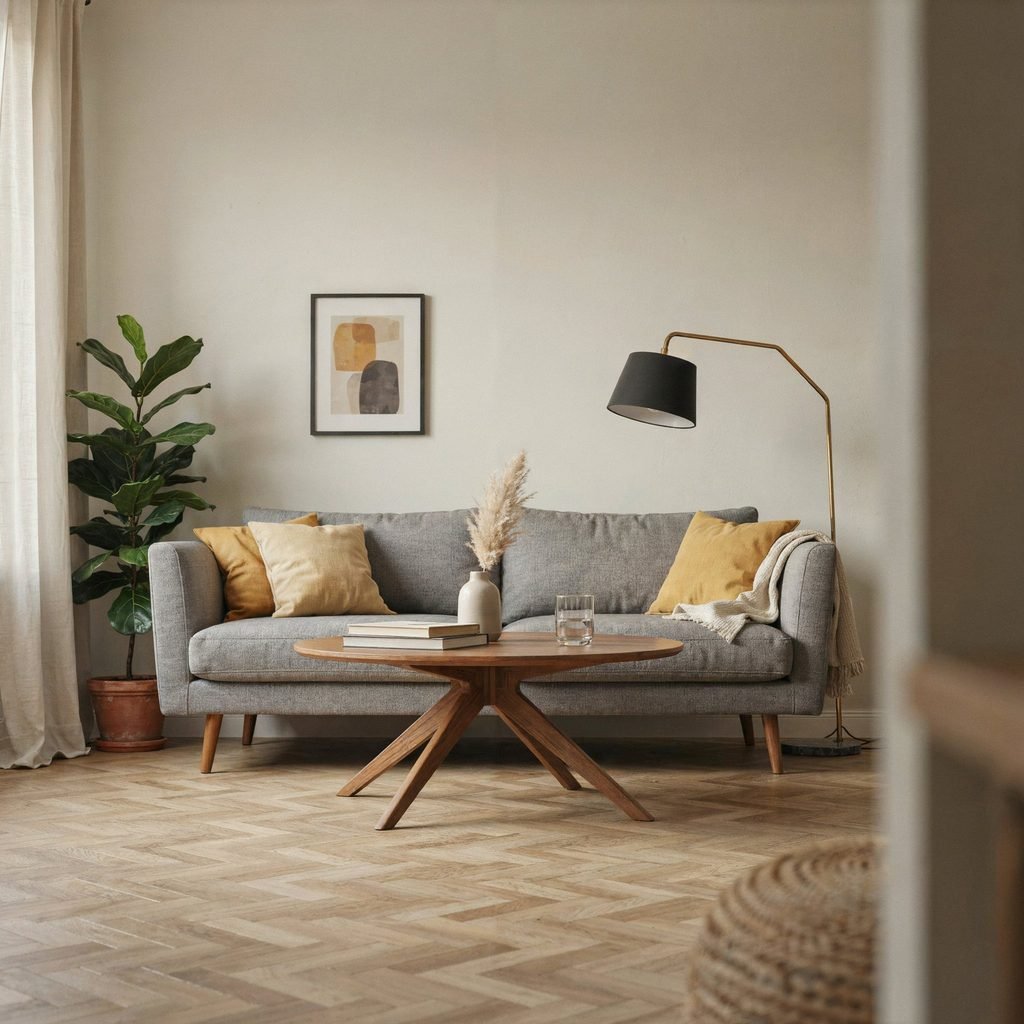
There is a reason mid-century modern living room decor continues to dominate interior design decades after its peak. Born from post-war optimism, this iconic style seamlessly blends functional forms with striking aesthetics. Think clean lines, warm wood tones, organic shapes, and a timeless retro appeal that feels both nostalgic and incredibly fresh. Whether you are furnishing a cozy apartment or an expansive open concept living room, this design philosophy focuses on livability rather than museum-like perfection. In this guide, we will explore practical, achievable ways to incorporate mid-century modern interior design into your home. From choosing the right mid-century modern furniture to perfecting your layout, these 15 styling tips will help you create a space that is warm, welcoming, and effortlessly stylish.
What Is Mid-Century Modern Living Room Style?
Emerging roughly between the mid-1940s and late 1960s, mid-century modern interior design was a radical departure from the heavy, ornate styles of the past. Designers championed functionalism, using new manufacturing techniques to mold plywood, fiberglass, and plastic into sculptural, organic curves. The aesthetic is defined by uncluttered spaces, seamless indoor-outdoor flow, and a focus on honest materials like walnut, teak, and leather. Today, vintage-inspired living room styling borrows the best of these principles—prioritizing streamlined silhouettes and minimalist mid-century decor while adapting them for modern everyday life. It is an enduring aesthetic that values quality craftsmanship and structural honesty over fleeting trends.
15 Timeless Mid-Century Modern Living Room Ideas
1. Start with a Neutral Foundation
The foundation of any successful mid-century modern living room is a calm, neutral base. Before introducing bold accents, paint your walls in warm whites, soft taupes, or subtle greiges. This approach allows the architectural details and natural wood grains of your furniture to take center stage. A neutral backdrop also gives you the flexibility to swap out accessories as trends evolve. When shopping for large upholstery pieces, opt for sofas and armchairs in oatmeal, charcoal, or warm cream. By keeping the major investments grounded in neutral tones, you can easily experiment with a vibrant mid-century modern color palette through easily changeable textiles and artwork. This creates a sophisticated, highly adaptable canvas for your home.
2. Choose a Low-Profile Mid-Century Modern Sofa
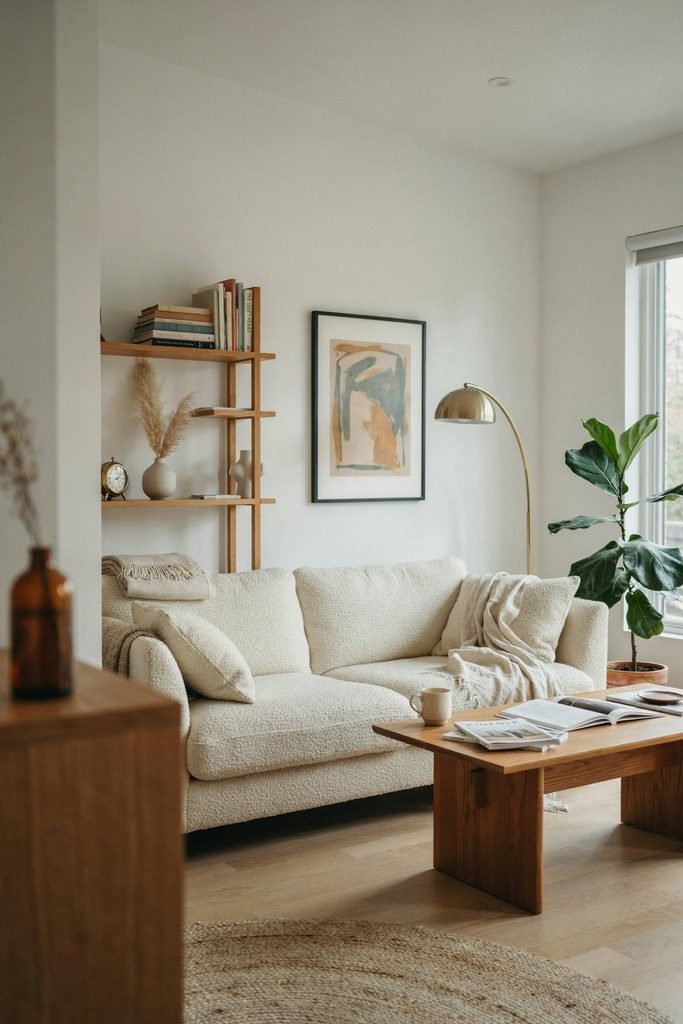
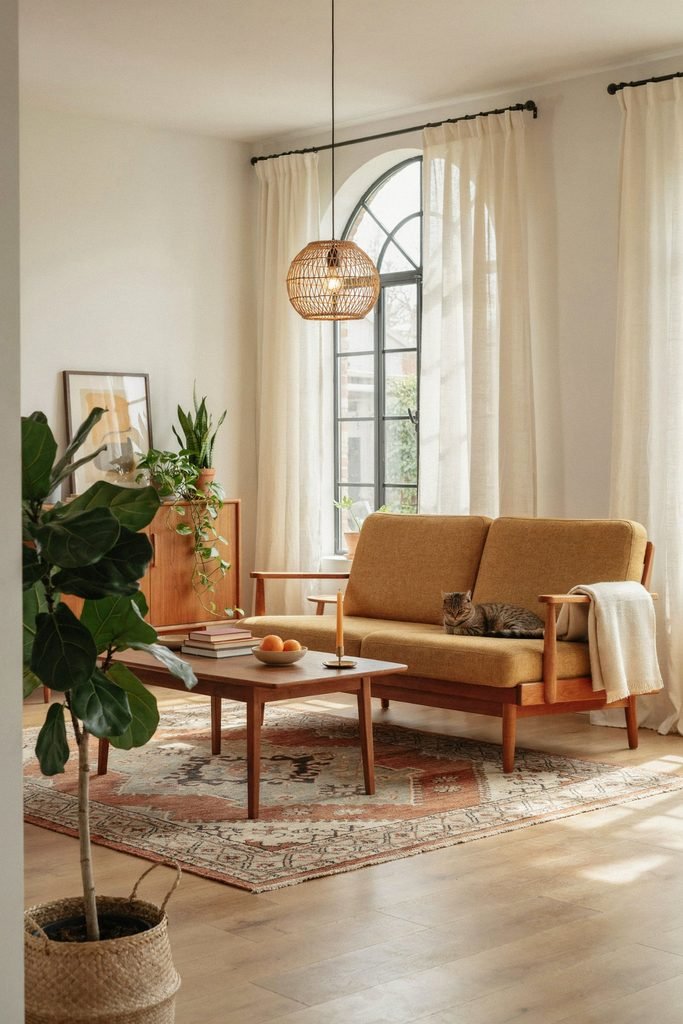
A true mid-century modern sofa is all about sleek proportions and a low-slung profile. Look for streamlined designs with tufted back cushions, tailored upholstery, and exposed wooden frames. Unlike plush, overstuffed contemporary sectionals, mid-century seating is designed to be visually light, keeping sightlines open across the room. When selecting a mid-century modern sofa, pay close attention to the depth. Many vintage-inspired pieces feature shallower seats that encourage upright, social seating rather than deep lounging. Pair a structured, low-profile sofa in a durable fabric like wool or performance velvet with a few contrasting throw pillows to add comfort without sacrificing that crisp, tailored aesthetic.
3. Add an Iconic Accent Chair
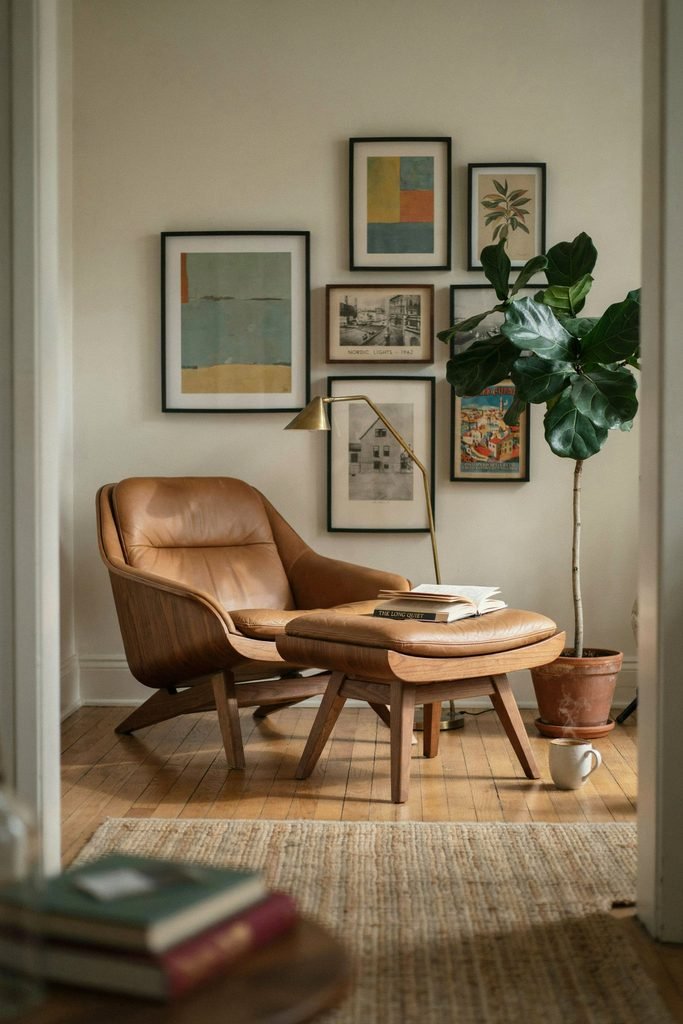
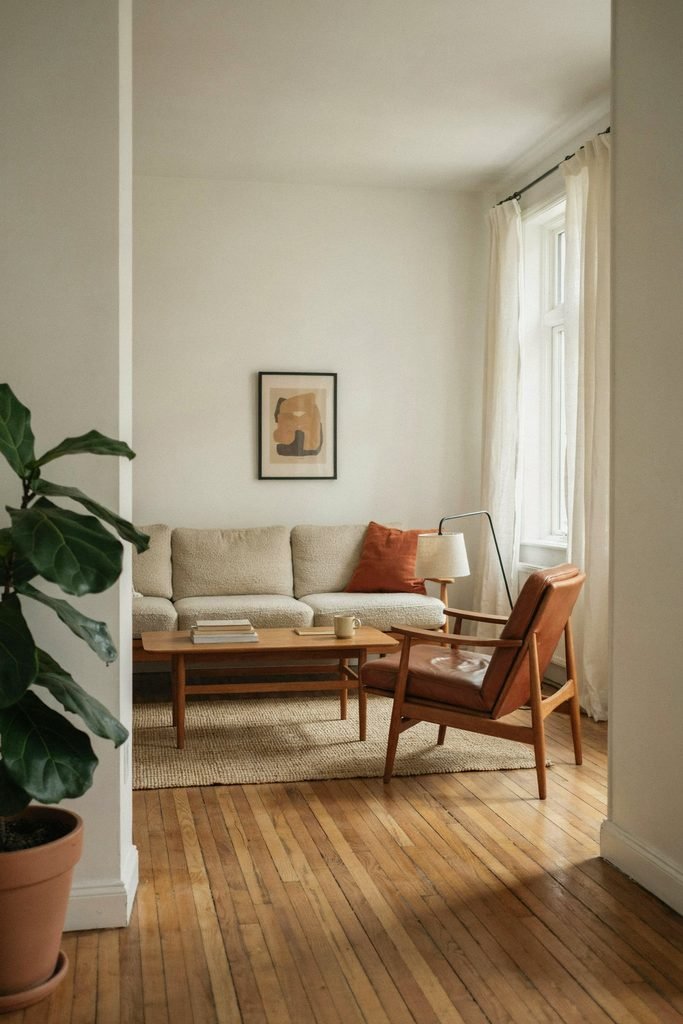
No retro living room decor is complete without a statement seating piece. An Eames-style lounge chair with its curved plywood shell and buttery leather upholstery is the ultimate mid-century modern accent chair. If that iconic investment piece isn’t in your budget, look for modern alternatives featuring molded plywood, bentwood frames, or sleek leather sling chairs. The goal is to introduce organic curves and sculptural shapes that contrast beautifully with the rigid, geometric lines of your sofa. Place your accent chair in a cozy reading corner next to a stylish floor lamp, or angle it slightly toward the main conversation area to create an intimate, welcoming layout.
4. Prioritize Tapered Legs and Raised Furniture
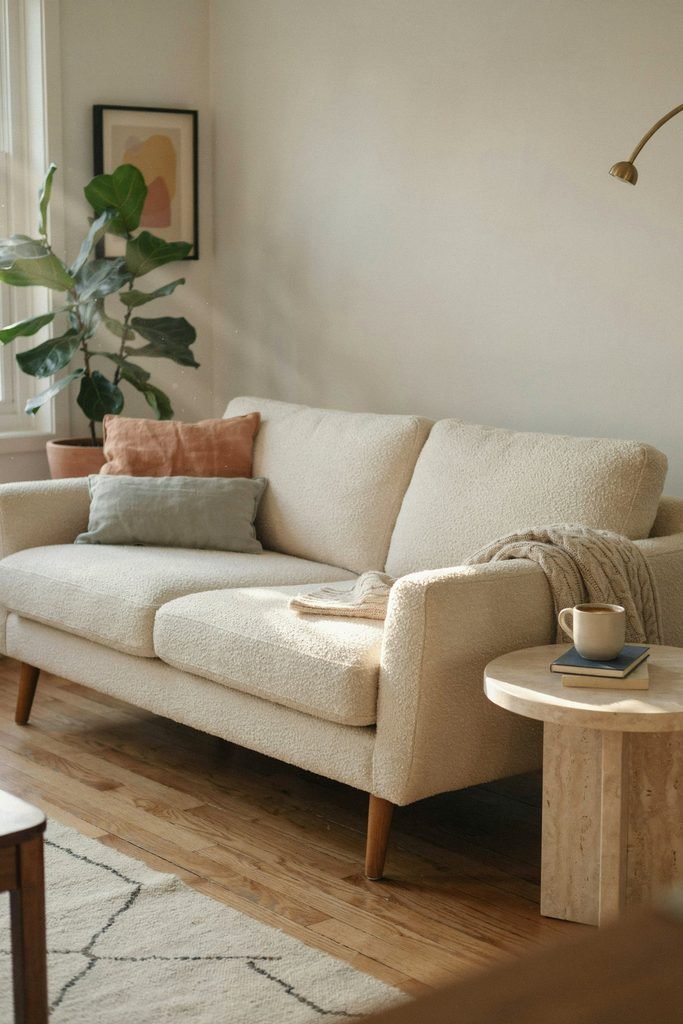
One of the most defining features of mid-century modern furniture is its relationship with the floor. Rather than heavy, skirted pieces that sit directly on the ground, mid-century designers elevated their creations on slender, tapered legs or splayed wooden pegs. This design choice tricks the eye into perceiving the room as larger and airier, making it a brilliant strategy for small living rooms. When shopping, look for media consoles, armchairs, and dining tables featuring these signature raised bases. Seeing the floor continue underneath your furniture creates an uninterrupted visual flow, which is essential for achieving that bright, uncluttered mid-century modern interior design aesthetic.
5. Anchor the Room with a Walnut or Teak Coffee Table
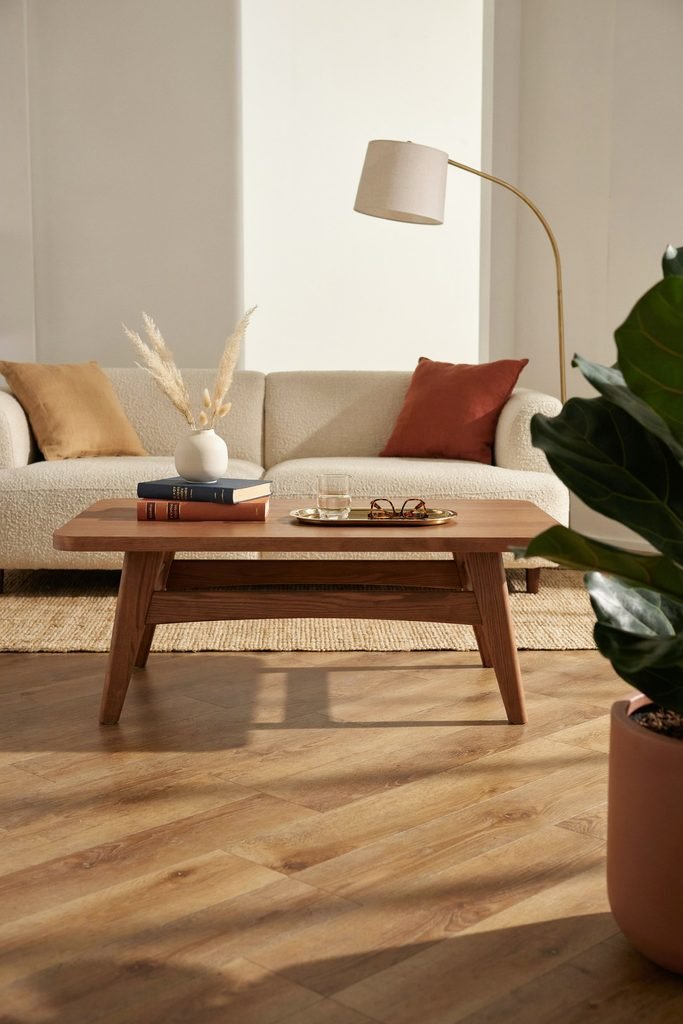
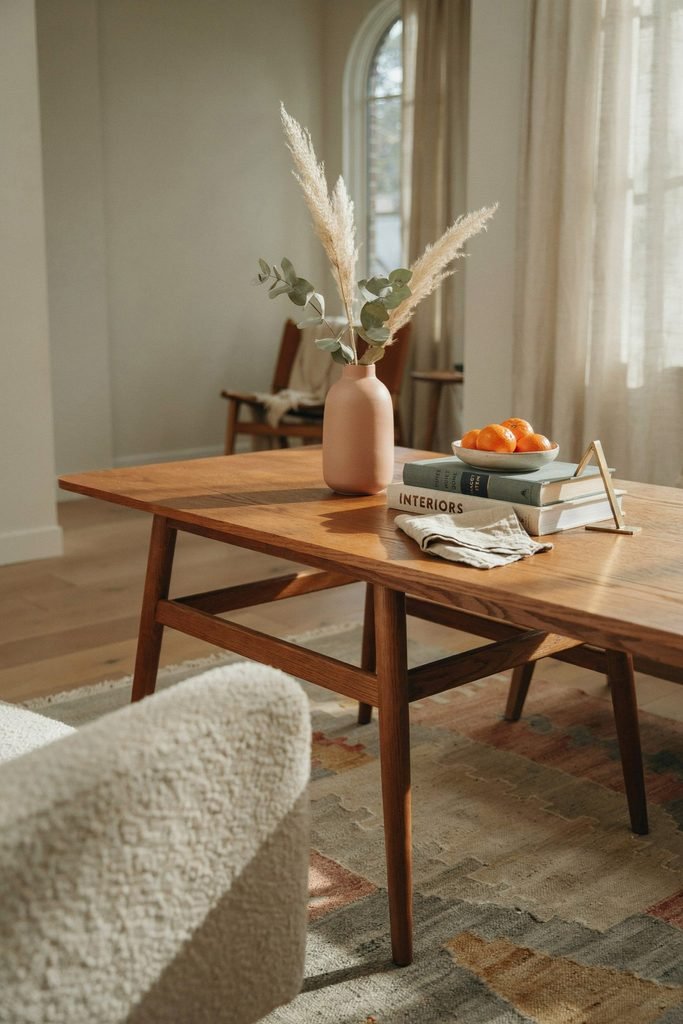
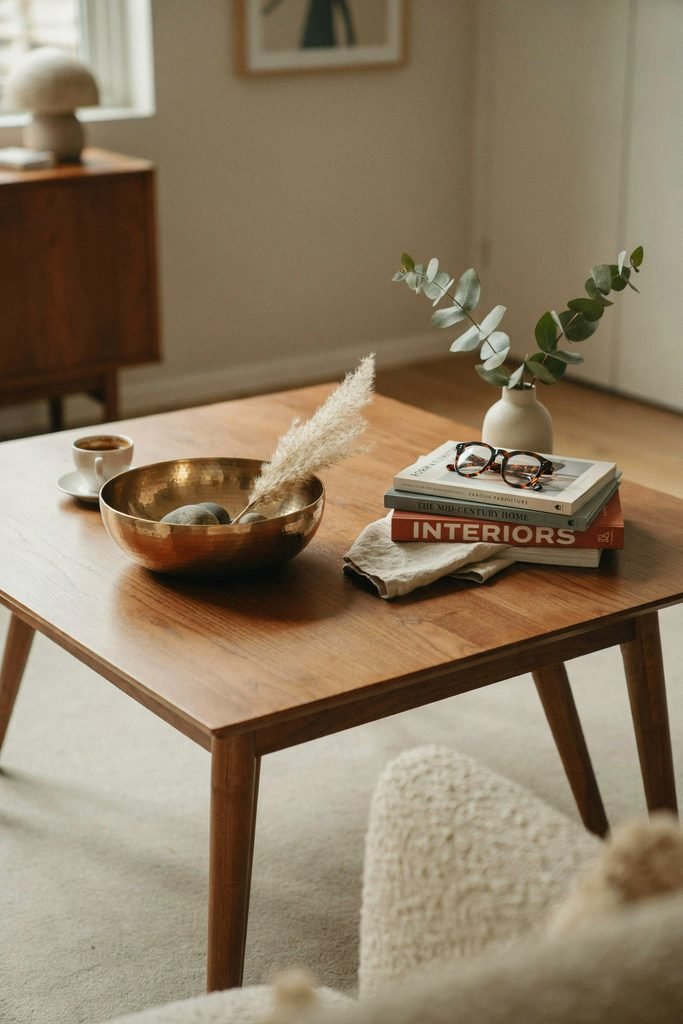
Wood tones are the heartbeat of mid-century modern style, and a beautifully finished mid-century modern coffee table is the perfect place to showcase them. Walnut furniture, with its rich, chocolatey grain, is the most classic choice, while warm teak and pale oak offer stunning alternatives. Look for coffee tables with unique, sculptural silhouettes—think organic kidney-bean shapes, sleek surfboard rectangles, or geometric tiered designs. Because these tables often feature minimalist wooden bases, they act as a grounding element in the center of your seating area. Keep the tabletop styling relatively sparse: a small stack of design books, a single ceramic bowl, and perhaps a small potted plant are all you need.
6. Use a Mid-Century Modern Sideboard for Storage and Display
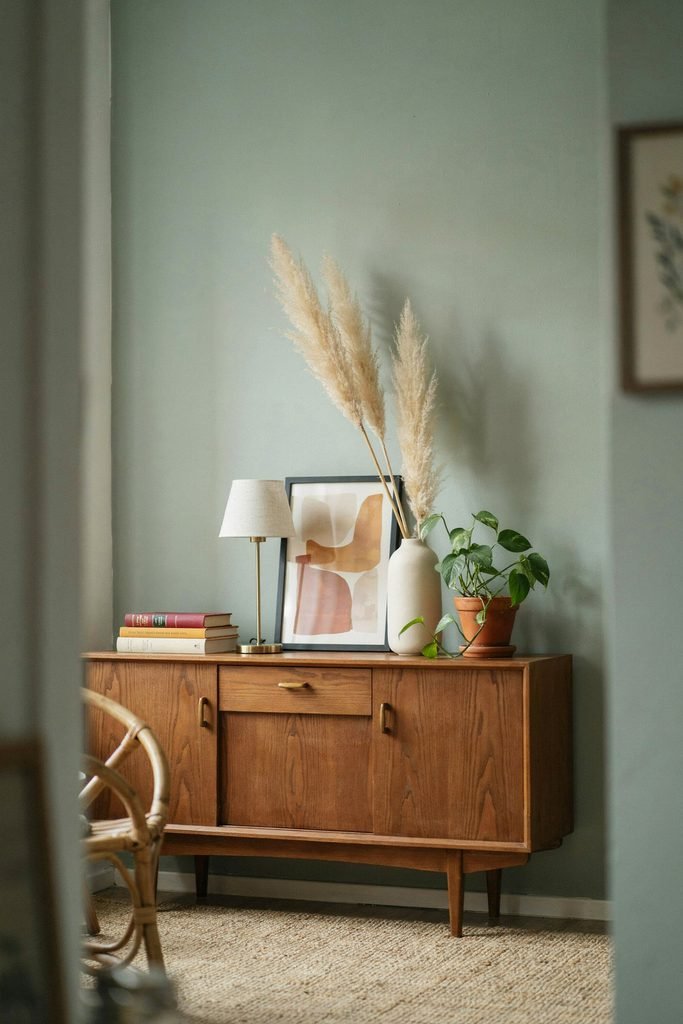
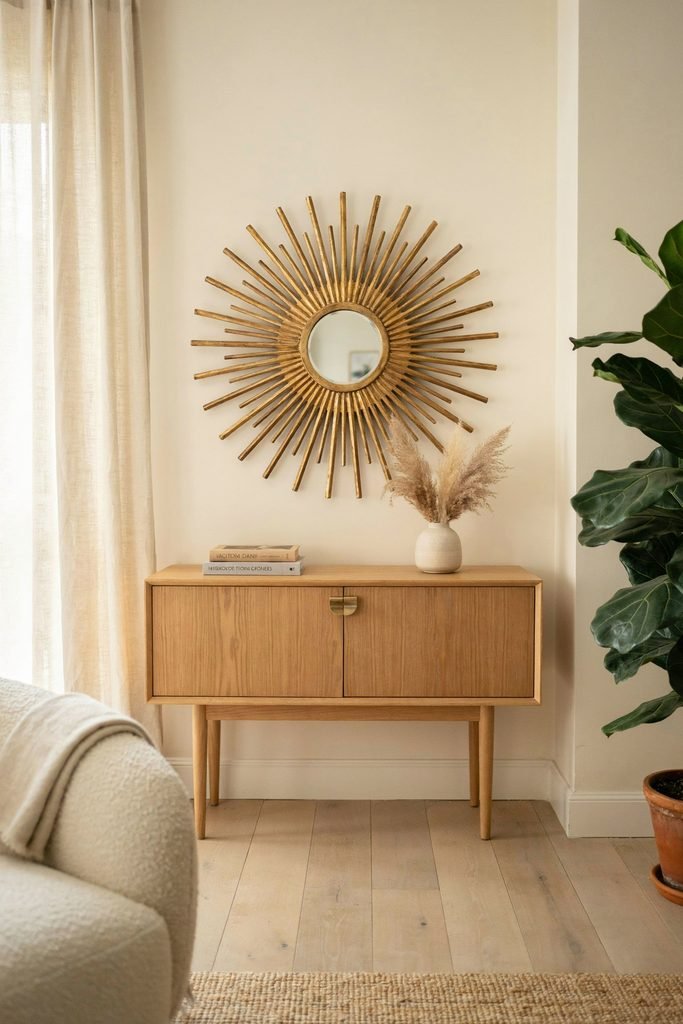
Functional storage is a cornerstone of minimalist mid-century decor, and a long, low-profile sideboard or credenza is the ultimate solution. Originally designed to hold dining room china, today these versatile pieces serve as media consoles, hidden storage for blankets, and display surfaces for curated decor. Place a walnut or teak mid-century modern sideboard against a large wall or use it to divide an open concept living room from a dining space. Dress the top with a record player, a pair of sleek table lamps, and a few pieces of abstract art. The key is to use the sideboard to hide daily clutter, maintaining the clean, unbroken lines that define the style.
7. Build a Warm, Nature-Inspired Color Palette
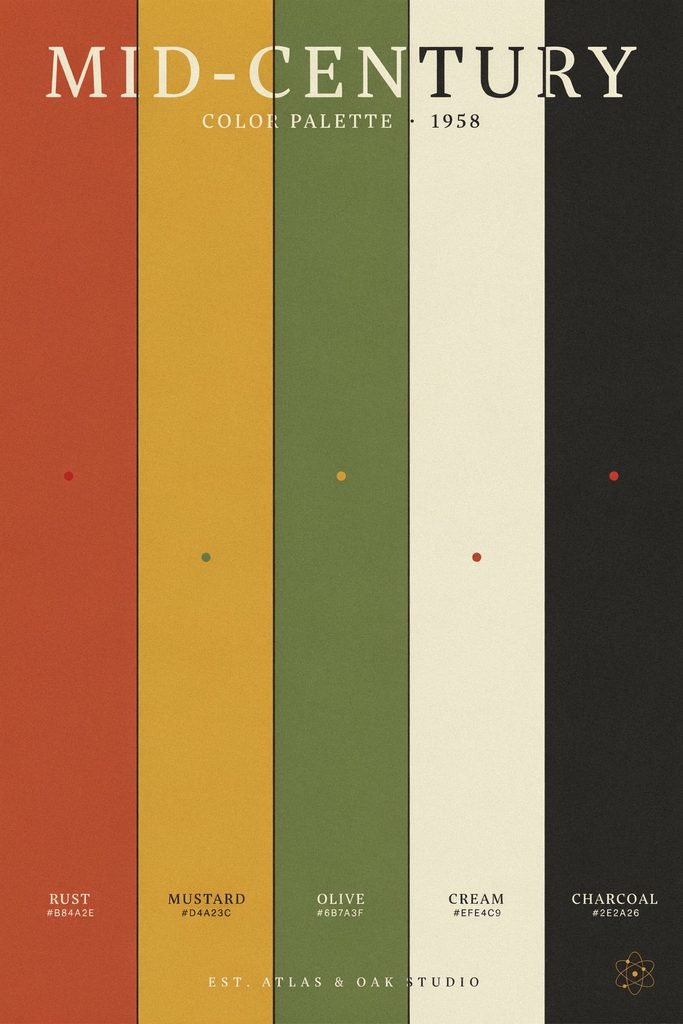
While your foundational pieces might be neutral, a true mid-century modern color palette draws deep inspiration from the natural world. Think of the changing leaves and earthy landscapes of the 1950s and 60s. Integrate rich, saturated accent colors like mustard yellow, burnt orange, rusty red, deep teal, and muted olive green. These hues evoke warmth and retro charm without feeling overwhelming. You can introduce this palette through an earthy mid-century modern rug, painted accent walls, or a carefully curated collection of ceramic vases. Blending these saturated tones with warm wood finishes creates a highly inviting, livable space that feels deeply connected to nature.
8. Add Bold Color Through Pillows, Art, and Ceramics
Once your nature-inspired color palette is established, use textiles and decor to inject specific pops of color. Because mid-century modern interior design avoids cluttered maximalism, bold hues work best when applied intentionally. Swap out standard throw pillows for ones featuring graphic geometric patterns in mustard or teal. Hang a large, vibrant piece of mid-century modern wall art above the sofa to serve as a dynamic focal point. You can also scatter glazed ceramic bowls or brightly colored bookends across your sideboard and coffee table. This approach allows you to embrace retro living room decor trends while keeping the overall space feeling balanced, curated, and visually restful.
9. Layer Geometric and Organic Patterns
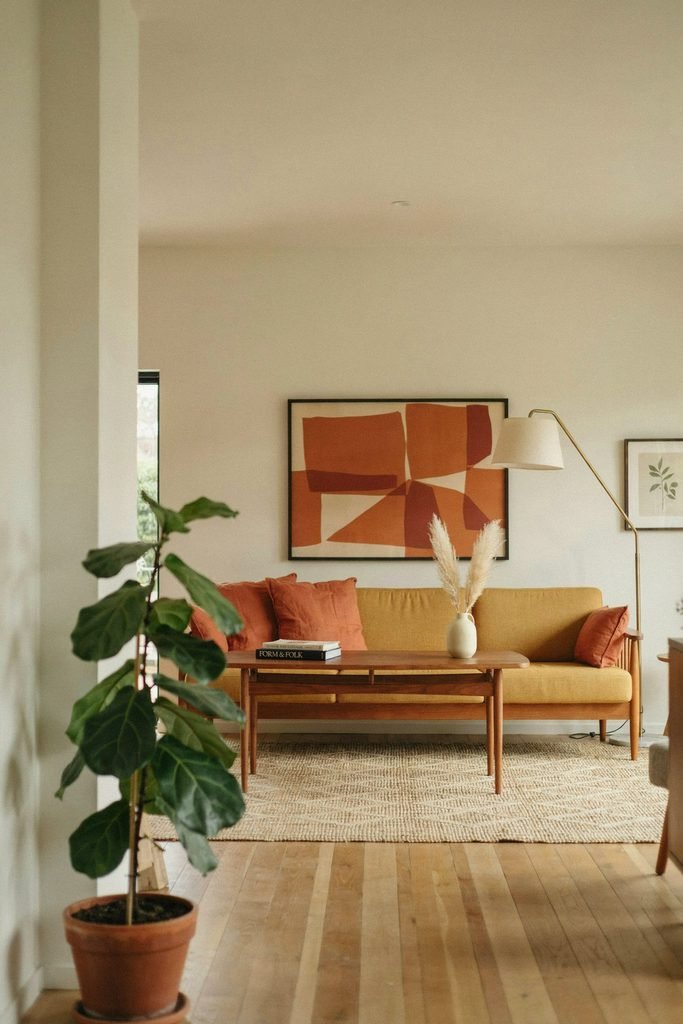
Textiles in a mid-century modern living room thrive on the interplay between rigid geometry and fluid, organic shapes. To master this look, layer patterns thoughtfully without letting them compete for attention. Start with a subtle base—perhaps a sofa in a solid, textured weave like bouclé or heavy wool. Next, introduce a throw blanket or area rug featuring classic mid-century atomic starbursts, bold stripes, or abstract boomerang motifs. Finally, balance these geometric patterns with the organic curves of your furniture and decor. Mixing tactile materials like smooth leather, nubby wool, woven rattan, and gleaming brass ensures your pattern play feels rich, layered, and intentionally designed.
10. Choose a Rug That Defines the Seating Area
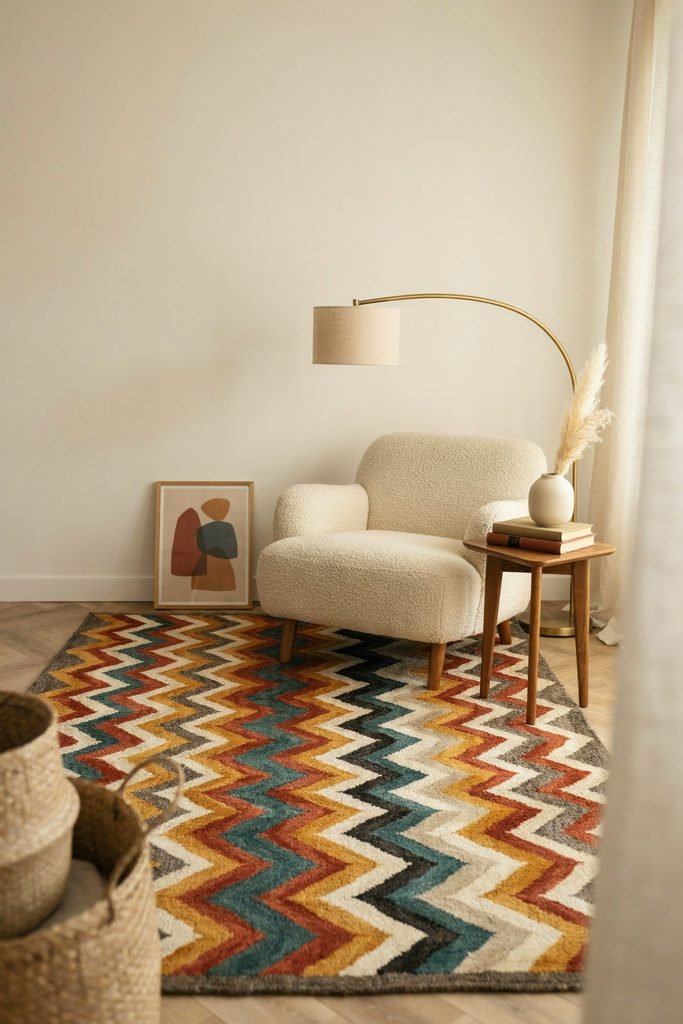
In mid-century design, a rug isn’t just a floor covering; it is an architectural tool used to define zones within a room. A well-chosen mid-century modern rug should be large enough that the front legs of all your primary seating pieces rest comfortably on it. This anchors the furniture grouping and prevents the room from feeling disjointed. Look for flatweave wool rugs, vintage-style oriental runners in faded, muted tones, or rugs featuring abstract, asymmetrical color blocking. Avoid overly plush, high-pile carpets, as they tend to clash with the sleek, tailored silhouettes of mid-century modern furniture. A low-profile rug keeps the aesthetic crisp and historically accurate.
11. Make Lighting a Design Feature
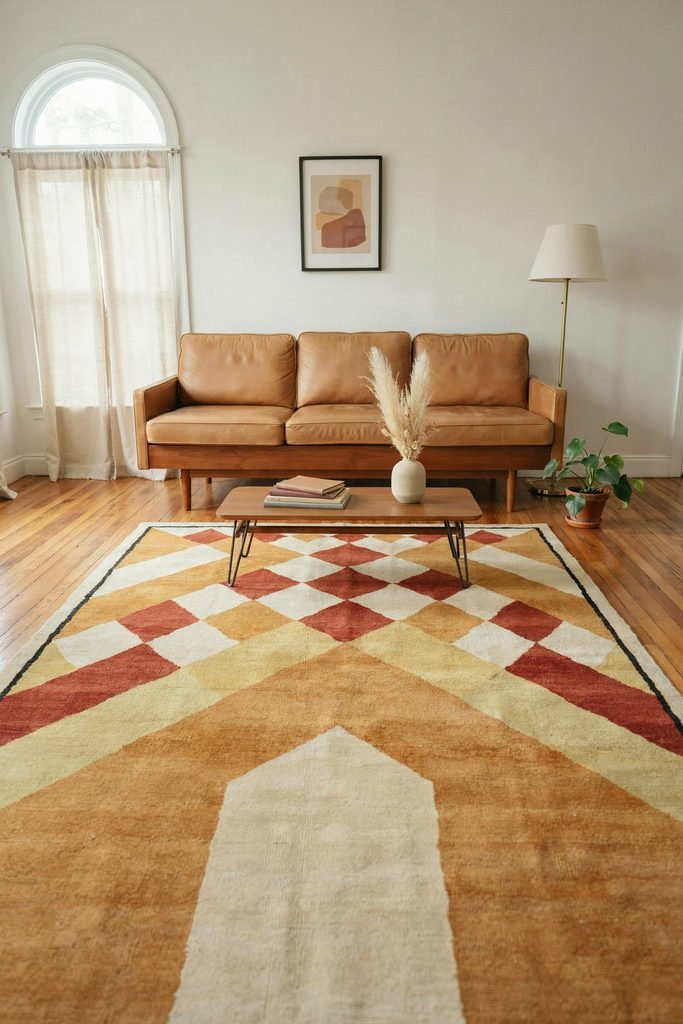
Mid-century modern lighting is equal parts functional and sculptural, acting as jewelry for your living room. Swap out generic builder-grade fixtures for statement pieces that command attention. A dramatic sputnik chandelier with radiating brass arms serves as a breathtaking ceiling focal point, while a sweeping arc floor lamp perfectly bridges the gap between a sideboard and a reading chair. Don’t forget the impact of mid-century modern lighting on a smaller scale, such as colorful glass globe pendants or sleek, angled desk lamps. By choosing fixtures with striking silhouettes and warm metallic finishes, you elevate the room’s design even when the lights are turned off.
12. Use Mirrors and Wall Art Strategically
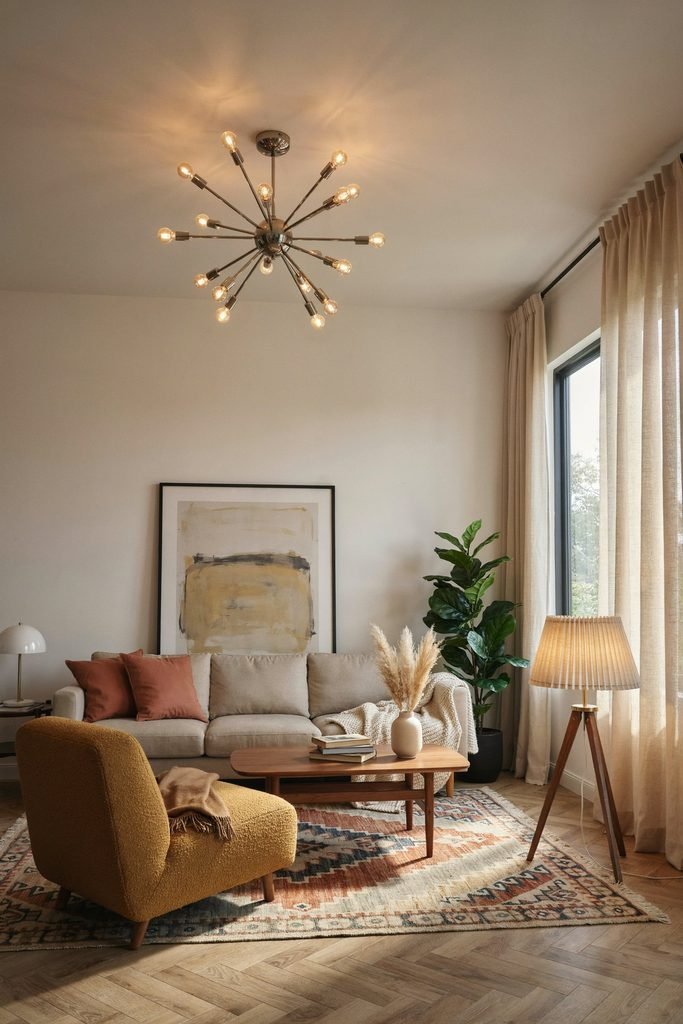
Walls in a mid-century modern living room should never feel bare, but they shouldn’t feel chaotic, either. A large, classic sunburst mirror in brass or wood is a quintessential piece of mid-century modern wall art that reflects natural light and adds immediate architectural interest. For other walls, create a curated gallery wall featuring a mix of abstract expressionist prints, vintage botanical illustrations, and simple line drawings. Use identical, slim frames in black or natural wood to unify the collection. This curated approach to wall decor adds personality and warmth while strictly adhering to the minimalist, intentional ethos of mid-century modern interior design.
13. Bring in Plants and Natural Materials
The original mid-century architects placed a massive emphasis on blurring the lines between indoors and outdoors. You can easily replicate this natural flow by introducing abundant greenery and raw materials. Place a large, architectural plant like a fiddle-leaf fig, a monstera, or a tall snake plant in a woven rattan basket or a sleek, tapered ceramic planter. Incorporate natural textures throughout the room through wooden bowls, woven wall hangings, and stone coasters. Maximizing natural light with sheer, breezy curtains also enhances this organic feel. Bringing the outside in softens the clean lines of your furniture and makes the space feel vibrant and alive.
14. Keep Surfaces Curated, Not Cluttered
While mid-century modern style is warm and inviting, it relies heavily on visual calm. Clutter is the enemy of clean lines. To maintain the integrity of your retro living room decor, adopt a “less is more” approach to styling your surfaces. On your coffee table and sideboard, group objects in odd numbers—such as a trio of varying heights. Use beautiful, functional objects like a sculptural wooden tray to corral remote controls, or store everyday items inside the drawers of your credenza. Leaving plenty of negative space around your decor allows the beautiful silhouettes of your mid-century modern furniture and the rich wood grains to truly shine.
15. Adapt the Look for Small or Open-Concept Living Rooms
Mid-century modern design is incredibly versatile and adapts beautifully to modern floor plans. In a small apartment living room, use furniture with raised tapered legs and glass coffee tables to maximize the feeling of space and light. Avoid heavy drapery in favor of simple roller shades or sheer curtains. Conversely, in an open concept living room, use your furniture arrangement and large mid-century modern rugs to define distinct “zones” for lounging and dining without building physical walls. A floating mid-century modern sideboard can even act as a stylish room divider. The style’s inherent focus on uncluttered spaces makes it a perfect fit for any layout.
Common Mid-Century Modern Living Room Mistakes to Avoid
As you design your space, it is easy to accidentally cross the line from stylishly curated to overly themed. Avoid the “retro diner” trap by steering clear of novelty items like neon signs, jukeboxes, or overly literal atomic-age kitsch. Another common mistake is ignoring texture. A room full of flat-painted wood and smooth vinyl upholstery will feel cold and flat; always mix in nubby wool, buttery leather, and warm brass to create depth. Finally, avoid overcrowding. Mid-century design relies on the beauty of negative space. If every inch of your floor and walls is covered, the room will lose the airy, functional flow that makes this aesthetic so enduring.
How to Make Mid-Century Modern Feel Current
The secret to a timeless mid-century modern living room is blending it with other contemporary styles rather than recreating a strict 1960s time capsule. You can easily mix mid-century furniture with softer, more relaxed elements like a chunky bouclé throw or a modern, organic-shaped plaster lamp. Blending mid-century modern with Scandinavian design works beautifully, as both styles share a love for light woods and functionalism. Alternatively, pairing sleek walnut furniture with eclectic, contemporary art and plush, modern textiles keeps the room feeling fresh and uniquely yours.
Mid-Century Modern vs. Contemporary Living Rooms
| Feature | Mid-Century Modern | Contemporary |
|---|---|---|
| Silhouettes | Sculptural, retro, tapered legs | Fluid, trend-driven, often modular |
| Materials | Walnut, teak, leather, molded plywood | Glass, chrome, polished stone, mixed metals |
| Color Palette | Earthy, saturated (mustard, teal, rust) | Often monochromatic, high-contrast, neutral |
| Vibe | Warm, nostalgic, functional | Sleek, minimalist, constantly evolving |
This blend ensures your home feels collected over time rather than bought from a single showroom catalog.
Frequently Asked Questions
Is mid-century modern still in style?
Yes. Because it prioritizes clean lines and functional, uncluttered spaces, mid-century modern interior design remains incredibly popular. Its focus on quality materials and timeless silhouettes ensures it outlasts fleeting design fads.
How do I mix mid-century modern with traditional furniture?
Focus on shared elements like warm wood tones. A traditional rug can beautifully anchor a sleek mid-century modern sofa. Keep the color palette cohesive to bridge the gap between the two distinct eras.
What are the most essential mid-century furniture pieces?
If you are starting out, invest in a low-profile sofa with tapered legs, a beautiful walnut coffee table, and a statement accent chair. These three pieces will immediately establish the aesthetic.
Can I use bright colors in a mid-century living room?
Absolutely. While the base is often neutral, saturated accents like burnt orange, mustard yellow, and deep teal are hallmarks of a classic mid-century modern color palette. Use them intentionally through art and textiles.
Conclusion
Creating a beautiful mid-century modern living room is about celebrating function, warmth, and sculptural beauty. By focusing on quality wood tones, streamlined silhouettes, and a curated approach to decor, you can craft a space that feels both historically inspired and perfectly suited for modern living. Start by assessing your current space, choose one or two key furniture pieces to anchor the room, and slowly build your collection. What is the first mid-century modern element you will add to your living room this weekend?
