
Walk into a charming older home, a trendy downtown apartment, or a cozy rental, and you might immediately notice something missing: an overhead ceiling light. It’s a surprisingly common design quirk that leaves many people wondering how to light a living room with no overhead ceiling lights without turning the space into a dark cave or a blinding showroom. When you don’t have a central fixture to flip on, the instinct is often to buy the biggest, brightest lamp you can find and stick it in the corner. But that usually results in harsh shadows, eye strain, and a room that feels more like a dentist’s waiting area than a relaxing sanctuary.
The real solution isn’t a single mega-lamp; it’s layered lighting. By combining multiple light sources at varying heights—floor level, table level, and wall level—you can mimic the natural, even glow of an overhead fixture. In this guide, we will explore practical, stylish, and renter-friendly lighting strategies to help you brighten up your space, create a cozy atmosphere, and master living room lighting ideas without ceiling lights. Let’s turn that dim, shadowy room into your favorite place to unwind.
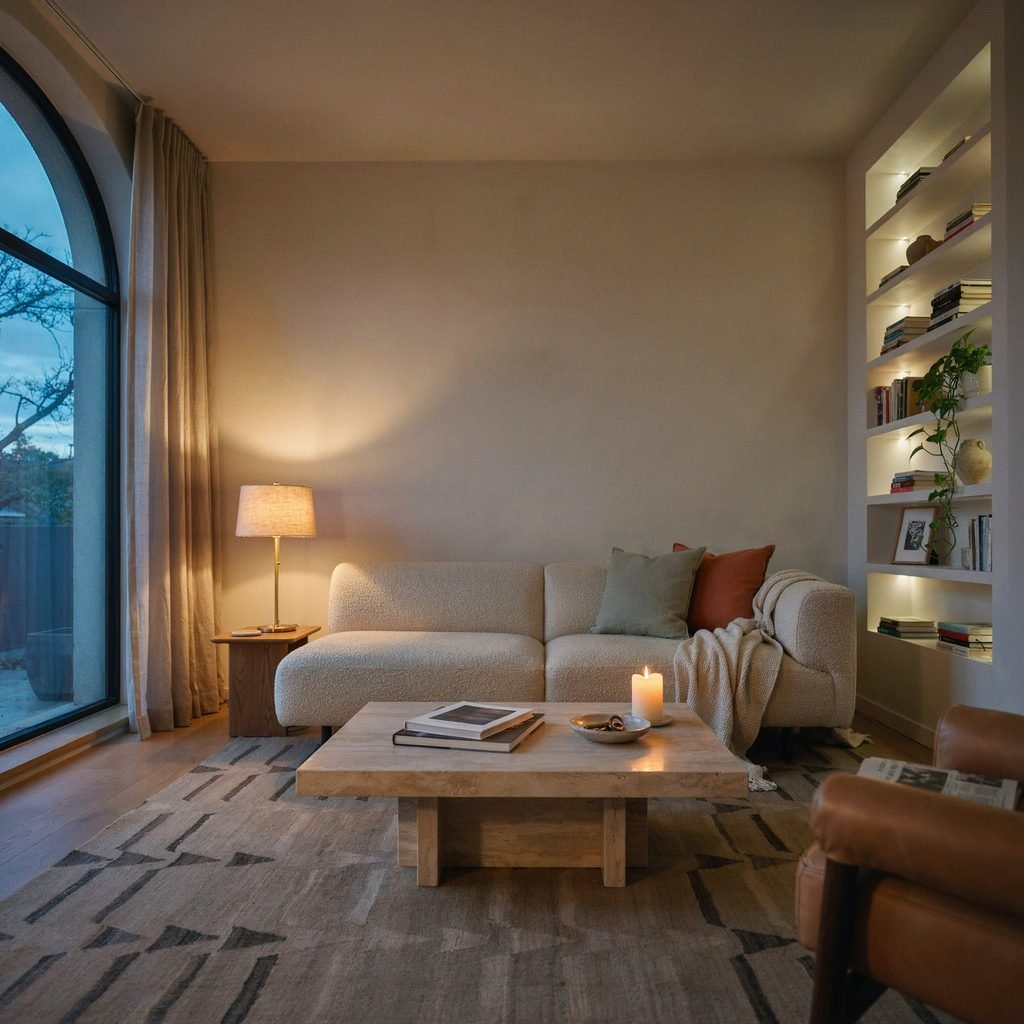
The Magic of Layered Lighting: Ambient, Task, and Accent
To master no overhead lighting solutions, you first need to understand the three foundational layers of interior lighting. Professional designers use this exact framework to make rooms feel balanced and inviting.
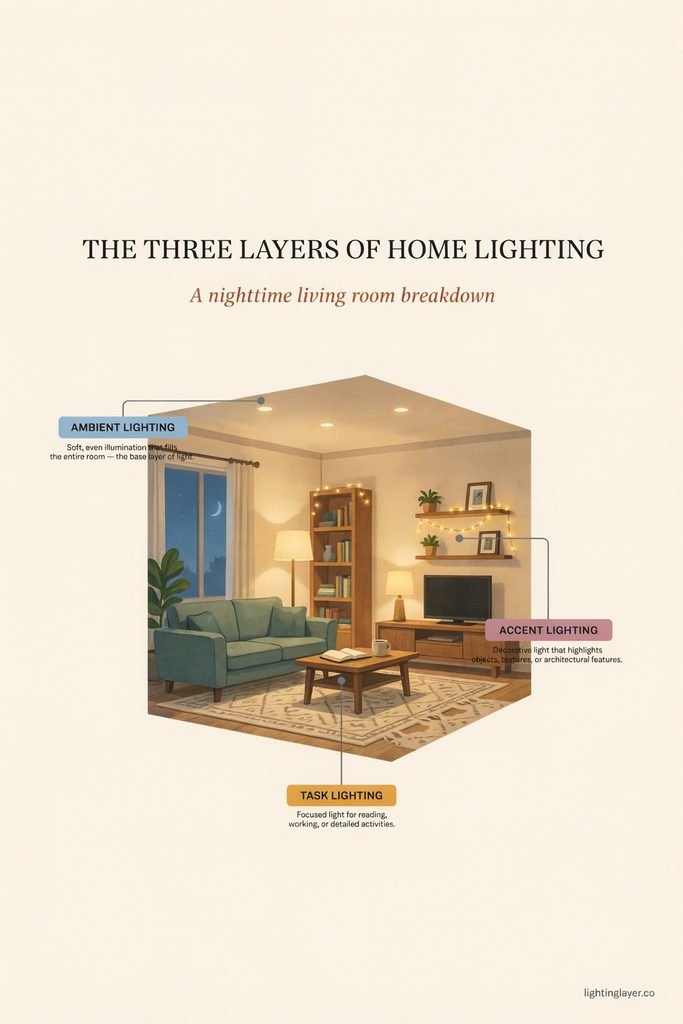
Ambient Lighting
This is your base layer. Ambient lighting provides the overall illumination for the room, acting as a substitute for natural daylight or a central ceiling fixture. It’s the light that allows you to safely navigate the space, vacuum the rug, and see the room as a whole. In a room without overhead lights, large floor lamps and multiple table lamps take on this crucial role.
Task Lighting
Task lighting is focused, brighter light designed for specific activities. Think of the glow you need to read a book on the sofa, knit a scarf, work on a laptop, or play a board game. This lighting should be directional and bright enough to prevent eye strain without spilling harsh glare into the rest of the room.
Accent Lighting
This is the layer that adds drama, depth, and personality. Accent lighting highlights architectural features, illuminates a favorite piece of artwork, brings a potted plant to life, or simply creates a cozy mood for movie night. It’s less about visibility and more about atmosphere.
By combining these three layers, you achieve layered lighting that makes the room feel intentionally designed rather than simply “lit.”
The Best Lighting Options for a Room Without Ceiling Lights
When you are figuring out how to light a living room with no overhead ceiling lights, you have a surprisingly wide array of stylish fixtures at your disposal. Here are the best tools for the job.
Floor Lamps for Living Room Spaces
Floor lamps are the undisputed heavyweights of no overhead lighting solutions because they take up zero table space and provide a massive amount of ambient light.
- Arc Floor Lamp: With its long, sweeping neck, an arc lamp is perfect for placing behind a sofa. It extends over the seating area, providing excellent ambient and task lighting for reading without needing an end table.
- Torchiere Floor Lamp: These lamps point their light straight up toward the ceiling. The light bounces off the ceiling and diffuses softly back down into the room, mimicking the effect of an overhead fixture beautifully.
- Tripod Lamps: These offer a stylish, mid-century modern aesthetic and provide a wide, even spread of ambient light.
- Adjustable Reading Lamps: Slim, directional lamps that can be angled exactly where you need them for task lighting.
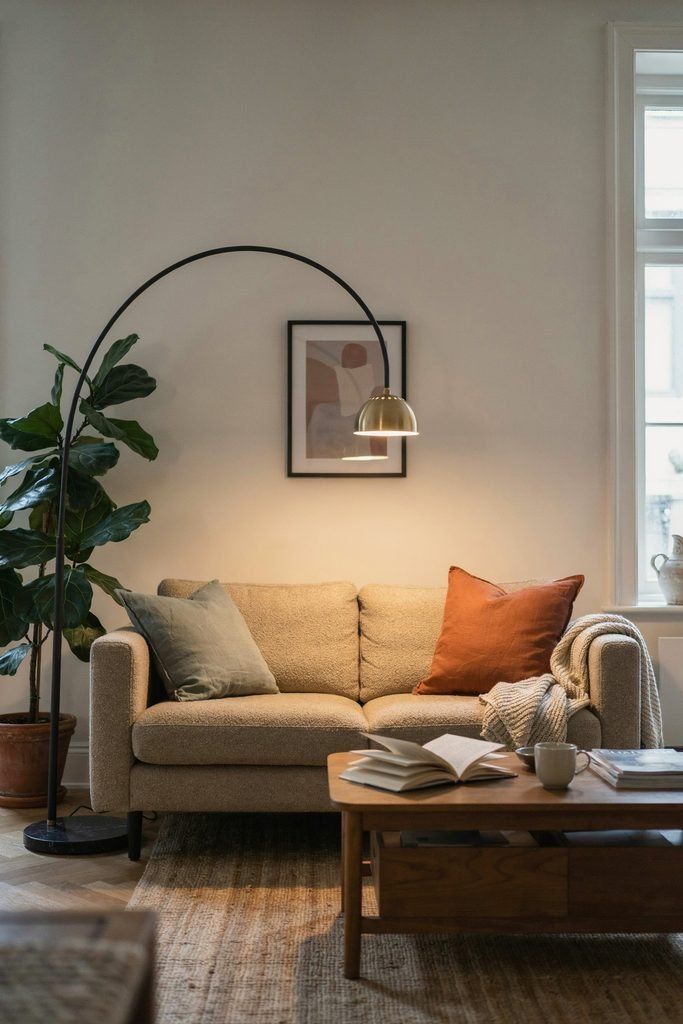
Table Lamps for Living Room Surfaces
Don’t underestimate the power of table lamps for living room setups. They provide excellent mid-level lighting, which is crucial for making a room feel cozy. Place them on console tables behind sofas, on bookshelves, or on side tables flanking your main seating.
Plug-In Wall Sconces
If you want the custom, built-in look of hardwired sconces but don’t want to call an electrician (or lose your security deposit), plug-in wall sconces are the answer. Swing-arm sconces are particularly great next to a reading chair or flanking a mirror, offering excellent task lighting that can be tucked away when not in use.
Battery-Operated Sconces and Puck Lights
For spots where an outlet simply isn’t reachable, battery-operated wall sconces and remote-controlled puck lights are lifesavers. They can be mounted anywhere to provide instant accent lighting for dark alcoves or shelving.
LED Strip Lights for Living Room Ambience
LED strip lights for living room use are incredibly versatile. You can adhere them behind your TV to reduce eye strain (a technique known as bias lighting), line the underside of floating shelves, or tuck them behind crown molding to create a stunning, hidden glow that washes the ceiling with ambient light.
Smart Bulbs, Smart Plugs, and Dimmable Lamps
Technology makes living room lighting ideas without ceiling lights much easier to manage. Smart bulbs for lamps allow you to change the brightness and color temperature right from your phone. Pair your standard lamps with smart plugs, and you can turn on all your dimmable lamps at once with a single voice command.
Candles and Flameless Alternatives
While they shouldn’t be your primary light source, real or flameless candles add a flickering, organic warmth that electric lights can’t replicate. Just be sure to practice fire safety and keep real flames away from curtains and pets.
Creating the Perfect Living Room Lighting Layout
Having the right fixtures is only half the battle; placement is everything. A strategic living room lighting layout ensures the light is distributed evenly, eliminating those dreaded dark, cavernous corners.
- Lighting the Sofa: Place a tall arc floor lamp behind or right beside the sofa to cast a wide net of ambient light over the seating area. To create balance, place matching or coordinating table lamps on the side tables at either end of the sofa.
- Lighting Dark Corners: Shadows in the corners of a room make the entire space feel smaller and dimmer. Tuck a tall torchiere floor lamp or a stylish tripod lamp into the darkest corner to bounce light off the walls and visually expand the room.
- Reading Chair Setup: Your reading nook needs dedicated task lighting. Place a swing-arm plug-in sconce on the wall beside the chair, or use an adjustable reading floor lamp that can be pulled close to the seat.
- Avoiding TV Glare: When watching television, you want to avoid placing bright, unshaded lamps directly behind you where they will reflect off the screen. Instead, use dimmable lamps or LED bias lighting behind the TV to balance the brightness of the screen and reduce eye strain.
- Maximizing Brightness with Decor: Light isn’t just about the bulbs. You can actively brighten a dark living room by strategically placing large mirrors opposite your brightest floor lamps to bounce light around the room. Additionally, light-colored walls, metallic decor, and glass coffee tables reflect light much better than dark, matte surfaces.
Choosing the Right Bulbs and Brightness
The fixture catches the eye, but the bulb dictates the mood. When shopping for bulbs for your floor lamps for living room use, keep these factors in mind:
- Color Temperature: Bulbs are measured in Kelvins (K). For a cozy, relaxing living room, stick to warm white light bulbs in the 2700K to 3000K range. This mimics the warm, inviting glow of traditional incandescent bulbs. Avoid “daylight” bulbs (5000K+), which emit a harsh, bluish-white light that can make a living room feel like a sterile hospital or garage. Soft white (3000K-3500K) is okay for task areas, but 2700K is the gold standard for ambient living spaces.
- Lumens vs. Watts: Forget watts; watts measure energy used, not brightness. Lumens measure actual light output. For a primary ambient floor lamp, look for bulbs that output 800 to 1,500 lumens. For table lamps and accent lighting, 400 to 800 lumens is usually plenty.
- Dimmable and Smart Options: Always opt for dimmable lamps and bulbs. Being able to lower the light output for movie night or a dinner party is essential for setting the right mood.
- Mixing Bulb Temperatures: Try to keep your color temperatures consistent. Mixing a 2700K warm bulb in your floor lamp with a 5000K cool bulb in your table lamp will create a jarring, inconsistent look that confuses the eye.
Renter-Friendly Lighting Solutions
If you are dealing with lighting for apartment living room spaces, you likely can’t drill into the walls or hire an electrician. Fortunately, modern renter-friendly lighting options are more stylish than ever.
- Command Hooks and Clips: Use heavy-duty, damage-free Command hooks to hang lightweight plug-in sconces or to elegantly drape and hide ugly cord covers along your baseboards.
- Battery-Powered Everything: Battery-operated wall sconces and puck lights are entirely wireless. Use them to highlight high shelves or dark alcoves where running a cord would be impossible.
- Portable Lamps: Invest in high-quality, plug-in fixtures. When your lease is up, you simply unplug them, pack them in a box, and take your beautiful lighting scheme to your next home.
- Cord Covers: If you must run a cord across a baseboard, use paintable, adhesive cord channels to keep things looking neat and built-in without using nails or screws.
Common Lighting Mistakes to Avoid
Even with the best intentions, it’s easy to misstep when figuring out how to brighten a dark living room. Avoid these common pitfalls:
- Relying on a Single Lamp: One giant lamp in the center of the room creates a harsh pool of light and leaves the corners in pitch blackness. Always use multiple sources.
- Using Only Cool White Bulbs: As mentioned, high-Kelvin bulbs will strip the coziness right out of your living space.
- Placing Lamps Too Low: Table lamps should generally be between 26 to 34 inches tall (measured from the floor to the top of the finial) when placed on a standard side table. If they are too low, they won’t cast light effectively across the room.
- Ignoring the Ceiling: Bouncing light off the ceiling via torchiere lamps or LED strips is a pro-level trick for simulating overhead lighting. Don’t forget the fifth wall!
- Forgetting Dimmers: Lighting needs to transition from “cleaning the house” bright to “relaxing with a glass of wine” dim. If your fixtures aren’t inherently dimmable, use smart bulbs.
Comparison Table: Best Lighting Options for a Living Room Without Ceiling Lights
To help you decide which fixtures to buy, here is a quick breakdown of the top choices.
| Lighting Option | Best Use | Placement Ideas | Renter-Friendliness | Mood Created |
|---|---|---|---|---|
| Arc Floor Lamp | Ambient & Task Lighting | Behind or beside the main sofa | Excellent (Just needs an outlet) | Elegant, cozy, and modern |
| Torchiere Floor Lamp | Ambient Lighting | Dark room corners | Excellent (Bounces light off ceiling) | Bright, airy, and spacious |
| Table Lamps | Task & Accent Lighting | End tables, console tables, bookshelves | Excellent (Portable and plug-in) | Intimate, balanced, and warm |
| Plug-In Sconces | Task & Accent Lighting | Flanking a mirror, beside a reading chair | High (Requires minor cord management) | Custom, sophisticated, boutique-hotel |
| LED Strip Lights | Accent & Bias Lighting | Behind TV, under shelves, along baseboards | High (Adhesive backing, peel-and-stick) | Dramatic, modern, cinematic |
| Smart Bulbs/Plugs | Lighting Control | Inside any existing lamp | Excellent (Screws in or plugs in) | Convenient, adaptable, high-tech |
A Sample Lighting Plan for a 15×20 Living Room
Let’s put all these living room lighting ideas without ceiling lights into practice with a sample layout for a standard 15×20 foot living room:
- The Ambient Anchor: Place a large brass arc floor lamp arching over the right side of a large sectional sofa. This provides widespread ambient light and a reading light for the corner seat.
- The Balanced Tables: On the left side of the sectional, place a wooden end table featuring a ceramic table lamp. Across the room, on a media console, place two smaller matching table lamps to balance the visual weight of the room.
- The Reading Nook: In the opposite corner, place a comfortable armchair next to a slim, adjustable torchiere floor lamp or reading lamp angled downward for bookworms.
- The TV Glow: Adhere LED strip lights for living room ambiance directly behind the television and along the bottom edge of the media console to eliminate screen glare and add a cinematic feel.
- The Art Highlight: Mount a battery-operated wall sconce or a picture light directly above a large canvas painting on the main wall to draw the eye and add depth.
- The Control Center: Plug all these fixtures into smart plugs and install smart bulbs. Group them in your phone’s app so you can say, “Turn on the living room,” and watch the space instantly come to life.
Frequently Asked Questions
How do you light a living room without ceiling lights?
You light the space by using a combination of floor lamps, table lamps, and wall sconces. The key is to layer your lighting at different heights (ambient, task, and accent) to create a soft, even glow that mimics the effect of a central ceiling fixture.
How many lamps should a living room have?
While it depends on the size of the room, a standard living room usually benefits from at least three to four distinct light sources. This could be one large floor lamp, two table lamps, and one accent light or sconce.
What is the best floor lamp for a room without overhead lighting?
An arc floor lamp is widely considered the best option because its sweeping design casts light directly over seating areas, acting much like an overhead pendant light. A torchiere floor lamp is also excellent for bouncing ambient light off the ceiling.
Are plug-in wall sconces a good option?
Absolutely. Plug-in wall sconces offer the high-end, custom look of hardwired fixtures without the need for an electrician or drywall repair. They are perfect for adding sophisticated task or accent lighting.
What color light bulb is best for a living room?
For a living room, warm white light bulbs between 2700K and 3000K are best. This color temperature promotes relaxation and makes the space feel inviting and cozy.
How can renters add lighting without damaging walls?
Renters should rely on renter-friendly lighting like plug-in lamps, battery-operated sconces, and adhesive LED strips. For hanging lightweight items or managing cords, heavy-duty, damage-free adhesive hooks are a renter’s best friend.
Conclusion
Figuring out how to light a living room with no overhead ceiling lights doesn’t have to be a frustrating design roadblock. By stepping away from the idea that a room needs a single, blinding central fixture, you open the door to a much more dynamic, stylish, and comfortable space. The secret is to remember the golden rule of interior lighting: combine at least three distinct light sources. Anchor the room with a beautiful ambient floor lamp, add functional warmth with table lamps, and finish it off with moody accent lighting. Whether you are decorating a forever home or navigating lighting for apartment living room restrictions, layering your light will instantly transform your dark space into a bright, welcoming haven.
