
There’s a reason modern farmhouse living room decor trends keep drawing homeowners back year after year. The style feels like a deep exhale—warm, welcoming, and effortlessly practical. It invites you to kick off your shoes, stack a few well-loved books on a reclaimed wood table, and settle into a linen sofa without worrying about perfection.
What separates a truly timeless farmhouse living room from a themed photo shoot comes down to restraint. The best spaces lean on quality materials, balanced proportions, and personal touches rather than novelty signs or matchy-matchy sets. In this guide, you’ll discover 15 modern farmhouse living room ideas that rely on natural textures, warm neutrals, and architectural character—choices that will still feel fresh and inviting a decade from now.
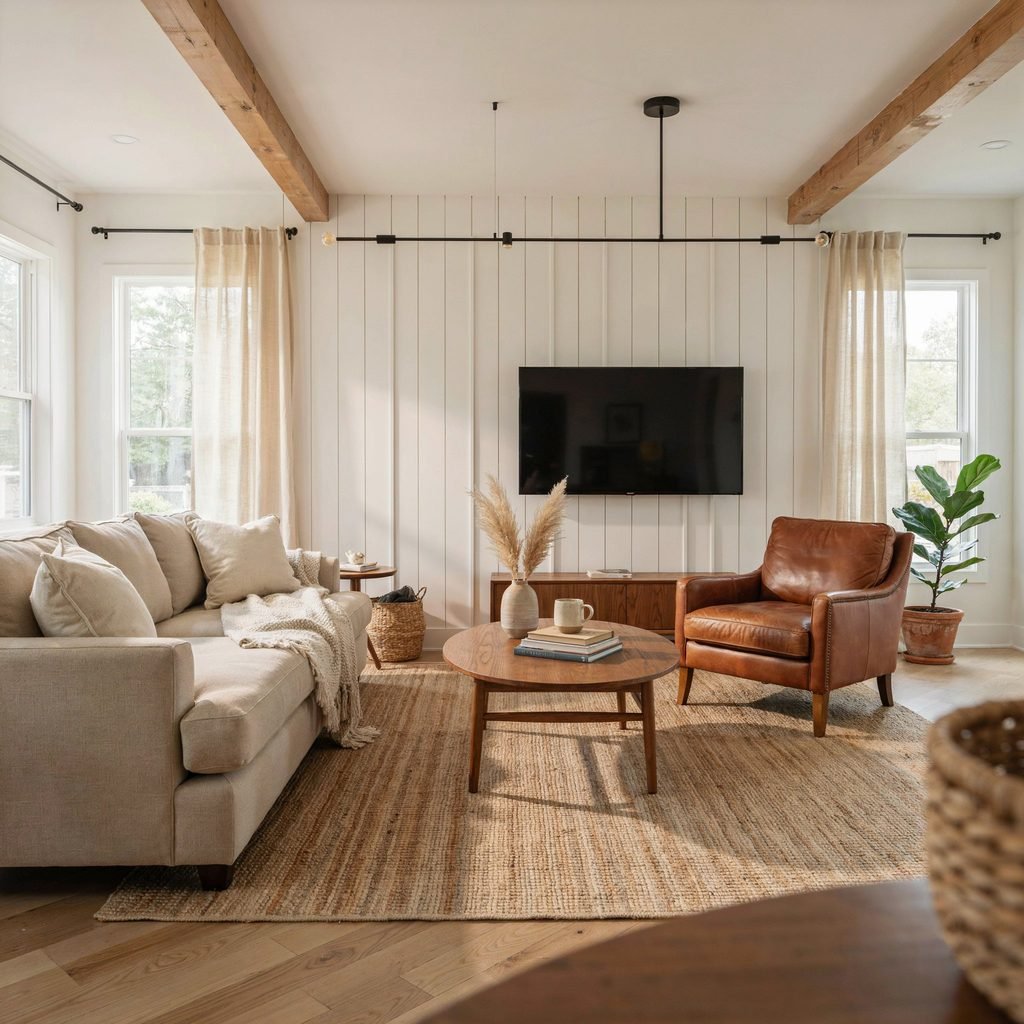
What Makes Modern Farmhouse Living Rooms Timeless?
Understanding the distinction between farmhouse substyles helps you make smarter design choices. Traditional farmhouse leans heavily on ornate details, floral patterns, and deeply rustic finishes. Rustic farmhouse pushes further into rough-hewn timbers, heavy iron hardware, and a cabin-like intensity. Modern farmhouse, by contrast, strips things back. It borrows the warmth and honesty of those older styles but pairs them with clean lines, open proportions, and a neutral farmhouse color palette that lets natural materials speak.
A timeless modern farmhouse living room design prioritizes five pillars: quality craftsmanship, layered texture, comfortable furniture, vintage-inspired accents, and a restrained color story. Rather than chasing the latest viral décor hack, this approach asks whether a piece will still feel right in five, seven, or ten years. Proportion matters as much as style. A well-scaled linen slipcovered sofa against warm white living room walls will outlast any trending gadget or decorative fad. Livability sits at the center—every element should serve comfort, function, and quiet beauty.
The 15 Trends
1. Warm White and Soft Greige Walls
Paint choice sets the emotional temperature of the entire room. Warm whites with subtle creamy or beige undertones create the bright, airy backdrop that defines a farmhouse style living room without feeling clinical. Soft greige—a blend of gray and beige—adds gentle depth while keeping the space versatile enough for future furniture changes. Choose eggshell or matte finishes to reduce glare and add softness. This earthy neutral living room foundation photographs beautifully in natural light and pairs effortlessly with wood, linen, and black metal accents, ensuring your walls remain relevant regardless of shifting color trends.
2. Shiplap Used With Restraint
Shiplap earned its reputation as a signature shiplap accent wall treatment, but timelessness comes from editing. Limit shiplap to a single focal wall—behind the sofa, flanking the fireplace, or framing a window seat. Horizontal boards draw the eye outward and add subtle architectural rhythm. Keep the boards painted the same warm white as surrounding walls so the texture reads as detail, not distraction. Avoid wrapping every surface in shiplap; overuse flattens the room and dates it quickly. One well-placed panel installation delivers far more impact than four.
3. Exposed Wood Beams and Architectural Character
Exposed wood beams instantly add history and vertical interest to a living space, whether your home is a century-old farmhouse or a newer build. Faux beams in white oak or walnut tones work beautifully in rooms without original structure. Pair them with clean-lined furniture so the eye travels upward without visual competition. This architectural detail anchors a rustic modern living room and introduces natural wood and stone textures overhead. Because beams reference centuries of building tradition, they transcend seasonal trends and add genuine structural character.
4. Reclaimed and Natural Wood Furniture
A reclaimed wood coffee table, console, or media stand brings irreplaceable grain variation and a sense of narrative to the room. Look for pieces with visible joinery, subtle patina, and simple silhouettes rather than over-distressed finishes. Mixing one or two reclaimed statement pieces with cleaner, newer wood tones keeps the farmhouse style living room grounded without tipping into a flea-market look. Solid wood ages gracefully, develops character, and can be refinished—making it a durable family-friendly living room investment that outlasts particleboard alternatives.
5. Stone Fireplaces and Cozy Hearth Styling
Nothing anchors a living room quite like a cozy farmhouse fireplace clad in limestone, stacked stone, or a smooth plaster surround. If a full renovation isn’t feasible, whitewashing an existing brick fireplace achieves a similar softened effect. Style the mantel with restraint: one vintage mirror or framed landscape, a pair of ceramic vessels, and a small stack of books. Avoid overcrowding the hearth. The fireplace serves as the emotional center of the space, and keeping its styling simple ensures it remains a timeless focal point through every season.
6. Linen Slipcovered Sofas and Comfortable Seating
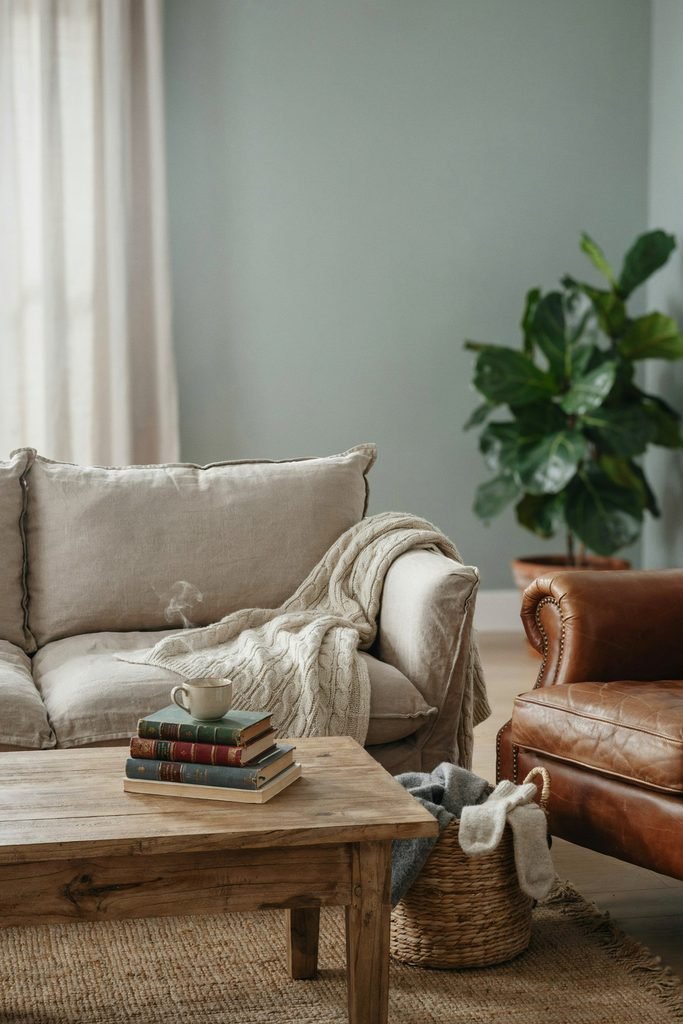
A linen slipcovered sofa is arguably the single most defining piece of furniture in a transitional farmhouse style living room. The relaxed drape, slightly rumpled texture, and breathable natural fiber communicate comfort without formality. Choose a warm oatmeal, ivory, or soft flax tone that hides everyday wear and can be machine-washed. Pair with deep, supportive cushions rather than stiff, sculpted seating. This approach prioritizes a functional living room layout where family members actually want to gather, and the slipcover can be swapped or refreshed as the room evolves.
7. Leather Accent Chairs for Warmth and Contrast
Positioning one or two leather accent chairs beside a linen sofa introduces rich contrast and a lived-in sophistication. Cognac, caramel, or warm tan leather develops a beautiful patina over years of use, deepening the room’s character. Choose simple silhouettes—club chairs, sling chairs, or low-profile armchairs—without excessive tufting or ornamentation. The leather grounds the layered textures living room and prevents an all-neutral palette from feeling flat. Because quality leather improves with age, these chairs become more attractive, not less, over time.
8. Black Metal Lighting and Hardware
Black metal light fixtures—think matte-black pendants, a linear chandelier, or simple wall sconces—provide crisp definition against warm white walls and natural wood. The contrast keeps a farmhouse style living room from drifting into overly soft or washed-out territory. Extend the black metal thread through cabinet pulls, curtain rods, or picture frames for cohesion without monotony. Stick to simple geometric shapes: cylinders, cones, or exposed-bulb cages. This restrained hardware approach reads as intentional and modern, ensuring your lighting stays current well beyond any single trend cycle.
9. Woven Textures: Rattan, Jute, Seagrass, and Baskets
Incorporating woven elements adds tactile warmth and visual softness that no polished surface can replicate. A large jute or sisal rug grounds the seating area, while seagrass baskets tucked beside the sofa corral throws and magazines. A rattan pendant or woven wall hanging introduces organic shape. These natural fibers complement an organic modern farmhouse aesthetic because they reference handcraft and agricultural heritage without feeling costumey. Rotate basket placements seasonally if you like, but the materials themselves remain perennially appropriate.
10. Layered Neutral Textiles and Natural Fabrics
A truly cozy farmhouse fireplace nook or sofa arrangement relies on textile layering: a chunky knit throw over a linen sofa, cotton-linen curtains pooling gently at the floor, a wool rug beneath jute. Stick to a tight palette of cream, oat, warm taupe, and soft clay so the layers read as intentional rather than busy. Mix weaves and weights for depth—smooth linen next to nubby bouclé, flat-weave beside cable-knit. This layered textures living room strategy adds richness through touch and shadow rather than color, keeping the scheme timeless.
11. Vintage and Antique-Inspired Accent Pieces
Vintage-inspired farmhouse decor tells a story that mass-produced items simply cannot. A weathered wooden dough bowl, an old ironstone pitcher, a framed botanical print, or a tarnished brass candlestick introduces patina and personality. Shop estate sales, thrift stores, and flea markets for one-of-a-kind finds, then edit ruthlessly—three meaningful objects on a shelf outperform ten decorative filler pieces. These accents prevent the room from feeling showroom-new and connect the space to a broader design lineage, which is central to timeless interior design trends.
12. Built-In Shelving and Functional Storage
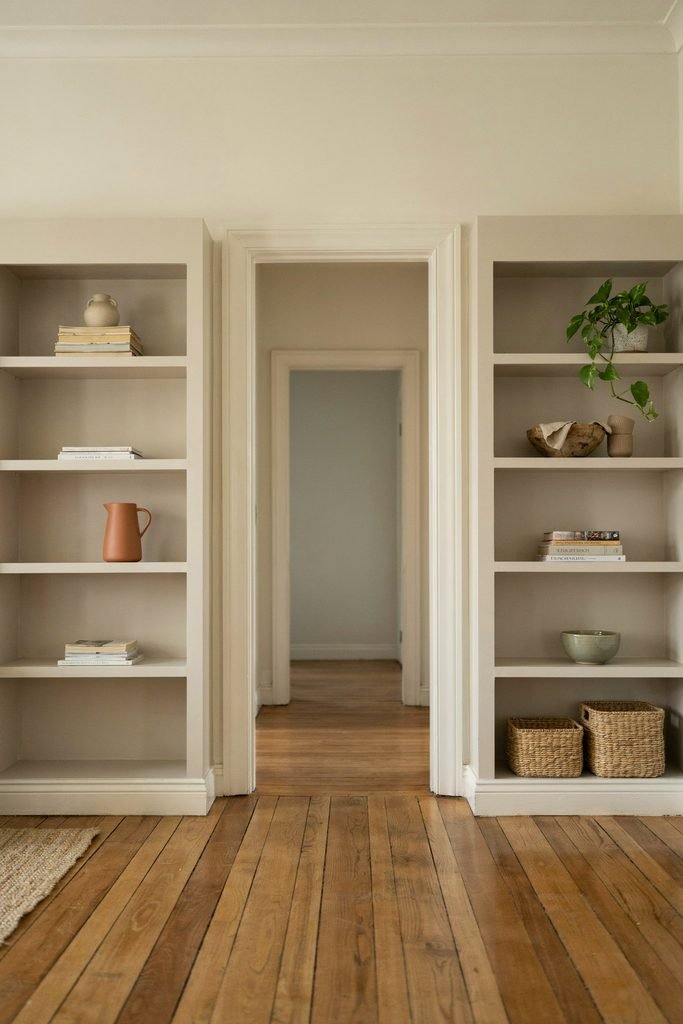
Built-in shelving ideas transform awkward wall space into purposeful storage that looks intentional and architectural. Flank a fireplace with recessed bookcases, or install a window-seat bench with hidden compartments for blankets and toys. Paint built-ins the same warm white as the walls so they recede visually, then style shelves with a mix of books, ceramics, and small woven baskets. This approach supports a durable family-friendly living room by keeping clutter contained while maintaining the clean, uncluttered lines that define modern farmhouse design.
13. Muted Earth Tones and Deep Accent Colors
While warm neutrals dominate, introducing muted earth tones—terracotta, olive, muted rust, or deep sage—prevents a neutral farmhouse color palette from feeling one-note. Use these richer hues in small doses: a pair of throw pillows, a ceramic vase, a single upholstered ottoman, or artwork. Deep accents add grounding weight and seasonal flexibility. Because these shades exist in nature, they avoid the dated feeling of neon or overly saturated trends and integrate seamlessly into an earthy neutral living room scheme.
14. Greenery, Ceramic Vessels, and Organic Décor
A few potted plants—a fiddle-leaf fig, trailing pothos, or simple eucalyptus stems in a stoneware vase—breathe life and softness into the room. Handmade ceramic vessels in matte glazes add sculptural interest on mantels and shelves without shouting for attention. Group organic décor in odd numbers and vary heights for natural rhythm. This organic modern farmhouse layer connects the interior to the landscape outside and reinforces the style’s roots in agrarian simplicity. Living elements shift subtly with the seasons, keeping the space feeling current.
15. A Balanced Mix of Old and New
The most compelling modern farmhouse living room design avoids looking like a period reenactment or a sterile catalog. Pair a reclaimed wood dining bench with a clean-lined contemporary sofa. Hang a vintage oil painting above a modern console. Contrast a rustic stone fireplace with sleek black metal sconces. This tension between old and new is what elevates the style from costume to curated home. It also makes the room adaptable; you can swap individual pieces over the years without redesigning the entire space.
How to Create a Timeless Modern Farmhouse Living Room
Building a cohesive farmhouse style living room doesn’t require a full renovation. Follow this simple sequence:
- Start with warm neutral walls and flooring. Paint walls in a soft white or greige, and choose wide-plank oak, luxury vinyl in a wood tone, or natural stone tile for the floor.
- Add one architectural feature. A shiplap accent wall, exposed wood beams, or a stone fireplace surround gives the room a focal anchor.
- Choose durable, comfortable seating. A linen slipcovered sofa and one or two leather accent chairs form the core of a functional living room layout.
- Layer wood, linen, stone, metal, and woven textures. Aim for at least four material families so the room feels rich without relying on color.
- Use black accents sparingly. Limit black metal light fixtures, hardware, and frames to three or four touchpoints.
- Add vintage or personal décor. Choose inherited objects, flea-market finds, or handmade ceramics instead of mass-produced farmhouse signs.
The goal is a space that feels collected over time, not decorated in a single weekend. Edit regularly. If an item no longer serves the room’s comfort or beauty, let it go. This discipline prevents the cluttered, overly rustic “theme-park farmhouse” look that dates quickly.
Common Mistakes to Avoid
Even well-intentioned decorating can veer off course. Watch for these five pitfalls:
- Overusing distressed wood and rustic signs. One or two weathered pieces add charm; covering every surface in them creates visual noise and reads as a costume rather than a home.
- Choosing cool gray tones that feel sterile. Blue-based grays drain warmth from a farmhouse style living room. Opt for greige, cream, or warm taupe instead.
- Adding too much shiplap. Limit it to one wall or a defined nook. Wrapping an entire room flattens architectural interest.
- Buying matching furniture sets. Identical pieces feel showroom-stiff. Mix wood tones, textures, and eras for a collected, lived-in atmosphere.
- Ignoring lighting layers and room function. A single overhead fixture leaves shadows and fails to support reading, conversation, or evening relaxation. Combine ambient, task, and accent lighting to support how your family actually uses the space.
Frequently Asked Questions
What is modern farmhouse style?
Modern farmhouse style blends the warmth, natural materials, and simple silhouettes of traditional rural homes with clean-lined, contemporary design. It favors a neutral farmhouse color palette, natural wood and stone textures, comfortable furniture, and vintage-inspired accents while avoiding heavy ornamentation or overly rustic finishes. The result feels cozy and approachable yet uncluttered and current.
Is modern farmhouse still in style?
Yes—when executed with restraint and quality materials. The style endures because it prioritizes comfort, natural textures, and livability over gimmicks. Spaces that lean on timeless interior design trends like warm neutrals, layered textiles, and honest materials remain attractive regardless of passing fads. The key is avoiding overly themed décor that dates quickly.
What colors work best in a modern farmhouse living room?
Warm whites, soft creams, greige, and pale taupe form the foundation. Layer in muted earth tones such as terracotta, sage, olive, or dusty rust through pillows, ceramics, and artwork. Use black sparingly for contrast. This palette keeps the room bright, grounded, and adaptable.
How do I make a farmhouse living room look expensive?
Focus on quality over quantity. Invest in solid wood furniture, natural linen upholstery, and hand-finished ceramics. Keep décor minimal and intentional. Add one statement architectural element—exposed wood beams or a stone fireplace. Thoughtful lighting, uncluttered surfaces, and a cohesive color story elevate the entire room without requiring a designer budget.
Conclusion
At its heart, a timeless modern farmhouse living room is about how a space feels when you walk in after a long day—warm, unhurried, and genuinely yours. Natural materials age gracefully. Comfortable furniture invites conversation. A restrained palette lets your personality shine through collected objects and personal mementos rather than store-bought novelty.
Choose pieces you love for how they feel in your hands, how they wear over the years, and how they make the room breathe. Skip the impulse buys and trend-chasing. Build slowly, edit often, and trust that simplicity, quality, and warmth never go out of style. Your living room will thank you for it—today and ten years from now.
