
You’ve finally saved up for that living room centerpiece you’ve been dreaming about. You’ve pinned inspiration boards, scrolled through furniture sites at midnight, and mentally redecorated your space a dozen times. But now you’re standing in the showroom—or staring at two browser tabs—completely stuck between a sectional and a sofa.
Sound familiar? You’re not alone. The sectional vs. sofa debate is one of the most common dilemmas homeowners and renters face when tackling a living room layout. Both options promise comfort and style, but they serve very different needs, spaces, and lifestyles.
In this guide, we’ll walk you through everything you need to know to choose the best seating for your living room. From room dimensions and traffic flow to budget and long-term value, you’ll leave with a clear answer tailored to your space. Let’s dive in.
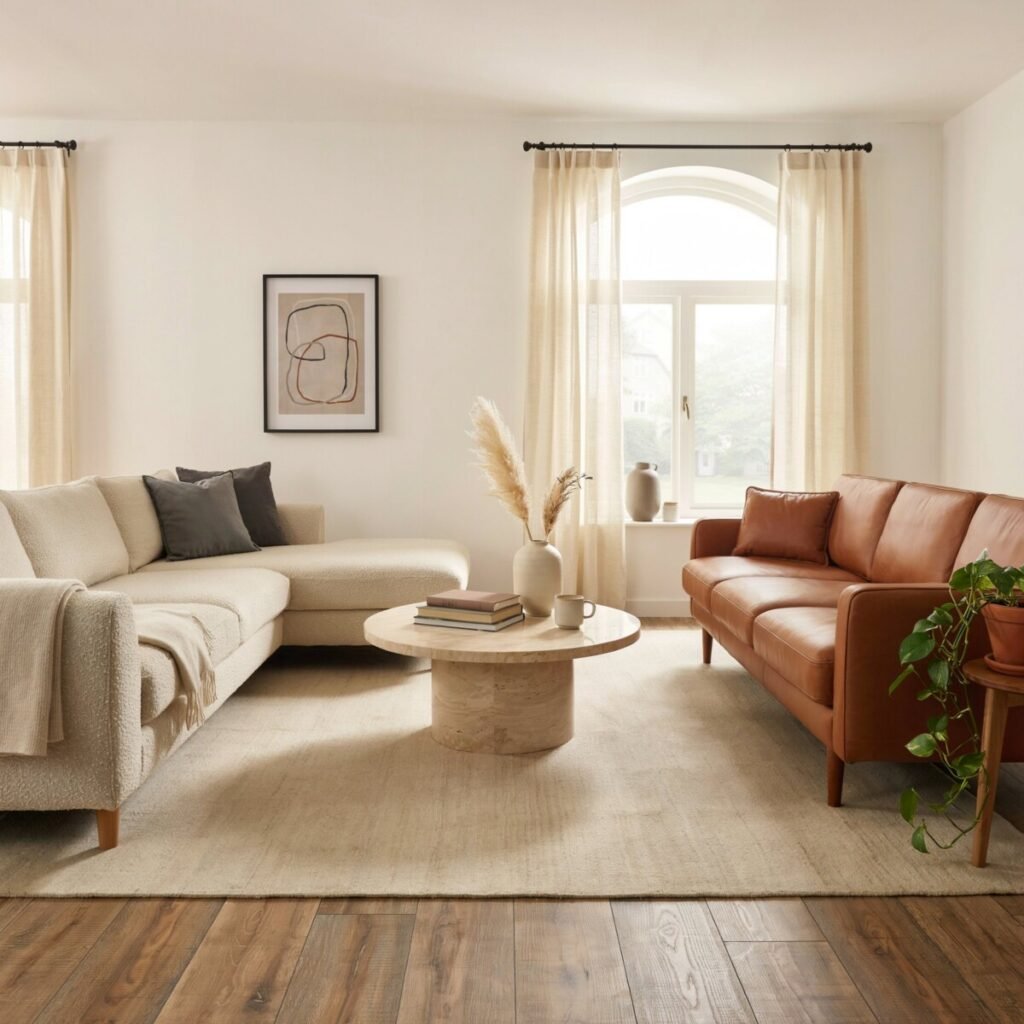
What Is a Sectional?
A sectional sofa is a multi-piece seating unit designed to form a continuous arrangement—most commonly an L-shape or U-shape. Unlike a single sofa, a sectional is built from connected modules that can include a chaise lounge, corner piece, armless seats, and sometimes even a sleeper component.
Common sectional configurations include:
- L-shaped sectional: Two sections meeting at a right angle. The most popular choice for US living rooms.
- U-shaped sectional: Three sections forming a horseshoe. Ideal for large, open spaces.
- Modular sectional: Individual pieces that can be rearranged, added to, or separated entirely.
- Chase sectional: A standard sofa with an extended chaise on one end.
Sectionals shine when it comes to maximizing seating capacity. They’re a go-to for families who pile in for movie night, hosts who entertain frequently, and anyone working with an open floor plan that needs defined seating zones. The L-shaped sectional, in particular, tucks neatly into corners or floats beautifully in the middle of a large room, making it a cornerstone of modern living room design.
What Is a Traditional Sofa?
A traditional sofa—sometimes called a standard sofa or settee—is a single, self-contained seating piece, most commonly a 3-seater sofa ranging from 72 to 96 inches wide. It’s the classic silhouette you picture when someone says “couch”: a back, two arms, and a row of cushions.
Traditional sofas come in countless styles, from rolled-arm Chesterfields to sleek mid-century modern designs. You’ll also find smaller variations like loveseats (2-seaters) and apartment-sized sofas (under 80 inches), which are lifesavers for anyone searching for a sofa for small living room situations.
Why homeowners love a traditional sofa:
- Versatility: It pairs effortlessly with accent chairs, ottomans, or a second sofa.
- Portability: Easier to move through doorways, up stairs, or during a future move.
- Classic appeal: A well-chosen sofa never goes out of style and anchors a room without dominating it.
- Budget-friendly: Generally more affordable than sectionals, making it a smart furniture investment for first-time buyers.
Whether you’re furnishing a cozy apartment living room or a formal sitting area, the traditional sofa remains one of the most flexible pieces of living room furniture you can own.
Key Factors to Consider
Choosing between a sectional and a sofa isn’t just about aesthetics. Here are the four decision factors that matter most.
Room Size & Dimensions
This is the single biggest determinant. A sectional for a large living room (think 15×20 feet or bigger) can look stunning and purposeful. But that same piece crammed into a 10×12 apartment space? It’ll swallow the room whole.
Quick measurement tips:
- Leave at least 30–36 inches of walkway clearance around any seating piece.
- For a sectional, you’ll typically need a wall span of 10+ feet or a room width of 12+ feet.
- For a sofa for small spaces, aim for a piece that occupies no more than two-thirds of the longest wall.
- Always measure doorways, hallways, and stairwells before purchasing—sectional sizing errors here are costly.
If your living room dimensions are under 12 feet across, a sofa (or a compact sofa with chaise) is almost always the smarter pick.
Seating Capacity & Lifestyle
Ask yourself: Who uses this room, and how?
- Families with kids, frequent hosts, or dedicated movie-night crews benefit enormously from a sectional’s generous seating capacity. Everyone has a spot, and the chaise doubles as a nap zone.
- Couples, minimalists, or design-lovers who redecorate seasonally tend to prefer the clean lines and flexibility of a traditional sofa paired with accent chairs.
Sarah, a mom of three in Austin, Texas, told us she switched from a sofa-and-chair setup to a large L-shaped sectional specifically because “the kids stopped fighting over spots.” For her family, the sectional was the ultimate family-friendly furniture upgrade.
Layout Flexibility & Traffic Flow
Sectionals anchor a room beautifully—but they also commit you. Once that U-shaped sectional is in place, your living room traffic flow is largely set. Rearranging for holiday gatherings or seasonal refreshes becomes a two-person, sweat-inducing project.
Sofas, by contrast, offer superior furniture layout flexibility. Swap them, rotate them, pair them differently with chairs and tables. If you live in an open floor plan and like to shift zones for entertaining guests, a sofa gives you that freedom.
Budget & Long-Term Value
Sectional sofa cost typically ranges from $1,200 to $4,000+ for quality pieces, while a solid traditional sofa often lands between $600 and $2,000. However, sectionals deliver more seating per dollar—you’re essentially getting a sofa, a chaise, and sometimes a corner loveseat in one purchase.
That said, an affordable living room sofa is easier to replace, resell, or reupholster down the road. If you see your taste evolving every few years, the lower upfront cost and easier exit strategy of a sofa might protect your furniture investment better.
Sectional vs. Sofa: Side-by-Side Comparison
Still on the fence? Here’s a quick sectional vs. sofa comparison to cut through the noise:
| Factor | Sectional | Traditional Sofa |
|---|---|---|
| Seating capacity | 4–7+ people | 2–3 people |
| Best room size | 12+ ft wide; open plans | Any size; excels under 12 ft |
| Flexibility | Low (anchored layout) | High (easy to rearrange) |
| Ideal for | Families, entertainers, movie lovers | Couples, minimalists, renters |
| Price range | $1,200–$4,000+ | $600–$2,000 |
| Moving/relocating | Difficult (multi-piece) | Moderate (single piece) |
| Style versatility | Modern, casual, cozy | Universal (classic to contemporary) |
If you’ve ever wished for a “sofa or sectional quiz,” this table is your shortcut. Whichever column aligns more closely with your answers is likely your winner.
Living Room Layout Ideas & Tips
Knowing what to buy is half the battle. Knowing where to put it is the other half. Here are practical layout strategies for both options.
For Sectionals
- Float it to define zones. In an open concept living room, a sectional floating perpendicular to the kitchen island creates a natural “living area” boundary without walls.
- Mind the chaise placement. Position the chaise on the shorter wall or the side farthest from the main entry so it doesn’t block pathways.
- Soften the angles. Pair an L-shaped sectional with a round coffee table and a curved floor lamp to keep the space from feeling boxy.
- Keep breathing room. Allow at least 18 inches between the sectional and your coffee table, and 30+ inches behind it if it floats away from a wall.
For Sofas
- Create a conversation grouping. Place your sofa opposite two accent chairs angled inward. Add a shared coffee table in the center. This sofa living room layout encourages eye contact and easy chatting.
- Go symmetrical for formal spaces. A sofa-and-loveseat combo facing each other with matching side tables delivers a polished, traditional look.
- Add comfort without bulk. An ottoman or a slim chaise lounge beside a 3-seater sofa gives you that stretch-out luxury without the footprint of a full sectional.
Hybrid Options: The Best of Both Worlds
Can’t fully commit? Consider a sofa with chaise—it gives you the extended lounging of a sectional in a more compact, movable frame. Or explore a modular sectional sofa, where individual pieces can be reconfigured as your needs change. This is especially smart for renters or anyone who craves flexible living room furniture that adapts over time.
Common Mistakes to Avoid
Even with the right choice between sectional and sofa, a few missteps can derail your living room design. Watch out for these:
- Overwhelming a small room. The number-one living room furniture mistake is buying a sectional that’s simply too large. Always mock up the footprint with painter’s tape on the floor before purchasing.
- Ignoring walkways and door swings. If your sectional blocks the path from the entry to the kitchen, or a sofa prevents a closet door from opening fully, you’ll regret it daily.
- Choosing style over function. That gorgeous ivory linen sectional won’t survive two toddlers and a golden retriever. For a family-friendly furniture pick, prioritize performance fabrics like microfiber, Crypton, or treated leather.
- Skipping the “sit test.” Never buy based on photos alone. Seat depth, cushion firmness, and back height vary wildly between brands. If you’re shopping online, check return policies carefully—this is one of the most overlooked sofa buying tips.
- Forgetting scale with other furniture. A massive sectional paired with a tiny side table (or a delicate sofa flanked by oversized bookcases) throws off the entire room’s visual balance.
Final Verdict: Which Should You Choose?
There’s no universal winner in the sectional vs. sofa debate—only the winner for your living room layout and lifestyle. Here’s a simple decision framework:
Choose a sectional if…
- Your room is 12+ feet wide or you have an open floor plan.
- You regularly seat four or more people.
- You want a single statement piece that defines the space.
- Lounging, napping, and sprawling are non-negotiable.
Choose a sofa if…
- Your space is under 12 feet or you’re furnishing an apartment.
- You value the ability to rearrange, redecorate, or move easily.
- You prefer pairing with accent chairs for a layered look.
- You’re working with a tighter budget or want easier future replacement.
Whichever you choose, measure your space first, think about how you actually use the room on a Tuesday night (not just during holiday parties), and prioritize comfort over trend. The best living room seating is the one you’ll actually sink into every day.
What’s Your Pick?
So—sectional or sofa? Drop your choice (and your reasoning!) in the comments below, or tag us on social media with your newly arranged space. We love seeing real living room transformations.
Want more help? Check out these next reads:
- How to Measure Your Living Room for Furniture (Without Losing Your Mind)
- Best Sectional Sofas for Families in 2025: Tested & Ranked
- 7 Small Space Solutions That Make Any Apartment Feel Bigger
Happy furnishing—and may your living room be cozy, functional, and unmistakably yours.