
You’ve just inherited your grandmother’s mahogany dining table—the kind with carved legs and a century of Sunday dinners baked into the grain. You love it. But your open-concept kitchen looks straight out of a 2023 design catalog, all matte black fixtures and quartz countertops. Do you ditch the table? Shove it in storage?
Not a chance.
Welcome to the art of mixing modern and traditional styles in home renovation—one of the most exciting (and practical) design movements sweeping American homes in 2026. Whether you’re updating a 1950s ranch in Austin, refreshing a Victorian in Portland, or breathing new life into a colonial in suburban Connecticut, eclectic home design lets you honor the past while living fully in the present.
And it’s catching on fast. According to recent Houzz data, over 65% of US homeowners now favor a fusion interior style over a purely modern or traditional approach. It’s not just a trend—it’s a philosophy. One that says your home should tell your story, not a catalog’s.
In this guide, you’ll learn exactly how to create balanced eclectic living spaces room by room, without blowing your budget. Whether you’re working with $5,000 or $50,000, these strategies will help you build a home that feels timeless, personal, and genuinely beautiful. Let’s get into it.
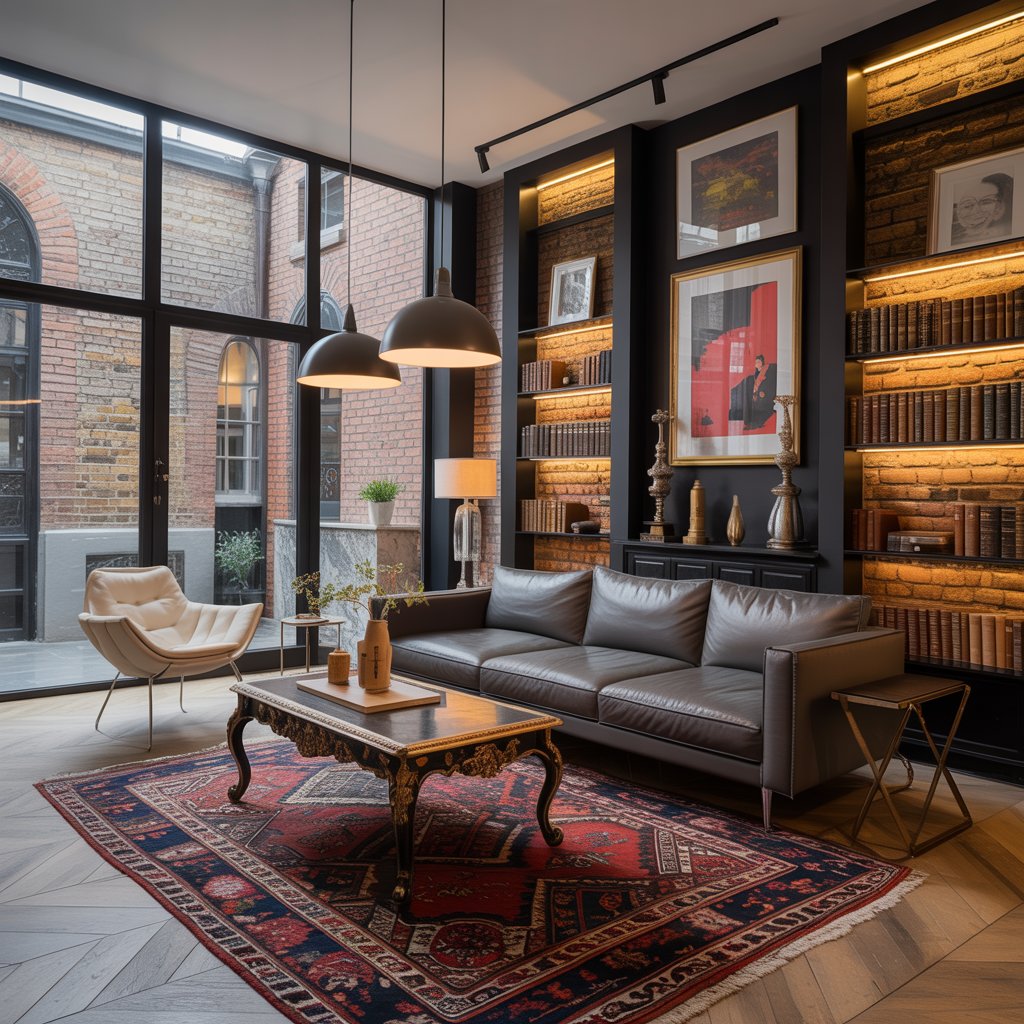
Why Blend Styles? The Case for Traditional-Modern Hybrid Decor
There’s a reason the traditional-modern hybrid decor movement resonates so deeply with millennial and Gen X homeowners right now. After years of pandemic-era living, Americans want homes that feel both functional and warm—not a tech showroom, not a museum, but somewhere in between.
Modern design brings clean energy. Think uncluttered surfaces, smart-home integration, and the kind of breathing room that makes you exhale the moment you walk in. Traditional design brings something else entirely: nostalgia, craftsmanship, and the sense that your home has roots.
The magic happens when you combine the two.
Here’s a quick breakdown of how each style contributes—and what the fusion unlocks:
| Aspect | Modern Elements | Traditional Elements | Fusion Benefit |
|---|---|---|---|
| Aesthetics | Sleek lines, metallics | Ornate details, wood grains | Balanced eclectic living spaces |
| Functionality | Smart tech integration | Built-in storage, durability | Open-concept layouts that work |
| Cost | Affordable mass-produced pieces | Thrifted or inherited heirlooms | Budget-friendly, character-rich upgrades |
| Sustainability | Energy-efficient systems | Reused/repurposed materials | Reduced environmental footprint |
Beyond aesthetics, there’s a strong sustainability argument for blending vintage and contemporary furniture. Repurposing an antique dresser instead of buying new keeps furniture out of landfills. Reupholstering a Victorian-era armchair with modern performance fabric extends its life by decades. These choices align with how a growing number of American homeowners want to live: intentionally, and with less waste.
The bottom line? Fusion isn’t compromise. It’s curation.
Key Principles for Blending Vintage and Contemporary Furniture
Before you start pulling pieces together, a few guiding principles will save you from the most common pitfalls—and help every room feel cohesive rather than chaotic.
1. Balance Scale and Proportion
One of the fastest ways to create visual tension (the bad kind) is by mismatching scale. A hulking Victorian sideboard next to a sleek low-profile sofa looks accidental rather than intentional. The fix: pair large traditional pieces with slim modern counterparts, and vice versa. A chunky farmhouse dining table? Ground it with narrow Parsons-style chairs. A sprawling modern sectional? Anchor it with a substantial antique trunk coffee table.
2. Build a Neutral Color Palette with Bold Accents
Neutral color palettes with bold accents are the backbone of successful fusion spaces. Think warm whites, greiges, and taupes as your base—these shades play nicely with both polished chrome and aged oak. From there, introduce deliberate pops: a navy velvet settee, a terracotta ceramic lamp, a forest-green linen curtain. Brass hardware fixtures are having a major moment and act as a natural bridge between old-world warmth and modern sophistication.
3. Play with Texture
Texture is where fusion rooms come alive. Pair the smooth surfaces of modern furniture—glass, lacquer, polished stone—with organic, tactile traditional materials: chunky wool rugs, linen upholstery, hand-thrown ceramic accessories. The contrast creates depth without visual noise.
4. Juxtapose Eras Intentionally
Mid-century modern accents paired with farmhouse chic elements is perhaps the most beloved American fusion combo—and for good reason. A pair of Eames-style walnut chairs (you can find solid reproductions at West Elm or CB2) looks stunning beside a shiplap accent wall. A sleek marble waterfall island holds its own against a reclaimed-wood ceiling beam. The juxtaposition signals I made this choice on purpose.
5. Apply the “One Statement Piece” Rule
In every room, let one piece do the heavy lifting. A museum-quality antique armoire in a minimalist bedroom. A raw-edge live-edge dining table in an otherwise modern kitchen. By building a room around a single anchor piece, you avoid visual competition and give your eye a place to rest.
Quick-reference checklist for fusion success:
- ✅ Mix metals intentionally (e.g., brass + matte black, not gold + silver + chrome all at once)
- ✅ Limit pattern mixing to two or three max per room
- ✅ Let wood tones connect both eras—walnut and oak appear in both modern and traditional palettes
- ✅ Source hybrid pieces from Anthropologie, McGee & Co., or Article for built-in cohesion
- ✅ When in doubt, edit. Remove one thing.
Room-by-Room Guide to Fusion Interior Style
Living Room: Where Old Meets Now
The living room is your canvas—and often the first room guests see. Start with a statement sofa. A deep-buttoned Chesterfield in cognac leather reads traditional, but pair it with a lucite side table and a low-slung modern media console, and suddenly it feels fresh. This blending of vintage and contemporary furniture signals confidence.
Layered lighting schemes are the secret weapon of every well-designed living room. A traditional chandelier (look for vintage or antique-style fixtures at Rejuvenation or even Facebook Marketplace) overhead creates drama and warmth. Below it, add recessed LED lighting or modern floor lamps for functional, adjustable ambient light. The combination gives you full atmospheric control at different times of day.
For walls, consider a textured wall treatment that honors both worlds: limewash paint has deep historical roots but looks remarkably contemporary in a muted white or clay tone. Or try a paneled board-and-batten accent wall painted in a bold modern hue—navy, forest green, or deep charcoal.
Anchor the space with a large-scale natural fiber rug (jute, sisal, or a Moroccan-style wool). These ground a room and read as neutral enough to bridge any style gap.
Kitchen: The Fusion Showstopper
Kitchen renovations are where traditional-modern hybrid decor truly shines—and where you’ll see the most dramatic before-and-after results.
The formula that works coast to coast: open-concept layouts with a mix of classic cabinetry details and sleek modern hardware. Think shaker-style cabinet doors (timeless, slightly traditional) finished in a modern two-tone palette—white uppers, deep green or navy lowers—with matte black or brushed brass hardware. Add a subway tile backsplash in a non-standard format (a vertical stack or herringbone pattern reads more modern than traditional brick-lay) and you’ve got instant fusion.
For countertops, butcher block is a sustainable home upgrade that looks both rustic and current. Pair it with a marble or quartz island for the contrast that photographers and Instagram accounts love. These days, you can source quality butcher-block sections directly from Home Depot or IKEA and have them custom-cut.
Smart appliances—refrigerators with interior cameras, voice-activated faucets, induction cooktops—bring function fully into the 21st century without disrupting a traditional aesthetic, especially when panel-ready models are used to blend seamlessly with cabinetry.
Case study: Joanna Gaines has made a career out of this precise balance. Her Magnolia-style kitchens consistently feature shiplap walls, farmhouse sinks, and antique pendant lighting alongside open shelving and modern stainless fixtures—a formula that’s launched a thousand renovations across the South and Midwest, and for good reason.
Bedroom: Calm, Layered, Intentional
The bedroom is where fusion design earns its keep emotionally. You want the space to feel serene and personal—not like a hotel, not like a time capsule.
Start with textured wall treatments: paneled wainscoting painted in a soft neutral (Benjamin Moore’s “White Dove” or Sherwin-Williams’ “Accessible Beige” are perennial favorites) brings architectural interest without period-specific styling. A grasscloth or linen-look wallpaper on a single accent wall adds warmth and dimension.
For furniture, try a traditional upholstered headboard—tufted, winged, or upholstered in a textured fabric—with streamlined modern nightstands in walnut or white lacquer. The juxtaposition is gentle but unmistakable.
Layer bedding in natural textiles: cotton percale, linen, or French-tuck duvet covers in earthy tones. Add a throw or quilt with traditional patchwork patterning. Modern minimalism meets American heritage—simply, warmly.
Keep lighting in this space deliberate. Matching sconces flanking the headboard (traditional symmetry) paired with a low-profile modern ceiling fixture keeps things grounded without feeling stuffy.
Bathroom & Entryway: Details That Make the Difference
In smaller spaces like bathrooms and entryways, the details do all the work—and this is where brass hardware fixtures earn their budget.
In the bathroom: Float a modern vanity beneath a traditionally framed mirror. If you have an older home with a clawfoot tub, consider it your anchor piece and build a DIY fusion project around it—refinish the exterior in a matte modern color (navy, black, or forest green) while keeping the interior classic white. Pair it with sleek wall-mounted fixtures in unlacquered brass. The contrast is stunning. Add simple subway tile in a modern format and you’ve bridged two centuries in one room.
In the entryway: A vintage console table (thrifted from Habitat for Humanity ReStore or a local antique mall) topped with a modern ceramic lamp and a clean rectangular mirror strikes the right note. Add a simple modern bench with a woven seat cushion, and hooks in mixed metals. First impressions set the tone for everything that follows.
Sourcing and Budget Tips for Timeless Renovation Trends
The good news: fusion interior style is inherently budget-flexible, because it actively encourages mixing price points.
For vintage and antique pieces:
- Etsy is a goldmine for vintage hardware, lighting, and decorative accessories—often at lower prices than antique shops
- Facebook Marketplace and Craigslist remain the best sources for large furniture at unbeatable prices
- Habitat for Humanity ReStores stock reclaimed architectural elements, from doors to mantels to tile
- Local antique malls and estate sales consistently outperform boutique shops on price
For modern elements:
- Home Depot and Lowe’s for modern fixtures, tile, and smart-home tech
- Wayfair for affordable contemporary furniture with fast shipping
- IKEA for modular basics that serve as neutral backdrops for vintage statement pieces
Rough budget allocation for a $15,000 renovation:
- 35% structural/labor (drywall, flooring, painting)
- 25% kitchen or bathroom fixtures
- 20% furniture and lighting
- 15% vintage/antique sourcing
- 5% accessories and textiles
Sustainable home upgrades to prioritize: reclaimed wood flooring, refurbished vintage lighting, low-VOC paints, and energy-efficient windows that preserve period-appropriate profiles.
Common Mistakes to Avoid
Even experienced renovators fall into these traps:
Overcrowding. More is not more in a fusion space. If every surface holds a meaningful object, nothing is meaningful. Adopt the editing rule: one bold piece per room, and everything else supports it.
Ignoring scale. A delicate Victorian side chair next to a sprawling modern sectional disappears. Scale your traditional pieces so they hold their own.
Mixing too many metals. Choose a dominant metal (brass, matte black, brushed nickel) and use others sparingly as accents only.
Forcing the narrative. Not every traditional piece needs to be displayed. If it doesn’t work in the room, store it, gift it, or sell it. Fusion is about intentional curation, not obligation.
Conclusion: Your Home, Your Story
Mixing modern and traditional styles in home renovation isn’t about following rules—it’s about breaking them thoughtfully. The most successful fusion spaces feel personal because they are personal: a family heirloom beside a West Elm coffee table, a reclaimed farmhouse beam above a smart kitchen, a Victorian clawfoot tub refinished in the boldest color you’ve ever loved.
When done right, eclectic home design creates spaces that age gracefully, reflect genuinely who you are, and—not incidentally—tend to hold and increase home value better than rigidly trend-driven interiors. Timeless renovation trends aren’t timeless because they’re safe. They’re timeless because they’re human.
Now it’s your turn. Pull out that grandmother’s table. Find the brass lamp at the estate sale. Mix the old with the new, and make something entirely yours.
We’d love to see what you create—drop your before-and-after photos in the comments below!
FAQs
Q: Can I mix styles in a small apartment?
Absolutely. In fact, smaller spaces benefit from fusion design because a single statement vintage piece (a brass floor lamp, a cane-backed chair) can do the heavy lifting without overwhelming the room. Keep the palette neutral and let one traditional element anchor the space.
Q: How do I know if two pieces “go together”?
Look for a shared element: a similar wood tone, a repeated color, or a complementary scale. If two pieces share at least one unifying characteristic, they’ll coexist comfortably even if their styles differ.
Q: Is fusion design more expensive than choosing one style?
Not necessarily. Because you’re actively mixing price points—a thrifted heirloom alongside a modern IKEA piece—fusion can actually cost less than furnishing a room from a single high-end modern or traditional retailer.
Q: What if I rent and can’t renovate structurally?
Fusion design works beautifully at the furniture and accessory level. Focus on layered lighting, rugs, textiles, and vintage decorative objects. You can transform a generic rental into a character-rich space without touching a single wall.
Q: Where do I start if I’m completely overwhelmed?
Start with one room. Choose your anchor piece first—the one item you love most and want to build around—then add pieces that complement it in scale, color, or material. Work outward from there, and edit ruthlessly as you go.