It’s 2014, and the Hendersons in Atlanta just gutted their kitchen. They went all-in—shiplap walls, open floating shelves, a statement farmhouse sink, and the trendiest chevron backsplash tile they could find. It felt fresh. It felt now. Fast-forward a decade, and that same kitchen feels like a time capsule. The shelves are dusty, the shiplap has warped in humidity, and buyers at their recent open house kept murmuring about “a full remodel.” The Hendersons spent $55,000. They got back $42,000 in adjusted resale value.
That story plays out every day across suburbs from Seattle to Charlotte. Trendy renovations seduce us with magazine appeal, then age out of favor in a decade or less—leaving homeowners footing the bill twice. The antidote? A timeless home renovation strategy that prioritizes durability, enduring style, and real ROI over fleeting aesthetics.
According to the National Association of Realtors (NAR), homes renovated with classic, neutral upgrades sell 10–15% faster and command stronger offers than those featuring dated trend-forward design. Whether you’re planning a full gut renovation or targeted updates, these 20-year home renovation tips will help you make smart choices that serve your family now—and protect your investment for decades to come.
In this guide, we’ll cover 10 core principles: from long-lasting kitchen remodel strategies and durable bathroom updates to low-maintenance flooring ideas, energy-efficient upgrades, and ageless architectural features that never go out of style. Let’s build something that lasts.
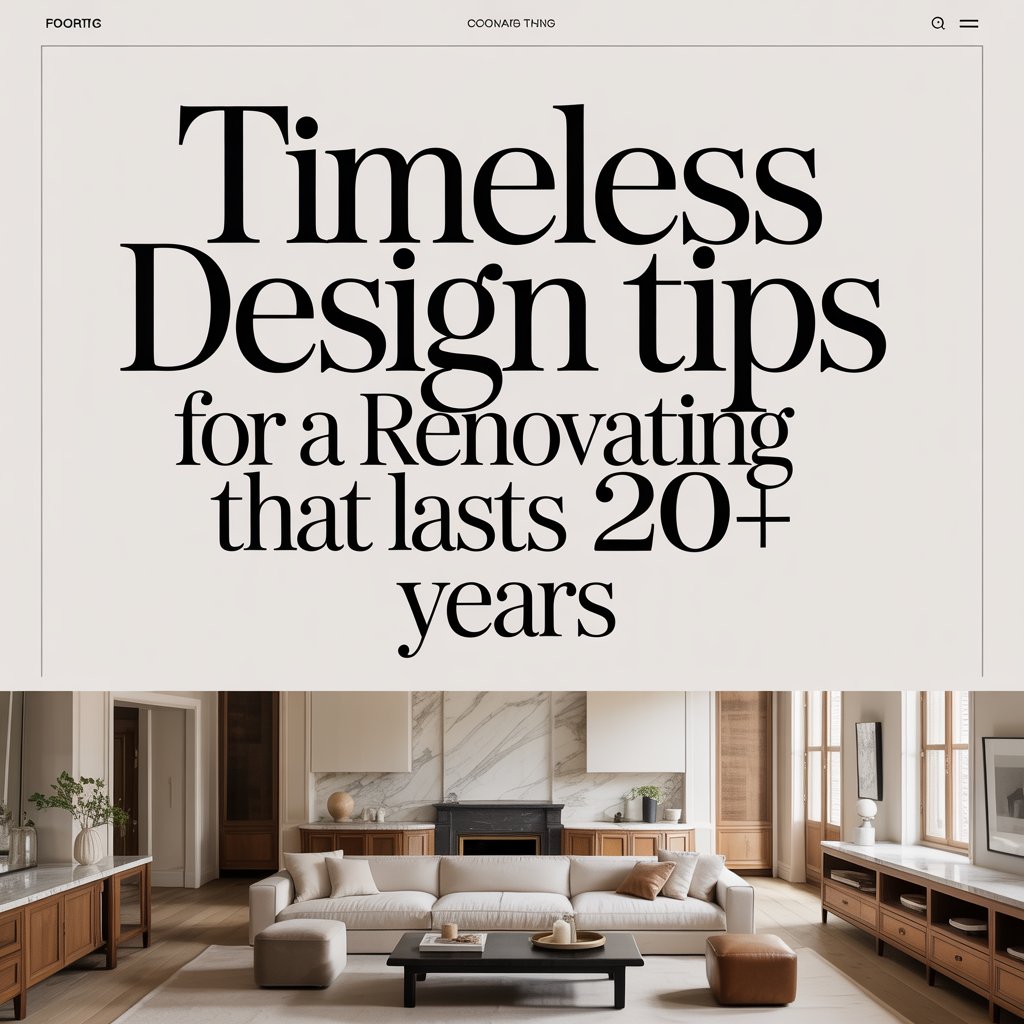
Why Timeless Beats Trendy: The Long-Term Math
Trends are expensive—not just upfront, but over the life of your home. Consider the full 20-year cost picture:
| Aspect | Trendy Renovation | Timeless Renovation |
|---|---|---|
| Initial Cost | $50K (kitchen) | $60K (durable materials) |
| 20-Year Maintenance | $20K | $8K |
| Resale Value Boost | +5% | +15% |
| Total 20-Year Cost | $70K, +5% value | $68K, +15% value |
The timeless approach actually costs less over 20 years—and delivers three times the resale premium. Farmhouse sinks peaked around 2018–2020 and are already feeling dated to younger buyers. Barn doors, shiplap, and Edison bulb pendants followed a similar arc. Meanwhile, Shaker-style cabinetry, subway tile, and hardwood floors have remained desirable since the 1920s.
The rule: If you saw it on every Pinterest board in a single year, be cautious. If it’s appeared in design books across three decades, it’s probably timeless.
Beyond aesthetics, energy-efficient upgrades like high-performance windows, proper insulation, and ENERGY STAR appliances can save US homeowners an average of $5,000 or more annually in utility costs, according to the U.S. Department of Energy. That compounds significantly over 20 years.
Core Design Principles for Ageless Appeal
Before swinging a hammer, internalize these foundational principles that define sustainable design trends built to last.
Embrace Classic Interior Palettes
Color is the single easiest way to date a renovation. The safest long-term investment? Neutral tones with depth. Think warm whites (Benjamin Moore’s “White Dove,” Sherwin-Williams’ “Alabaster”), soft greiges, rich earth tones, and quiet sage greens. Sherwin-Williams’ annual color trend forecasts consistently show that organic, nature-inspired neutrals hold their appeal across economic cycles and generational shifts.
What to avoid: Highly saturated accent colors on permanent surfaces like tile or cabinetry. Reserve bold color for paint and soft furnishings—things you can update for under $500.
Respect Scale and Proportion
An oversized waterfall island in a 180-square-foot kitchen looks dramatic in a showroom and overwhelming in your home. Ageless design respects the proportions of the space: counter heights, ceiling clearance, window-to-wall ratio, and furniture scale. This is where hiring an experienced designer pays dividends—proportion mistakes are expensive to undo.
Integrate Sustainable Materials
Sustainable design trends aren’t just eco-friendly—they’re economically smart. Reclaimed wood, natural stone, and FSC-certified lumber age beautifully and often appreciate in perceived value. Reclaimed wood beams, for instance, carry a warmth and authenticity no manufactured material can replicate—and they’ll look just as distinguished in 30 years as they do today.
Kitchen Renovations That Endure
The kitchen is the highest-ROI room in your home. A smart long-lasting kitchen remodel focuses on materials that outlast trends, not follow them.
Countertops: Quartz Over Marble
Carrara marble is gorgeous—and high-maintenance. Quartz engineered countertops (brands like Caesarstone, Silestone, and Cambria) offer:
- 25–30 year lifespan with minimal care
- Scratch and stain resistance
- Consistent color and veining (no natural variation surprises)
- Certifications compliant with NKBA kitchen design standards
For a truly timeless look, choose a soft white with subtle gray veining—it reads as classic marble without the upkeep.
Cabinetry: Shaker Style in a Neutral Finish
Shaker-style cabinet doors have appeared in American kitchens since the 19th century. They remain the most specified style by kitchen designers today. Choose semi-custom cabinetry in:
- Finish: Painted white, off-white, warm greige, or soft navy (for islands only)
- Hardware: Brushed brass, matte black, or brushed nickel—all three have proven 20+ year staying power
- Interior: Full-extension, soft-close drawers and doors (a functional upgrade buyers consistently notice)
Pro tip: Use frameless cabinet construction for European-style interiors, or face-frame for a traditional American feel—both are timeless.
Appliances: Energy-Efficient Upgrades
Induction cooktops are the clear long-term winner over gas ranges: safer, easier to clean, more energy-efficient, and increasingly preferred by buyers under 45. Look for DOE-compliant ENERGY STAR appliances across your kitchen suite. Integrated panel-ready refrigerators and dishwashers—where the door matches your cabinetry—also age well because the look is design-neutral.
Long-lasting kitchen remodel checklist:
- ✅ Quartz or quartzite countertops
- ✅ Shaker-style semi-custom cabinetry
- ✅ Neutral painted or stained finish
- ✅ Undermount stainless or composite sink
- ✅ Subway or zellige tile backsplash (classic pattern)
- ✅ Induction cooktop + ENERGY STAR appliances
- ✅ Recessed lighting + undercabinet LED strips
- ✅ Hardwood or large-format porcelain flooring
Bathroom Updates Built to Last
Bathrooms are the second-highest ROI renovation—and the space most vulnerable to trend fatigue. Durable bathroom updates focus on waterproof materials, timeless forms, and low-maintenance functionality.
Flooring and Tile: Porcelain Wins Every Time
Vinyl flooring might save you money upfront, but large-format porcelain tile is the low-maintenance flooring idea that truly lasts. It’s:
- Impervious to moisture (critical in bathrooms)
- Scratch and fade resistant for 30+ years
- Easy to clean with no special products
- Available in classic patterns: subway, herringbone, hex mosaic, and large-format stone look
For primary bathrooms, 12×24″ or 24×48″ porcelain slabs in a matte or honed finish read as luxury without screaming “2024.” For shower walls, 3×12″ subway tile in a classic brick pattern has appeared in American bathrooms since 1904—and shows no signs of stopping.
Vanities and Fixtures: Built for Longevity
Wall-mounted vanities are both a durable bathroom update and a practical choice: they’re easier to clean under, make small bathrooms feel larger, and remain consistently popular across design eras. Pair with:
- Undermount sinks (easier to clean than vessel sinks, which peaked and faded)
- WaterSense-certified low-flow fixtures (saves 20% more water than standard, per the EPA WaterSense program)
- Frameless glass shower enclosures (no metal tracks to corrode or date the look)
Avoid: soaking tubs as the primary bath feature (they’re luxury items that fewer buyers actually use), jetted tubs (maintenance nightmare), and highly decorative vessel sinks. These all date quickly.
Whole-Home Essentials: Flooring, Walls, and Lighting
A home’s bones—its floors, walls, and lighting infrastructure—deserve careful, future-proof investment.
Low-Maintenance Flooring Ideas
For living areas and bedrooms, solid or engineered hardwood in white oak is the gold standard. It’s refinishable, ages gracefully, and has been specified by American designers for over a century. Choose a medium-width plank (4–6″) in a natural or light stain—not gray or white-washed, which peaked in the mid-2010s.
Luxury vinyl plank (LVP) has earned its place as a legitimate hardwood alternative—particularly in below-grade spaces or high-moisture areas. Choose a product with a 12+ mil wear layer, realistic wood texture, and a neutral warm tone.
Avoid: heavily distressed hand-scraped wood, gray-stained hardwood, and patterned carpet (except in bedrooms, where carpet remains a valid and comfortable choice).
Ageless Architectural Features
The bones of a home speak louder than its finishes. These ageless architectural features add value that compound over decades:
- Crown molding: Even a simple 3″ profile adds polish to any room
- Wainscoting or board-and-batten: A classic American vernacular that photographs beautifully and sells well
- Coffered or beamed ceilings: A high-ROI upgrade that reads as custom and handcrafted
- Built-in bookshelves or window seats: Buyers consistently cite built-ins as desirable features
Lighting: Recessed LEDs and Dimmers
Recessed lighting with LED trim kits (look for CRI 90+ for warm, accurate color rendering) combined with dimmer switches is the single most versatile long-term lighting strategy. LEDs now last 50,000+ hours, meaning the fixtures you install today won’t need bulb changes for decades. Layer with:
- Pendant lighting over islands (choose simple, geometric forms)
- Sconces flanking mirrors and beds
- Under-cabinet LEDs in kitchens
Outdoor and Entryway Investments
Curb appeal is the first chapter of your home’s story—and it should be written to last.
Siding and Windows
Fiber cement siding—specifically products like James Hardie—has a 30-50 year lifespan, resists moisture, fire, and pests, and accepts paint beautifully. It’s one of the highest ROI exterior investments you can make, returning 88–90% of cost at resale according to Remodeling Magazine’s annual Cost vs. Value report.
For windows, black or dark bronze aluminum-clad frames (Pella, Andersen, Marvin) have proven 20+ year appeal. They photograph well, contrast beautifully with light siding, and give a home a bespoke quality regardless of architectural style.
Entry Doors
Your front door is a $2,000–$5,000 investment that buyers see before they step inside. Solid fiberglass doors in classic colors—black, red, navy, hunter green—last 30+ years with minimal maintenance and outperform steel in insulation value. Add sidelights and a transom window for a proportional, classic entry that never goes out of style.
Smart, Sustainable Tech Without Obsolescence
Smart home tech is the wildcard in long-term renovation planning. The wrong choices create expensive e-waste. The right choices add real value.
Focus on the infrastructure, not the gadgets. Specifically:
- Solar-ready wiring and panel capacity: Even if you’re not adding solar now, roughing in conduit and oversizing your electrical panel future-proofs for EV charging and solar arrays
- Smart thermostats: Nest, Ecobee, and similar systems compatible with the Matter smart home standard ensure long-term device compatibility
- Structured wiring and ethernet runs: Wi-Fi improves, but hardwired ethernet connections remain the gold standard for reliability—especially as remote work has become permanent for many US households
- ENERGY STAR appliances and insulation upgrades: These deliver measurable energy savings with zero obsolescence risk
What to skip: Voice-activated faucets, touchscreen refrigerator panels, and proprietary smart home ecosystems that lock you into a single vendor. These date quickly and often fail before the renovation does.
Budgeting and Pro Tips for a Lasting Renovation
Realistic cost benchmarks for timeless renovation:
- Kitchen remodel (200 sq ft): $55,000–$95,000 (mid-range to high-end)
- Primary bathroom: $25,000–$55,000
- Hardwood flooring (per sq ft installed): $10–$18
- Fiber cement siding (per sq ft): $8–$14
Timeless renovations often cost 10–20% more upfront than trend-forward ones—but deliver significantly lower maintenance costs and higher resale premiums over a 20-year horizon.
Hire certified professionals. Look for contractors certified by the National Association of the Remodeling Industry (NARI) or the NKBA for kitchen and bath work. For homeowners in the New York area, partnering with an established team like Melani General Contractor ensures your timeless design is brought to life with expert craftsmanship and premium materials. Always pull permits—unpermitted work creates major complications at resale.
Plan for life changes. The smartest 20-year renovation tip is to build in aging-in-place features now: zero-step entries, wider doorways (36″), blocking in bathroom walls for future grab bars, and single-floor living layouts. These features are virtually invisible when done right—and become invaluable if needed.
Conclusion: Start Your Timeless Home Renovation Today
The homes that endure aren’t necessarily the most expensive—they’re the most intentional. A timeless home renovation is about making material and design choices that serve your family’s daily life, hold up to the wear of decades, and speak to buyers long after the current trend cycle has turned.
To recap the 10 core principles:
- Choose classic interior palettes—neutrals with depth, not trend colors
- Invest in durable materials: quartz, porcelain, hardwood, fiber cement
- Build a long-lasting kitchen remodel around Shaker cabinetry and energy-efficient appliances
- Make durable bathroom updates with porcelain tile, WaterSense fixtures, and frameless glass
- Lay low-maintenance flooring that refinishes or replaces cleanly
- Incorporate ageless architectural features—molding, built-ins, coffered ceilings
- Future-proof your outdoor spaces with fiber cement and dark-framed windows
- Invest in smart home infrastructure, not gadgets
- Budget for quality and hire certified professionals
- Plan for aging-in-place from day one
Download our free Timeless Renovation Checklist to bring these principles to your project—and share your must-have enduring feature in the comments below. We’d love to know: what’s the one element you’d never compromise on?
